. 2019 Jun 7;364(6444):956-959.
doi: 10.1126/science.aaw7567.

Organoids by design

Affiliations

Organoids by design

Takanori Takebe et al. Science. .

Abstract

Organoids are multicellular structures that can be derived from adult organs or pluripotent stem cells. Early versions of organoids range from simple epithelial structures to complex, disorganized tissues with large cellular diversity. The current challenge is to engineer cellular complexity into organoids in a controlled manner that results in organized assembly and acquisition of tissue function. These efforts have relied on studies of organ assembly during embryonic development and have resulted in the development of organoids with multilayer tissue complexity and higher-order functions. We discuss how the next generation of organoids can be designed by means of an engineering-based narrative design to control patterning, assembly, morphogenesis, growth, and function.


Figures

Fig. 1.
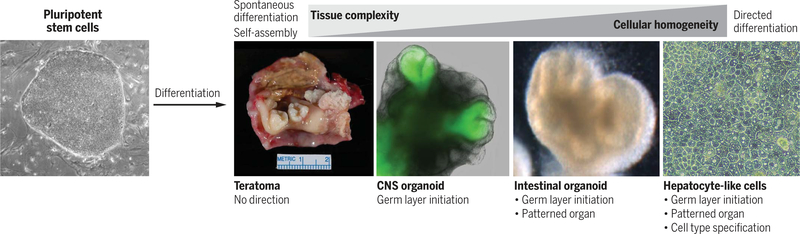
Fig. 1.. Controlling the chaotic differentiation of pluripotent stem cells.
Pluripotent stem cells (PSCs) stochastically differentiate in vivo into a disordered mix of tissues called teratomas [teratoma image by permission from Sanjay Mukhopadhyay, Cleveland Clinic]. PSC differentiation can be directed in a stepwise manner by controlling the initiation of germ layer formation [CNS organoid with an optic cup shown from (29) by permission from Nature, copyright 2011], organ patterning (intestinal organoids shown), and specification of individual cell types (hepatocytes shown).
Fig. 2.
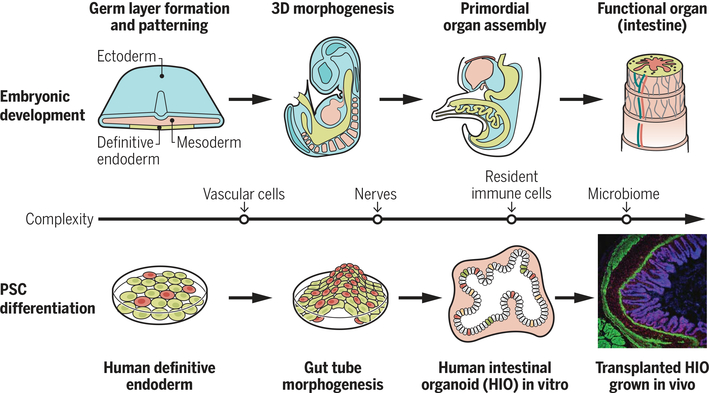
Fig. 2.. Using principles of organogenesis to generate cellular complexity during organoidgenesis.
The upper panel shows some of the main stages that drive assembly of organ primordia. The middle line indicates additional cell types that get incorporated into developing organs (vascular cells, nerves, immune cells) and how these cell types have been experimentally incorporated into developing organoids (lower panel). After transplantation, organoids can become vascularized by the host and continue to grow in size and undergo tissue morphogenesis.
Fig. 3.
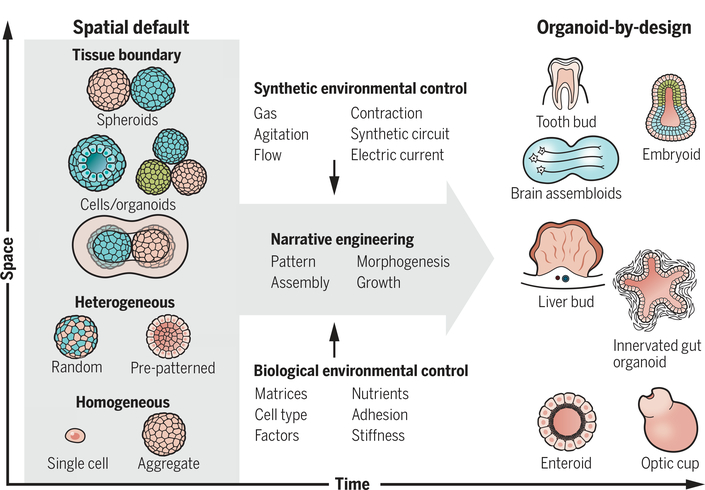
Fig. 3.. Concept of narrative engineering.
Starting from the initial default structures, the timed manipulation of environmental factors will facilitate complex and stereotyped organoid formation from stem cells. The right panel explains some examples of terminal products: Enteroids (gut epithelial organoids) or optic cup organoids develop from single or homogeneous stem cell aggregates, whereas vascularized liver bud or innervated gut organoids self-organize by coculturing heterogeneous progenitors. Recent examples of brain organoids and embryoids were self-assembled from the two distinct, preformed tissue aggregates. These self-organization processes are optimized by temporal modulation of biological and/or synthetic parameters.

References

    1. Simian M, Bissell MJ, J. Cell Biol. 216, 31–40 (2017). - PMC - PubMed
    1. McCauley HA, Wells JM, Development 144, 958–962 (2017). - PMC - PubMed
    1. Dekkers JF et al. , Sci. Transl. Med 8, 344ra84 (2016). - PubMed
    1. Wells JM, Watt FM, Nature 557, 322–328 (2018). - PubMed
    1. Zorn AM, Wells JM, Annu. Rev. Cell Dev. Biol. 25, 221–251 (2009). - PMC - PubMed