


PRL3-zumab as an immunotherapy to inhibit tumors expressing PRL3 oncoprotein
- PMID: 31171773
- PMCID: PMC6554295
- DOI: 10.1038/s41467-019-10127-x
PRL3-zumab as an immunotherapy to inhibit tumors expressing PRL3 oncoprotein
Erratum in
-
Author Correction: PRL3-zumab as an immunotherapy to inhibit tumors expressing PRL3 oncoprotein.Nat Commun. 2021 Nov 2;12(1):6431. doi: 10.1038/s41467-021-26548-6. Nat Commun. 2021. PMID: 34728638 Free PMC article. No abstract available.
Abstract
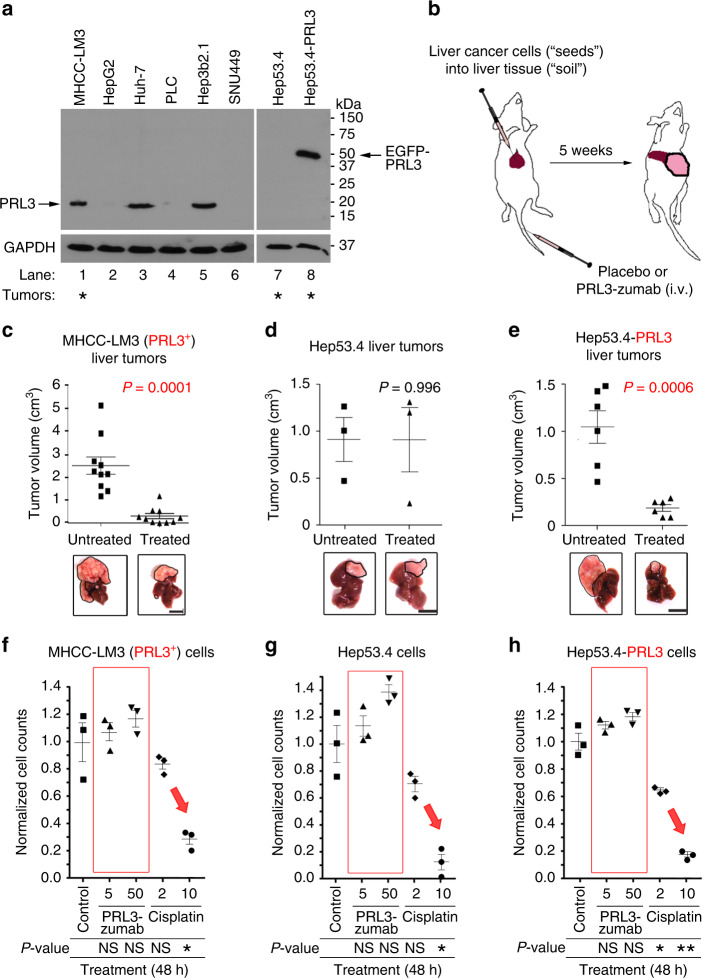
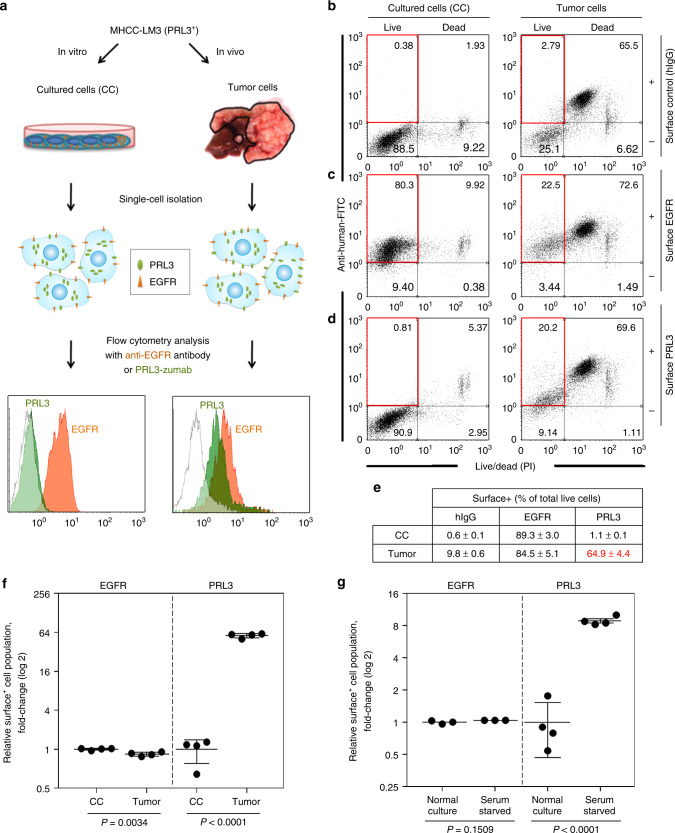
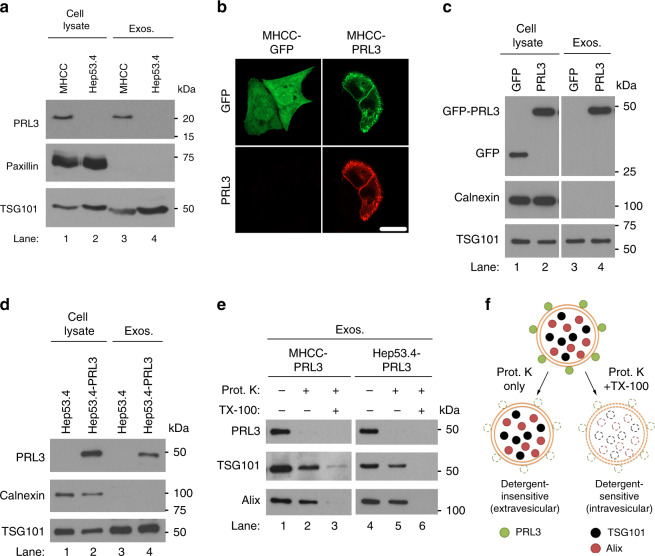
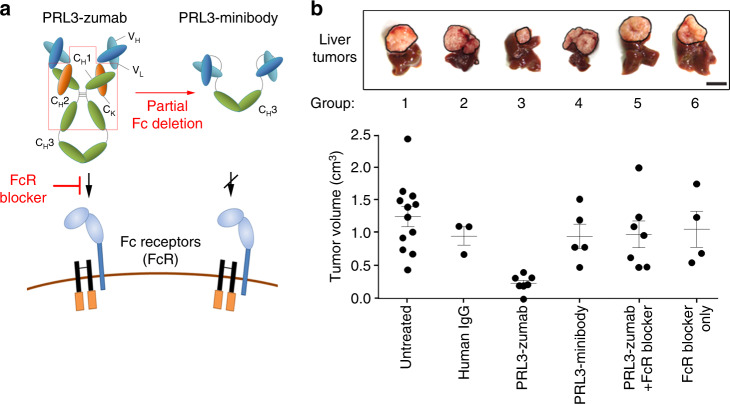
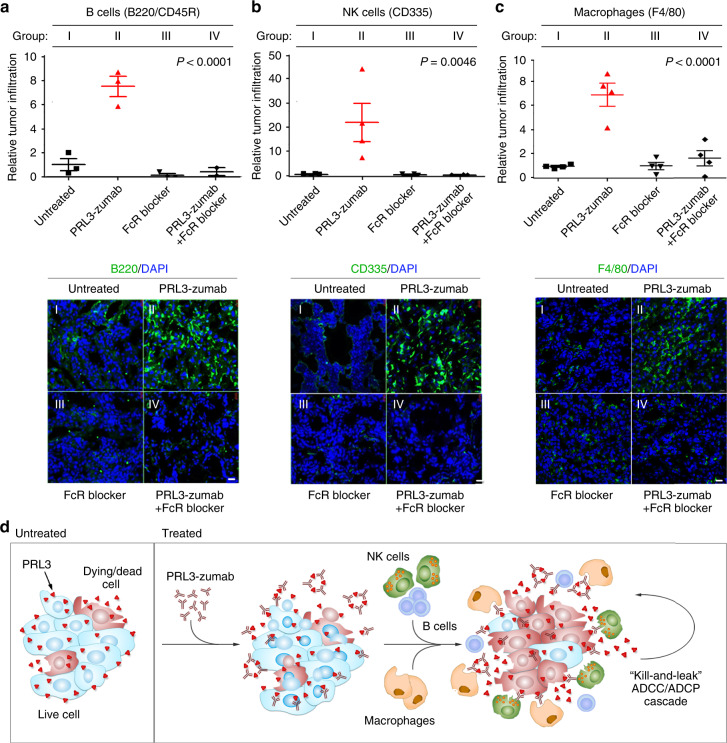
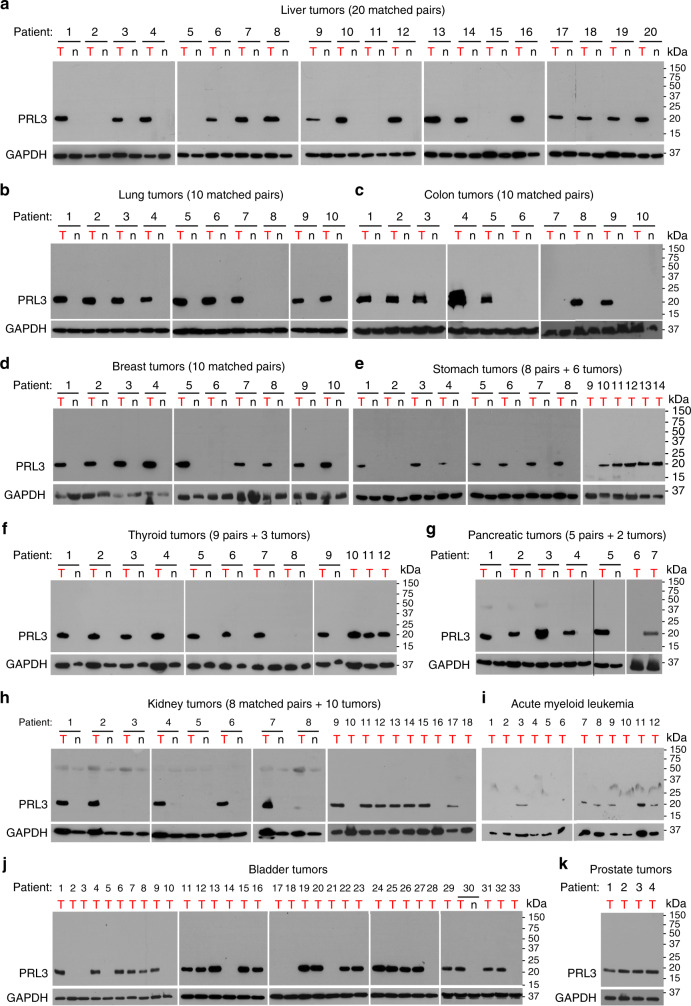
Tumor-specific antibody drugs can serve as cancer therapy with minimal side effects. A humanized antibody, PRL3-zumab, specifically binds to an intracellular oncogenic phosphatase PRL3, which is frequently expressed in several cancers. Here we show that PRL3-zumab specifically inhibits PRL3+ cancer cells in vivo, but not in vitro. PRL3 antigens are detected on the cell surface and outer exosomal membranes, implying an 'inside-out' externalization of PRL3. PRL3-zumab binds to surface PRL3 in a manner consistent with that in classical antibody-dependent cell-mediated cytotoxicity or antibody-dependent cellular phagocytosis tumor elimination pathways, as PRL3-zumab requires an intact Fc region and host FcγII/III receptor engagement to recruit B cells, NK cells and macrophages to PRL3+ tumor microenvironments. PRL3 is overexpressed in 80.6% of 151 fresh-frozen tumor samples across 11 common cancers examined, but not in patient-matched normal tissues, thereby implicating PRL3 as a tumor-associated antigen. Targeting externalized PRL3 antigens with PRL3-zumab may represent a feasible approach for anti-tumor immunotherapy.
Conflict of interest statement
Q.Z. is the founder of Intra-Immu SG Pte Ltd., an Agency of Science, Technology and Research (A*STAR) spin-off company granted licensing rights for the PRL3-zumab IP portfolio. The other authors declare no competing interests.
Figures
References
Publication types
MeSH terms
Substances
LinkOut - more resources
Full Text Sources
Medical
