


Coexistence of endometrial mesonephric-like adenocarcinoma and endometrioid carcinoma suggests a Müllerian duct lineage: a case report
- PMID: 31174566
- PMCID: PMC6556029
- DOI: 10.1186/s13000-019-0830-4
Coexistence of endometrial mesonephric-like adenocarcinoma and endometrioid carcinoma suggests a Müllerian duct lineage: a case report
Abstract
Background: Endometrial mesonephric-like adenocarcinomas exhibit classical histologic features of mesonephric carcinoma; however, it remains unclear whether these tumors represent mesonephric (Wolffian) carcinoma or endometrioid (Müllerian) carcinomas that closely mimic mesonephric carcinoma.
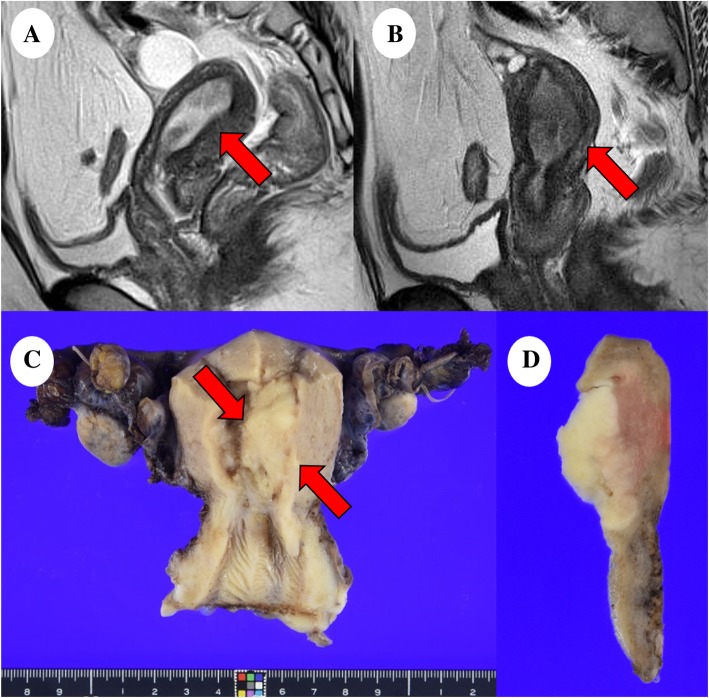
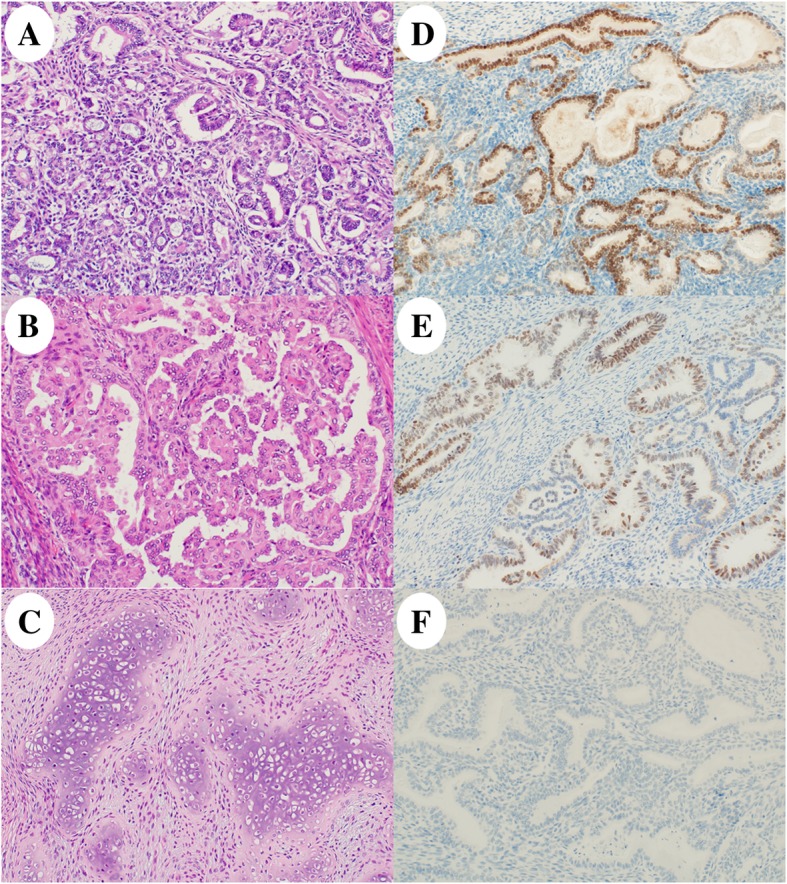
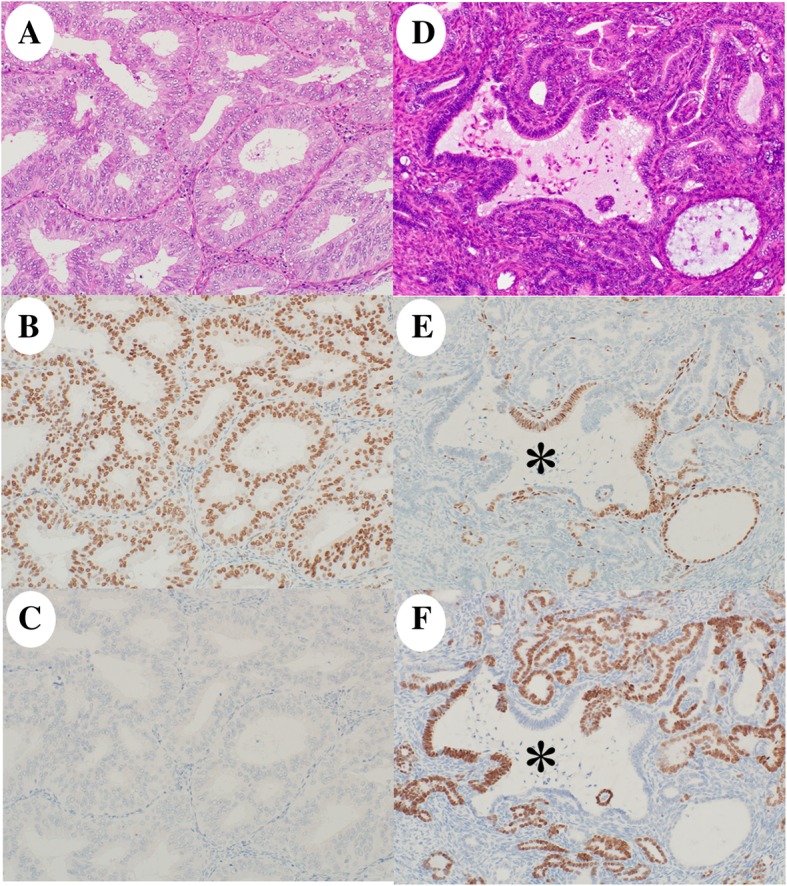
Case presentation: A 32-year-old Japanese primigravida presented with atypical vaginal bleeding. An endometrial biopsy suggested low-grade endometrioid carcinoma, and she was administered medroxyprogesterone acetate. Her tumor recurred 6 years later, and she underwent hysterectomy, salpingo-oophorectomy, and omentectomy, at which point she was diagnosed with mesonephric-like adenocarcinoma of the uterine endometrium. Retrospective pathological review of the initial biopsy confirmed coexisting low-grade endometrioid carcinoma and mesonephric-like adenocarcinoma of the uterine endometrium. On immunohistochemistry, the endometrioid carcinoma component was diffuse positive for estrogen and progesterone receptors but negative for thyroid transcription factor 1. However, the mesonephric-like adenocarcinoma component exhibited a mixture of estrogen receptor- and thyroid transcription factor 1-positive cells within the same glands.
Conclusions: We encountered a patient with coexisting endometrial mesonephric-like adenocarcinoma and low-grade endometrioid carcinoma, which was treated using medroxyprogesterone acetate therapy, resulting in recurrence of mesonephric-like adenocarcinoma alone. These clinicopathological findings support the prevailing notions that mesonephric-like adenocarcinoma is a Müllerian adenocarcinoma exhibiting mesonephric differentiation.
Keywords: Endometrial cancer; Endometrioid carcinoma; Medroxyprogesterone acetate therapy; Mesonephric-like adenocarcinoma; Müllerian duct.
Conflict of interest statement
The authors declare no conflicts of interest associated with this manuscript.
Figures
References
-
- Patel V, Kipp B, Schoolmeester JK. Corded and Hyalinized mesonephric-like adenocarcinoma of the uterine Corpus: report of a case mimicking Endometrioid carcinoma. Hum Pathol. 2018; S0046-8177(18)30334-4. - PubMed
Publication types
MeSH terms
Substances
Grants and funding
LinkOut - more resources
Full Text Sources
