


Obsessions are strongly related to eating disorder symptoms in anorexia nervosa and atypical anorexia nervosa
- PMID: 31176948
- PMCID: PMC6708491
- DOI: 10.1016/j.eatbeh.2019.05.001
Obsessions are strongly related to eating disorder symptoms in anorexia nervosa and atypical anorexia nervosa
Abstract
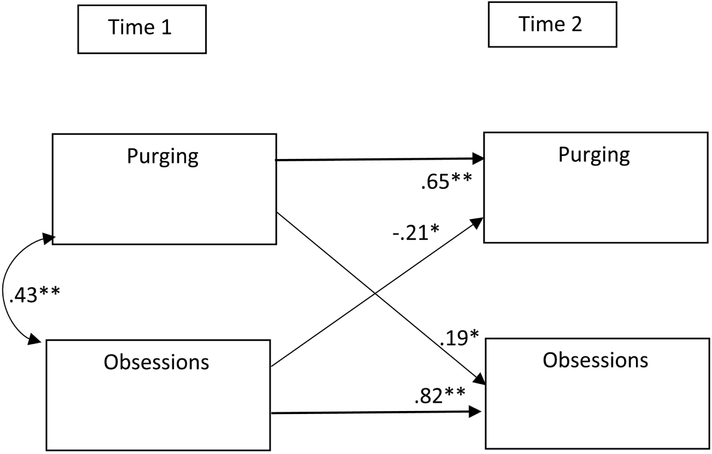
Anorexia nervosa (AN) and obsessive-compulsive disorder (OCD) are highly comorbid. However, little research has examined which specific cognitive-behavioral aspects (e.g., checking, obsessing) of OCD are most relevant in those with AN. Furthermore, there is no research examining aspects of OCD in Atypical AN. The current two studies (N = 139 and N = 115 individuals diagnosed with AN/Atypical AN) examined a) which aspects of OCD were most related to AN symptomatology and b) if there were differences in OCD between individuals diagnosed with AN vs Atypical AN. We found that obsessing was most related to AN symptoms. We also found that there were no substantial significant differences between AN and Atypical AN. These findings add to the literature suggesting minimal differences between AN and Atypical AN, specifically regarding OCD symptomatology. These findings clarify that obsessions (rather than compulsions) may be the specific aspect of OCD most warranting treatment intervention in AN and Atypical AN.
Keywords: Anorexia nervosa; Atypical anorexia nervosa; Obsessions; Obsessive-compulsive disorder.
Copyright © 2019 Elsevier Ltd. All rights reserved.
Figures
References
-
- American Psychiatric Association. (2013). Diagnostic and statistical manual of mental disorders (5th ed.). Arlington, VA: American Psychiatric Publishing.
Publication types
MeSH terms
Grants and funding
LinkOut - more resources
Full Text Sources
Medical
