


Long Chain Polyunsaturated Fatty Acids (LCPUFAs) in the Prevention of Food Allergy
- PMID: 31178862
- PMCID: PMC6538765
- DOI: 10.3389/fimmu.2019.01118
Long Chain Polyunsaturated Fatty Acids (LCPUFAs) in the Prevention of Food Allergy
Abstract
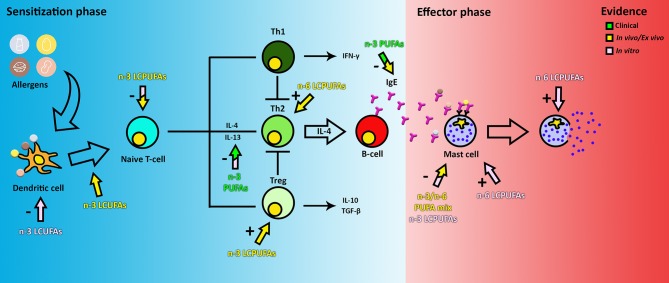
N-3 long chain polyunsaturated fatty acids (LCPUFAs) are considered to possess protective properties for human health by impacting on immunological reactions. An "inflammation-suppressive" effect appears to be the common denominator of the beneficial effects of most of these dietary components which may protect against the development of chronic immune disorders such as (food) allergy. LCPUFAs, especially n-3 LCPUFAs, have been shown to interact with both the sensitization as well as the effector phase in food allergy in pre-clinical models. In this review, we explore the anti-allergic properties of LCPUFAs by providing an overview of clinical, in vivo and in vitro studies. Furthermore, we discuss the susceptibility of LCPUFAs to lipid oxidation and possible strategies to support the efficacy of LCPUFAs in reducing the allergy risk by using additional components with anti-oxidative and anti-inflammatory capacities such as the flavonoid quercetin. Finally, we propose new strategies to prevent (food) allergy using combinations of LCPUFAs and additional nutrients in diets or supplements, and postulate to investigate the use of LCPUFAs in allergic symptom relief.
Keywords: LCPUFA; PUFA; anti-inflammatory; food allergy; immune response.
Figures
References
-
- EAACI . The European Academy of Allergy and Clinical Immunology. (2015). Available online at: http://www.eaaci.org/documents/EAACI_Advocacy_Manifesto.pdf (accessed May 12, 2019).
Publication types
MeSH terms
Substances
LinkOut - more resources
Full Text Sources
Medical
