. 2019 Jun 11;17(6):e3000281.
doi: 10.1371/journal.pbio.3000281. eCollection 2019 Jun.

A novel druggable interprotomer pocket in the capsid of rhino- and enteroviruses

Affiliations

A novel druggable interprotomer pocket in the capsid of rhino- and enteroviruses

Rana Abdelnabi et al. PLoS Biol. .

Abstract

Rhino- and enteroviruses are important human pathogens, against which no antivirals are available. The best-studied inhibitors are "capsid binders" that fit in a hydrophobic pocket of the viral capsid. Employing a new class of entero-/rhinovirus inhibitors and by means of cryo-electron microscopy (EM), followed by resistance selection and reverse genetics, we discovered a hitherto unknown druggable pocket that is formed by viral proteins VP1 and VP3 and that is conserved across entero-/rhinovirus species. We propose that these inhibitors stabilize a key region of the virion, thereby preventing the conformational expansion needed for viral RNA release. A medicinal chemistry effort resulted in the identification of analogues targeting this pocket with broad-spectrum activity against Coxsackieviruses B (CVBs) and compounds with activity against enteroviruses (EV) of groups C and D, and even rhinoviruses (RV). Our findings provide novel insights in the biology of the entry of entero-/rhinoviruses and open new avenues for the design of broad-spectrum antivirals against these pathogens.


Conflict of interest statement

The authors have declared that no competing interests exist.

Figures
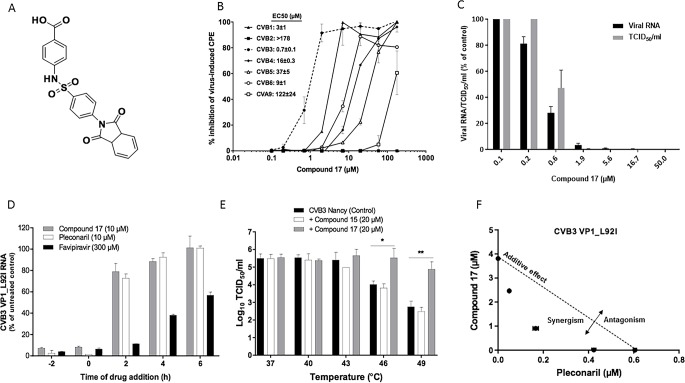
Fig 1
Fig 1. Compound 17 is an early-stage inhibitor of CVB3.
(A) Compound 17’s formula. (B) Dose-response antiviral activity of compound 17 on the replication of group B enteroviruses in a CPE reduction assay. Data are mean values ± SD of three independent experiments. (C) Validation of the dose-response effect of compound 17 on CVB3 virus yield (viral RNA and infectious viral particles). Data are mean values ± SD of three independent experiments. (D) Time-of-drug-addition assay. Data are mean values ± SD of at least two independent experiments. (E) Thermostability assay in the presence or absence of compound 17 or the inactive analogue, compound 15. Values are the mean ± SD of three independent experiments. *p < 0.05, **p < 0.01 by unpaired t test. (F) Combination study of compound 17 with pleconaril. The graph is a plot of combination indices (CIs) versus the EC50 values of compounds at different combination ratios. Data are mean values ± SD of two independent experiments. The raw data of figures are presented in S1 raw data. CI, combination index; CPE, cytopathic effect; CVB, Coxsackievirus B; EC50, 50% effective concentration; TCID50, 50% tissue culture infective dose.
Fig 2
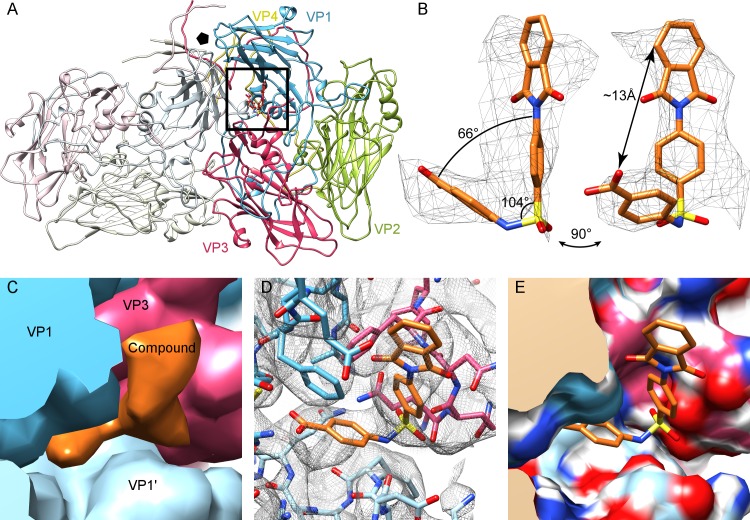
Fig 2. A novel druggable pocket of CVB3.
(A) The atomic model of CVB3 Nancy in complex with compound 17 based on the cryo-EM density shows the position of the drug at an interprotomer site, located between adjacent VP1 chains (gray and blue) and VP3 (red). (B) Difference density for compound 17 (mesh), with an atomic model of compound 17 fitted in, shown at 1.5 standard deviations above the mean. (C) The process of difference mapping: simulated density map was generated from 1COV for the capsid proteins (here colored blue, light blue, red by protein) and normalized to the cryo-EM density map in UCSF Chimera. When the simulated density map of 1COV was then subtracted from the cryo-EM density, the difference density remained (orange). (D) Model docked into map. (E) Electrostatic analysis of the surface pocket. The raw cryoelectron microscopy data are deposited in the EMPIAR (Electron Microscopy Public Image Archive) database with the ID: EMPIAR-10199. CVB, Coxsackievirus B; EM, electron microscopy; UCSF, University California San Francisco.
Fig 3
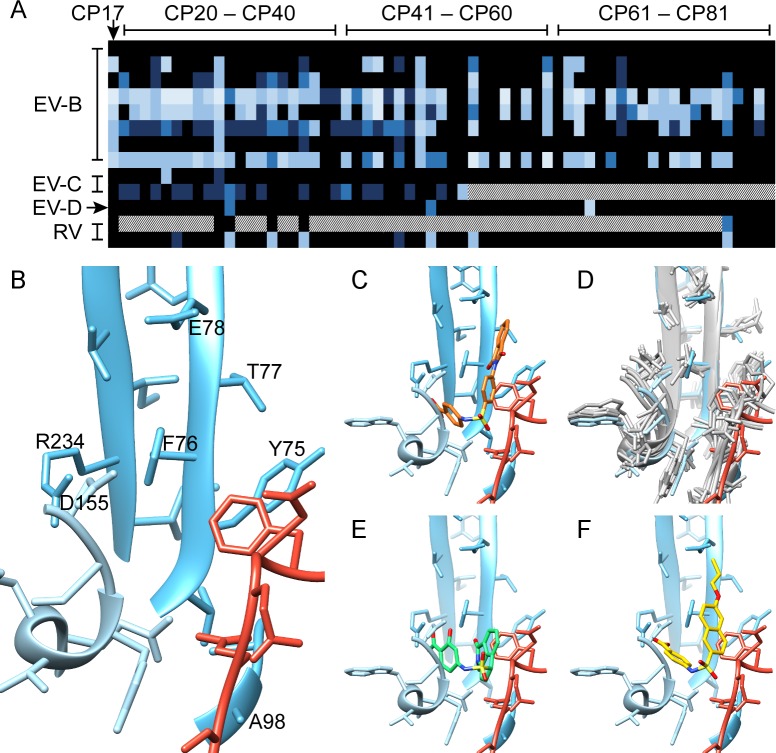
Fig 3. Discovery of new CP17 analogues with improved potency and spectrum.
(A) Heat map of the activity (EC50) of CP17 and the 62 analogues (CP20–CP81) in the context of EV-B (CVB1, CVB2, CVB3, CVB3_L92I, CVB4, CVB5, and CVB6), EV-C (CVA21 and PV1), EV-D (EVD68), and RV (RVA63 and RVB14) infection. Color range: black (inactive compounds)–light blue (compounds with EC50 < 1 μM). For white-dotted pixels, EC50 was not determined. EC50 values and compounds structures are available in S1 Table. (B) Pocket residues of VP1 proteins (blue, light blue) and VP3 (red), with those labelled that, when mutated, induced resistance to compound 17. (C) Position of compound 17 in the pocket (orange). (D) Pocket structural conservation for related enteroviruses exhibiting sensitivity to compound 17: an overlay of the solved structure (blue/light blue/red) with atomic models (gray) of CVB3 (wwPDB ID:1COV), CVA9 (wwPDB ID:1D4M), EVD68 (wwPDB ID:4WM8), E1 (wwPDB ID:1EV1), E7 (wwPDB ID:2X5I), and E11 (wwPDB ID:1H8T). RMSD statistics found in S4 Table. (E) The predicted docking of compound 29 (green) into the solved structure. (F) The predicted docking of compound 48 (yellow). CP17, compound 17; CVA, Coxsackievirus A; CVB, Coxsackievirus B; E, echovirus; EC50, 50% effective concentration; EV-B, enterovirus-B; EV-C, enterovirus-C; EV-D, enterovirus-D; EVD68, enterovirus D68; PV, poliovirus; RMSD, root mean square deviation; RV, rhinovirus; RVA63, rhinovirus A63; RVB14, rhinovirus B14; ww, worldwide.

References

    1. Mirabelli C, Scheers E, Neyts J. Novel therapeutic approaches to simultaneously target rhinovirus infection and asthma/COPD pathogenesis. F1000Research. 2017;6: 1860 10.12688/f1000research.11978.1 - DOI - PMC - PubMed
    1. Baggen J, Thibaut HJ, Kuppeveld FJM Van. The life cycle of non-polio enteroviruses and how to target it. Nat Rev Microbiol. Springer US; 2018; 10.1038/s41579-018-0005-4 - DOI - PubMed
    1. Yi E-J, Shin Y-J, Kim J-H, Kim T-G, Chang S-Y. Enterovirus 71 infection and vaccines. Clin Exp Vaccine Res. 2017;6: 4 10.7774/cevr.2017.6.1.4 - DOI - PMC - PubMed
    1. Holm-Hansen CC, Midgley SE, Fischer TK. Global emergence of enterovirus D68: A systematic review. The Lancet Infectious Diseases. 2016. pp. e64–e75. 10.1016/S1473-3099(15)00543-5 - DOI - PubMed
    1. Aylward B, Tangermann R. The global polio eradication initiative: Lessons learned and prospects for success. Vaccine. 2011;29 10.1016/j.vaccine.2011.10.068 - DOI - PubMed

Publication types

MeSH terms