


Performance of the Barrett Toric Calculator with and without measurements of posterior corneal curvature
- PMID: 31189992
- PMCID: PMC7002745
- DOI: 10.1038/s41433-019-0489-9
Performance of the Barrett Toric Calculator with and without measurements of posterior corneal curvature
Abstract
Background: Toric intraocular lens power calculators, e.g., the Barrett Toric Calculator, based on predicted, rather than on measured posterior corneal curvature have yielded the best results so far. However, recent update of the Barrett Toric Calculator aims to fine tune its refractive predictions with the input of measured posterior corneal curvature. Here, we wanted to compare refractive predictions of the Barrett Toric Calculator, based on IOL Master 700 biometry, with and without measurements of posterior corneal curvature.
Methods: In total 30 eyes were included in the study. One-month postoperative manifest refraction and predicted residual refractive error of both formulas were utilized to calculate mean absolute error and centroid error in predicted residual astigmatism. The Pentacam was used to measure posterior corneal curvature.
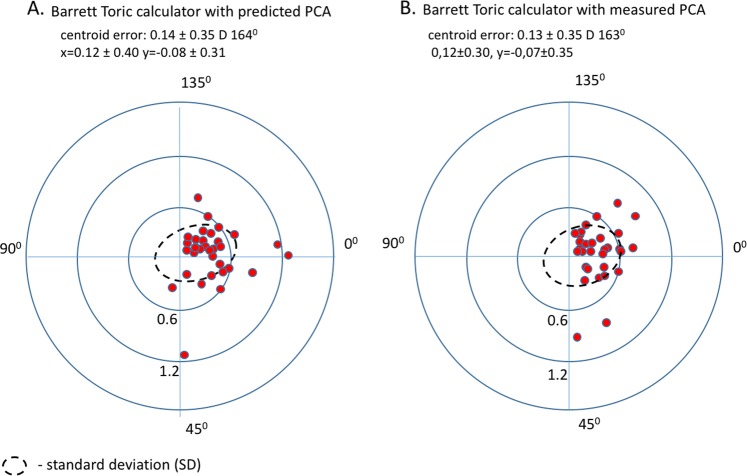
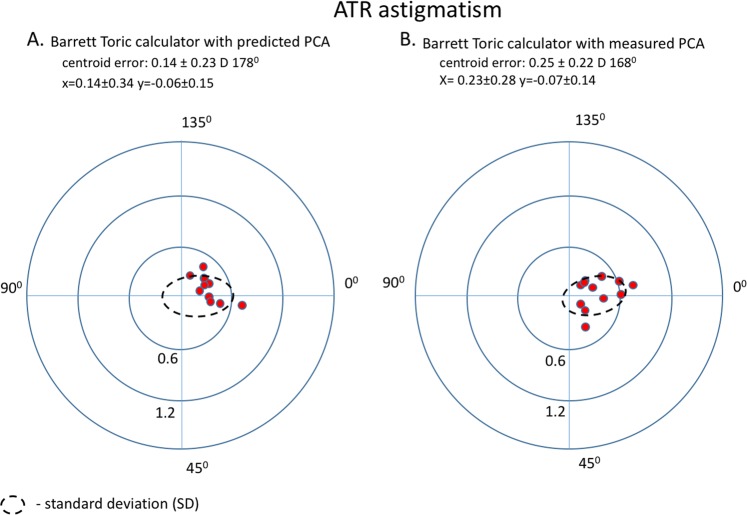
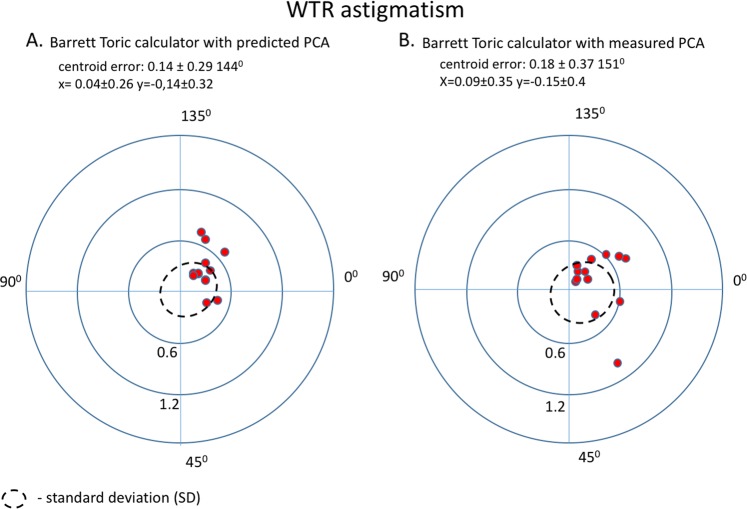
Results: We did not find any statistically significant difference in mean absolute error and centroid error in predicted residual astigmatism between the Barrett Toric Calculator with and without measurement of posterior corneal curvature. Post-hoc analysis of with-the-rule and against-the-rule astigmatic eyes did not reveal any significant differences as well.
Conclusions: Astigmatism prediction errors, based on IOL Master 700 biometry, with and without measured posterior corneal curvature, were similar. To the best of our knowledge, the updated Barrett Toric Calculator is the first formula to provide non-inferior and reliable predictions based on measurement of posterior corneal curvature.
Conflict of interest statement
The authors declare that they have no conflict of interest.
Figures
References
-
- Roberts TV, Hodge C, Sutton G, Lawless M, contributors to the Vision Eye Institute IOLor. Comparison of Hill-radial basis function, Barrett Universal and current third generation formulas for the calculation of intraocular lens power during cataract surgery. Clin Exp Ophthalmol. 2018;46:240–6. - PubMed
Publication types
MeSH terms
LinkOut - more resources
Full Text Sources
