


National Trends in the Diagnosis of CRPS after Open and Endoscopic Carpal Tunnel Release
- PMID: 31192042
- PMCID: PMC6546494
- DOI: 10.1055/s-0039-1678674
National Trends in the Diagnosis of CRPS after Open and Endoscopic Carpal Tunnel Release
Abstract
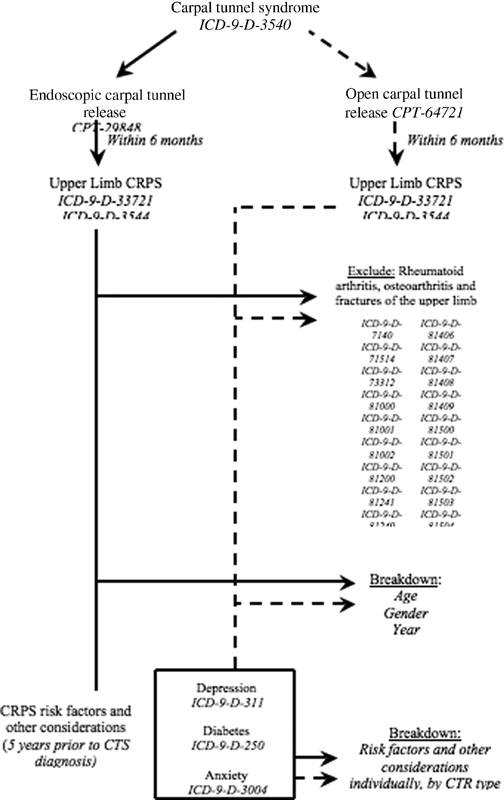
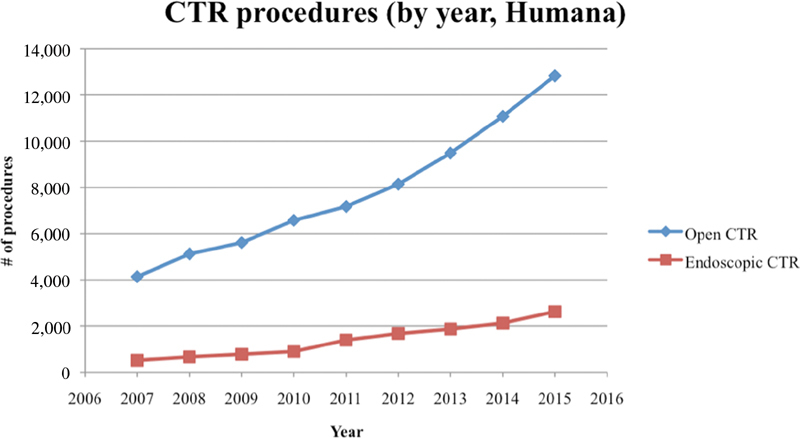
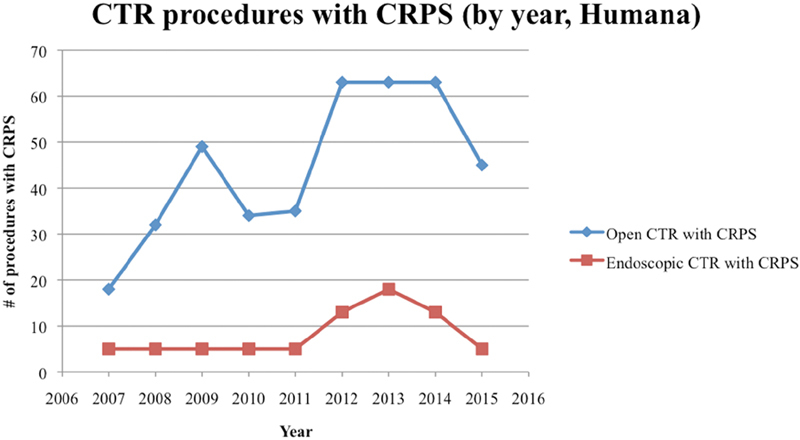
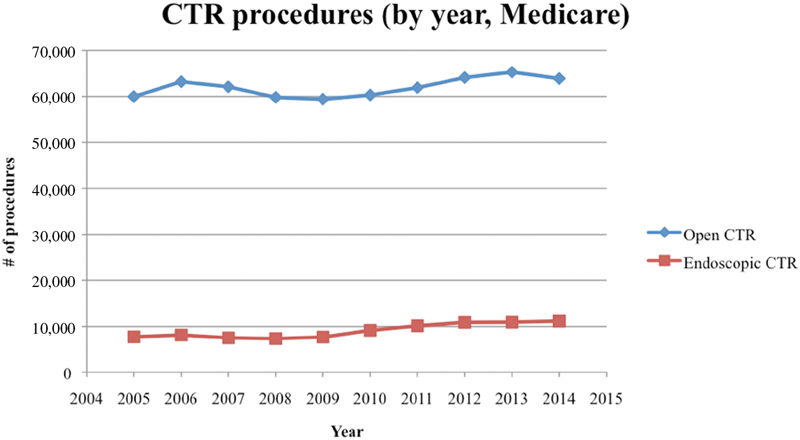
Background Complex regional pain syndrome (CRPS) occurs in 2 to 8% of patients that receive open or endoscopic carpal tunnel release (CTR). Because CRPS is difficult to treat after onset, identifying risk factors can inform prevention. We determined the incidence of CRPS following open and endoscopic CTR using a national claims database. We also examined whether psychosocial conditions were associated with CRPS after CTR. Methods We accessed insurance claims using diagnostic and procedural codes. We calculated the incidence of CRPS following open carpal tunnel release and endoscopic carpal tunnel release within 1 year. The response variable was the presence of CRPS after CTR. Explanatory variables included procedure type, age, gender, and preoperative diagnosis of anxiety or depression. Results The number of open CTRs (85% of total) outweighs the number of endoscopic procedures. In younger patients, the percentage of endoscopic CTRs is increasing. Rates of CRPS are nearly identical between surgery types for both privately insured (0.3%) and Medicare patients (0.1%). Middle aged (range: 40-64 years) and female patients had significantly higher rates of CRPS than did the general population. Preoperative psychosocial conditions did not correlate with the presence of CRPS in surgical patients. Clinical Relevance The decision between endoscopic and open CTR should not be made out of concern for development of CRPS postsurgery, as rates are low and similar for both procedures. Rates of CRPS found in this study are much lower than rates found in previous studies, indicating inconsistency in diagnosis and reporting or generalizability of prior work. Preoperative psychosocial disorders and CRPS are unrelated.
Keywords: carpal tunnel release; carpal tunnel syndrome; complex regional pain syndrome; quality.
Conflict of interest statement
Figures

References
-
- Birklein F, O'Neill D, Schlereth T. Complex regional pain syndrome: an optimistic perspective. Neurology. 2015;84(01):89–96. - PubMed
-
- Jänig W, Baron R. Complex regional pain syndrome is a disease of the central nervous system. Clin Auton Res. 2002;12(03):150–164. - PubMed
-
- Maihöfner C. [Complex regional pain syndrome: a current review] Schmerz. 2014;28(03):319–336. - PubMed
-
- Bruehl S. Complex regional pain syndrome. BMJ. 2015;351:h2730. - PubMed
-
- Li Z, Smith B P, Smith T L, Koman L A. Diagnosis and management of complex regional pain syndrome complicating upper extremity recovery. J Hand Ther. 2005;18(02):270–276. - PubMed
LinkOut - more resources
Full Text Sources
