


Determinants for success in climbing: A systematic review
- PMID: 31193395
- PMCID: PMC6527913
- DOI: 10.1016/j.jesf.2019.04.002
Determinants for success in climbing: A systematic review
Abstract
Background: The number of athletes engaged in climbing sports has risen. Specific physical and psychological skills are required. The objective of this review was to determine factors for high climbing performance. We evaluated physiological, biomechanical and psychological characteristics that simplify the ascent. We also assessed training and recovery strategies.
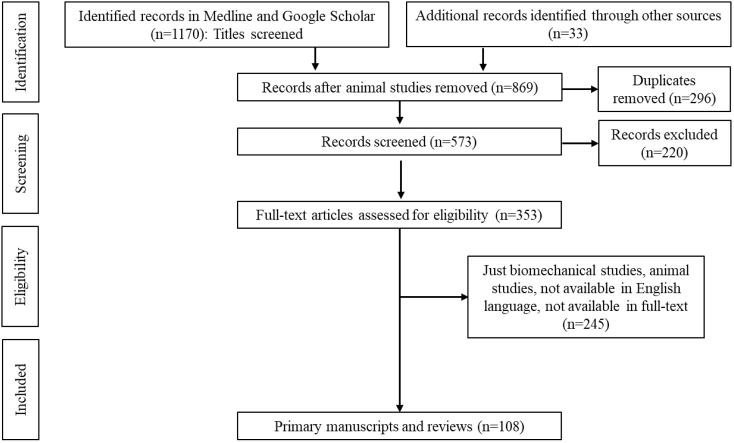
Methods: Medline (Pubmed), Cochrane Library and Google scholar up to September 2018.
Results: A low skinfold thickness, body fat and large forearm volume were anthropometric traits in successful climbers. Well-trained forearm flexors with high aerobic capacities lead to an efficient style. Hand grip strength and endurance, postural stability and optimized kinematic motions were favourable. Elite climbers had long finger and bent-arm hang times. Psychologically, an "iceberg profile" was typical. Constant training with fingerboard and dynamic eccentric-concentric training helped to push the "red-point grade".
Conclusion: Hand, forearm strength and endurance are highly important elements in elite climbers. An efficient climbing style with perpetual focus and accuracy, high speed and low exhaustion due to adaption to repeated isometric exercise is helpful in the ascent, while low body fat and a large bone-to-tip pulp make it easier. Constant training is essential, e.g. eccentric-concentric training of finger flexors, which should be followed by active recovery.
Keywords: Biomechanics; Bouldering; Climbing; Performance; Physiology.
Figures
References
-
- Seifert L., Orth D., Boulanger J., Dovgalecs V., Hérault R., Davids K. Climbing skill and complexity of climbing wall design: assessment of jerk as a novel indicator of performance fluency. J Appl Biomech. 2014;30(5):619–625. - PubMed
- Seifert L, Orth D, Boulanger J, Dovgalecs V, Herault R, Davids K. Climbing skill and complexity of climbing wall design: assessment of jerk as a novel indicator of performance fluency. Journal of Applied Biomechanics. 2014;30(5):619-625. doi:10.1123/jab.2014-0052. - PubMed
-
- Fuss F.K., Niegl G. Instrumented climbing holds and dynamics of sport climbing. In: Moritz E.F., Haake S., editors. The Engineering of Sport 6. Springer New York; New York, NY: 2006. pp. 57–62.
- Fuss FK, Niegl G. Instrumented Climbing Holds and Dynamics of Sport Climbing. In: Moritz EF, Haake S, eds. The Engineering of Sport 6. New York, NY: Springer New York; 2006:57-62.
-
- Woollings K.Y., McKay C.D., Emery C.A. Risk factors for injury in sport climbing and bouldering: a systematic review of the literature. Br J Sports Med. 2015;49(17):1094–1099. - PubMed
- Woollings KY, McKay CD, Emery CA. Risk factors for injury in sport climbing and bouldering: a systematic review of the literature. Br J Sports Med. 2015;49(17):1094-1099. doi:10.1136/bjsports-2014-094372. - PubMed
-
- Hasse D., Stutte H.L., editors. Felsenheimat Elbsandsteingebirge, Sächsisch-Böhmische Schweiz: Erlebnis einer Landschaft und ihre künstlerischen Darstellung ; ein Jahrhundert sächsisches Bergsteigen. Wolfratshausen/Obb.; Stutte: 1979.
- Hasse D, Stutte HL, eds. Felsenheimat Elbsandsteingebirge, Sachsisch-Bohmische Schweiz: Erlebnis einer Landschaft und ihre kunstlerischen Darstellung ; ein Jahrhundert sachsisches Bergsteigen. Wolfratshausen/Obb.: Stutte; 1979.
-
- Helt M. 2017. GYMS AND TRENDS OF.http://www.climbingbusinessjournal.com/gyms-and-trends-of-2017/
- Helt M. GYMS AND TRENDS OF 2017. http://www.climbingbusinessjournal.com/gyms-and-trends-of-2017/. Accessed March 14, 2019.
Publication types
LinkOut - more resources
Full Text Sources
