


Optimizing Discharge Opioid Prescribing Practices After Mastectomy With Immediate Reconstruction
- PMID: 31193969
- PMCID: PMC6543550
- DOI: 10.1016/j.mayocpiqo.2019.03.001
Optimizing Discharge Opioid Prescribing Practices After Mastectomy With Immediate Reconstruction
Abstract
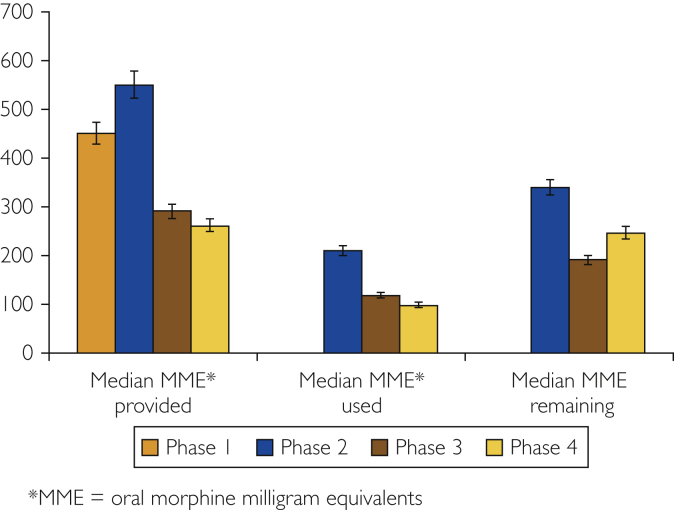
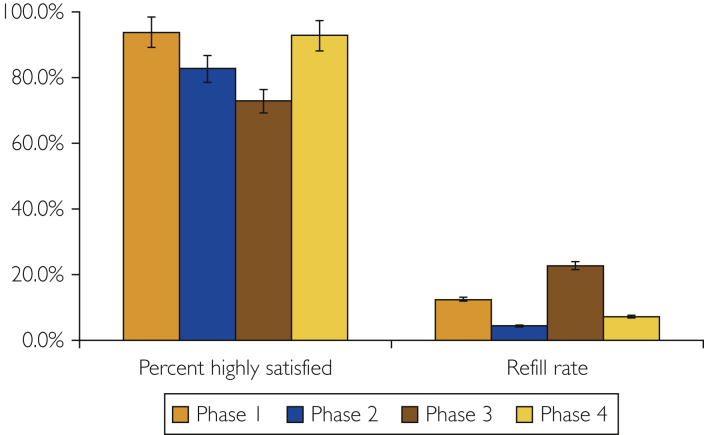
A quality improvement initiative was conducted to provide guidelines for opioid prescribing following mastectomy with immediate reconstruction. Patients undergoing mastectomy with concurrent tissue expander reconstruction were surveyed at their first postoperative visit to determine use of pain medication, satisfaction, and refill rates. Opioid prescriptions were converted to total oral morphine milligram equivalents (MMEs). Guidelines for postdischarge prescriptions were developed. During phase I, 16 patients were surveyed to determine baseline prescribed MMEs and rate of satisfaction. A guideline was subsequently developed to standardize postdischarge prescribing (550 MMEs prescribed average risk vs 900 MMEs high risk), and the survey was repeated (phase II). Median 210 MMEs were used. Of the 23 patients, 1 required a refill, 83% were highly satisfied, and 77% of opioids were unused. Guidelines were further revised to limit prescribed opioids (290 MME average risk vs 450 MME high risk), and the survey was repeated (phase III). A median of 118 MMEs was used. Of the 22 patients, 5 required refills, 73% were highly satisfied, and 53% of opioids were unused. Phase IV included 27 patients. A median of 98 MMEs was used. Two patients required refills, 93% were highly satisfied, and 58% of opioids were unused. Our finding showed that there is significant overprescription of opioids after elective breast surgery. Practice guidelines can reduce the amount of opioids prescribed. Reducing excess opioids available in the community is a noble goal; however, it must be done cautiously, as decreased patient satisfaction can be an unintended consequence.
Keywords: IQR, interquartile range; MME, oral morphine milligram equivalents.
Figures
References
-
- U.S. Department of Health and Human Services. https://www.hhs.gov/opioids/about-the-epidemic/index.html Available at: - PubMed
-
- Bohnert A.B., Valenstein M., Bair M.J., et al. Association between opioid prescribing patterns and opioid overdose-related deaths. JAMA. 2011;305(13):1315–1321. - PubMed
-
- Maxwell J.C. The prescription drug epidemic in the United States: a perfect storm. Drug Alcohol Rev. 2011;30(3):264–270. - PubMed
-
- Thiels C.A., Anderson S.S., Ubl D.S., et al. Wide variation and overprescription of opioids after elective surgery. Ann Surg. 2017;266(4):564–573. - PubMed
LinkOut - more resources
Full Text Sources
Miscellaneous
