


Occipital Petalia and Albinism: A Study of Interhemispheric VEP Asymmetries in Albinism with No Nystagmus
- PMID: 31195712
- PMCID: PMC6617331
- DOI: 10.3390/jcm8060802
Occipital Petalia and Albinism: A Study of Interhemispheric VEP Asymmetries in Albinism with No Nystagmus
Abstract
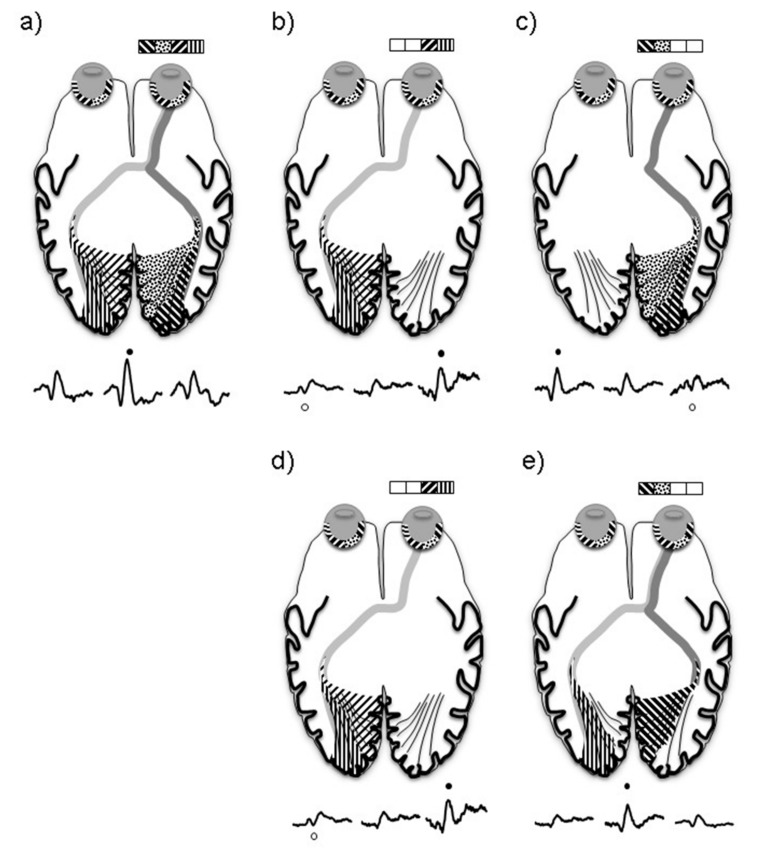
The purpose of this study was to assess chiasmal misrouting in a cohort of children with albinism with no nystagmus using hemifield visual evoked potentials (VEP) measures.
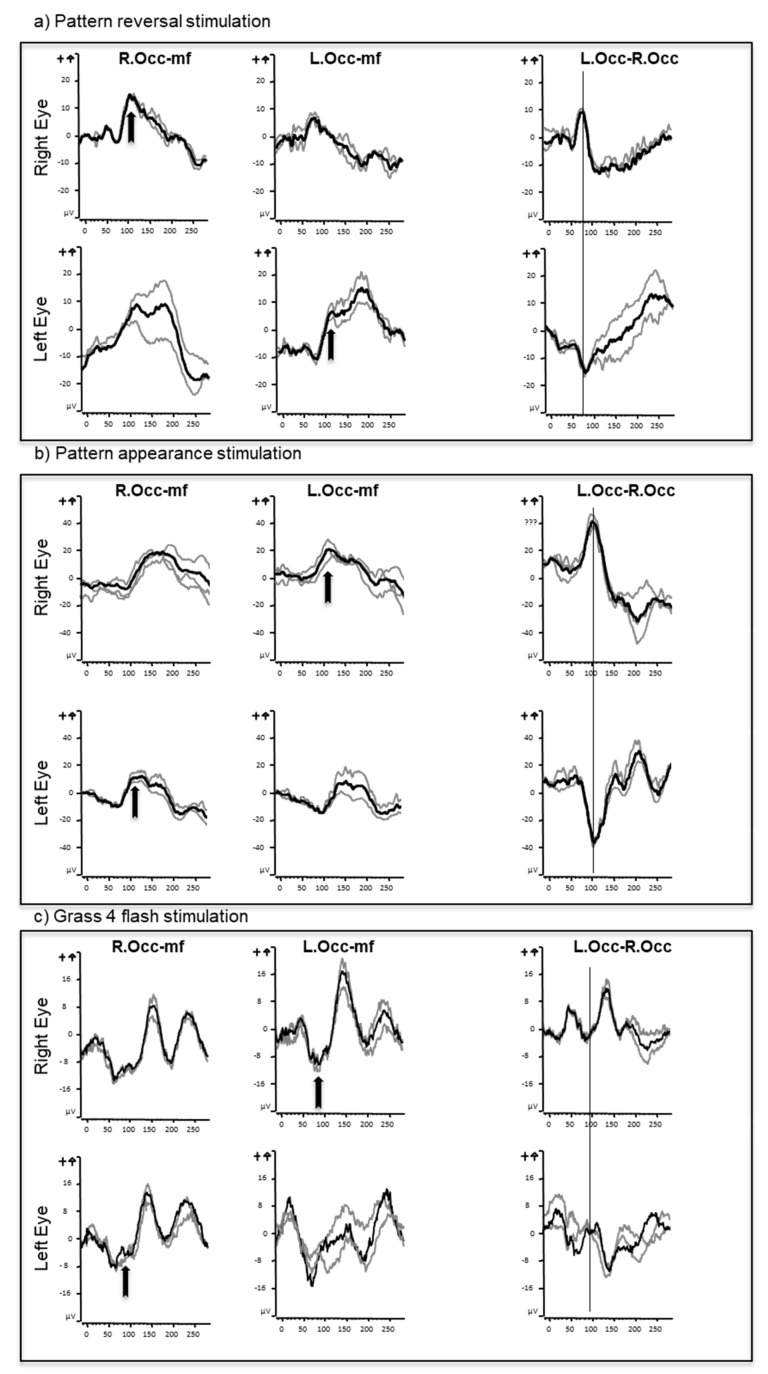
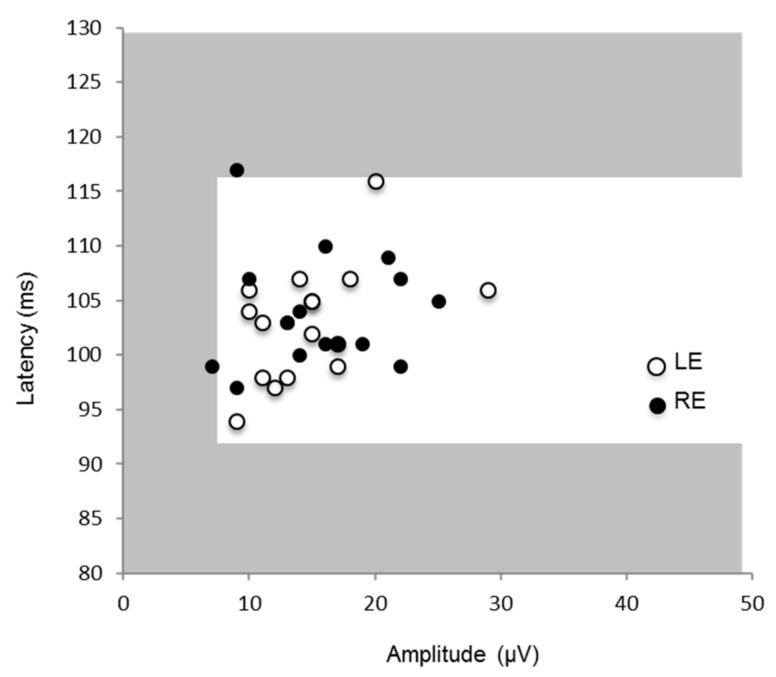
Methods: Monocular VEPs were recorded and analyzed from three electrodes (O1, Oz, and O2 referred to Fz) from 16 children with albinism without nystagmus. Pattern reversal (full field and hemifield stimulation), full field pattern appearance and flash stimuli were used to evoke VEPs for each eye.
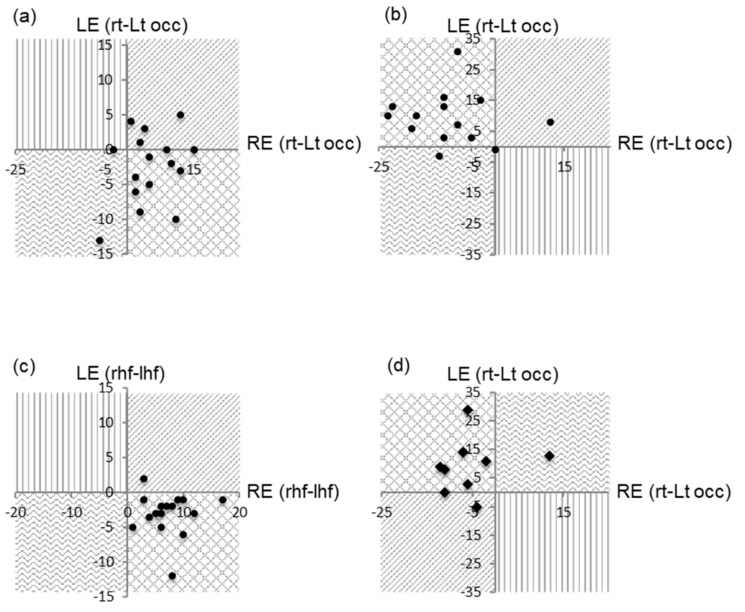
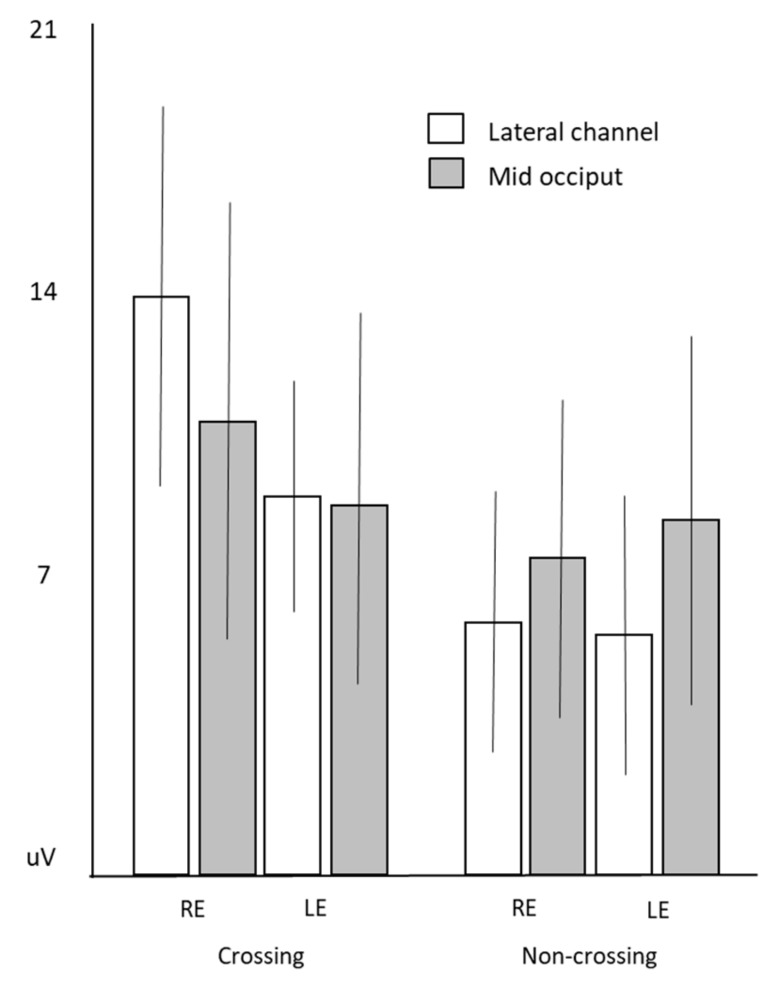
Results: The amplitude of the pattern reversal VEPs to stimulation of the hemifield corresponding to the crossing pathways were as expected significantly larger than those to the non-crossing in each eye ((right eye p = 0.000004), (left eye p = 0.001)). Pattern reversal VEPs recorded from the left hemisphere were also larger than those from the right and most evident when comparing the crossing pathways of each eye (p = 0.004).
Conclusions: This study has demonstrated electrophysiological differences in visual pathway function of the left and right hemisphere in subjects with albinism like that previously described in controls. Nasal field stimulation activated crossing and non-crossing pathways in patients with albinism and as a result, nasal hemifield VEPs in albinism are less lateralized compared to what is found in normal subjects.
Keywords: albinism; hemifield; misrouting; visual evoked potential.
Conflict of interest statement
The authors declare no conflict of interest.
Figures
Similar articles
-
Chiasmal coefficient of flash and pattern visual evoked potentials for detection of chiasmal misrouting in albinism.Doc Ophthalmol. 2003 Mar;106(2):137-43. doi: 10.1023/a:1022526409674. Doc Ophthalmol. 2003. PMID: 12678278
-
Identifying human albinism: a comparison of VEP and fMRI.Invest Ophthalmol Vis Sci. 2008 Jan;49(1):238-49. doi: 10.1167/iovs.07-0458. Invest Ophthalmol Vis Sci. 2008. PMID: 18172098
-
Pattern evoked potentials in human albinism. Evidence of two different topographical asymmetries reflecting abnormal retino-cortical projections.J Neurol Sci. 1980 Nov;48(2):265-86. doi: 10.1016/0022-510x(80)90206-3. J Neurol Sci. 1980. PMID: 7431042
-
Multi-channel pattern VEPs with full and half field stimulation: methods of interpretation and diagnostic evaluation.Doc Ophthalmol. 2025 Apr;150(2):87-95. doi: 10.1007/s10633-025-10012-7. Epub 2025 Mar 25. Doc Ophthalmol. 2025. PMID: 40128423 Free PMC article. Review.
-
Visually evoked potentials.Handb Clin Neurol. 2019;160:501-522. doi: 10.1016/B978-0-444-64032-1.00034-5. Handb Clin Neurol. 2019. PMID: 31277872 Review.
Cited by
-
Ophthalmological Manifestations of Oculocutaneous and Ocular Albinism: Current Perspectives.Clin Ophthalmol. 2022 May 24;16:1569-1587. doi: 10.2147/OPTH.S329282. eCollection 2022. Clin Ophthalmol. 2022. PMID: 35637898 Free PMC article. Review.
-
Detecting congenital chiasmal misrouting using multichannel VEPs: protocol for a scoping review.Doc Ophthalmol. 2025 Aug;151(1):69-74. doi: 10.1007/s10633-025-10036-z. Epub 2025 Jun 28. Doc Ophthalmol. 2025. PMID: 40580395
References
LinkOut - more resources
Full Text Sources
