


Adipose-derived stem cells prevent the onset of bisphosphonate-related osteonecrosis of the jaw through transforming growth factor β-1-mediated gingival wound healing
- PMID: 31196208
- PMCID: PMC6567445
- DOI: 10.1186/s13287-019-1277-y
Adipose-derived stem cells prevent the onset of bisphosphonate-related osteonecrosis of the jaw through transforming growth factor β-1-mediated gingival wound healing
Abstract
Background: Due to its complex pathogenesis and low clinical cure rate, bisphosphonate-related osteonecrosis of the jaw (BRONJ) poses a substantial challenge for oral and maxillofacial surgeons. Therefore, the treatment of BRONJ should focus on prevention. In clinical studies, primary wound closure can significantly reduce the incidence of BRONJ. Whether local stem cell transplantation can promote primary gingival healing in patients with a medication history and prevent BRONJ has not been reported.
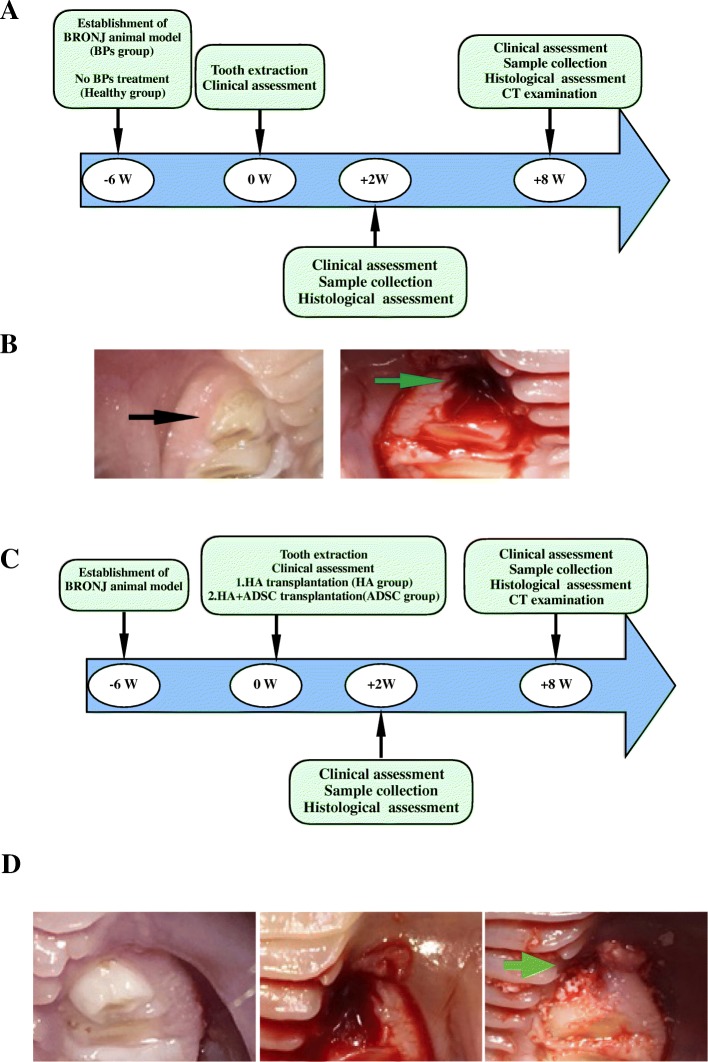
Methods: In this study, animals were divided into a healthy group (non-drug treatment), a BP group, a hydroxyapatite (HA) group, and an adipose-derived stem cell (ADSC) group. All groups except the healthy group were treated with BPs and immunosuppressive drugs once per week for 8 weeks, simulating clinical use for the treatment of cancer patients with bone metastasis, to induce BRONJ-like animals. After the sixth drug treatment, the bilateral premolars were extracted in all groups. In contrast to the healthy and BP groups, the extraction sockets in the HA and ADSC groups were filled with HA or HA + ADSCs simultaneously post extraction to observe the preventive effect of ADSCs on the occurrence of BRONJ. At 2 and 8 weeks post extraction, animals from all groups were sacrificed.
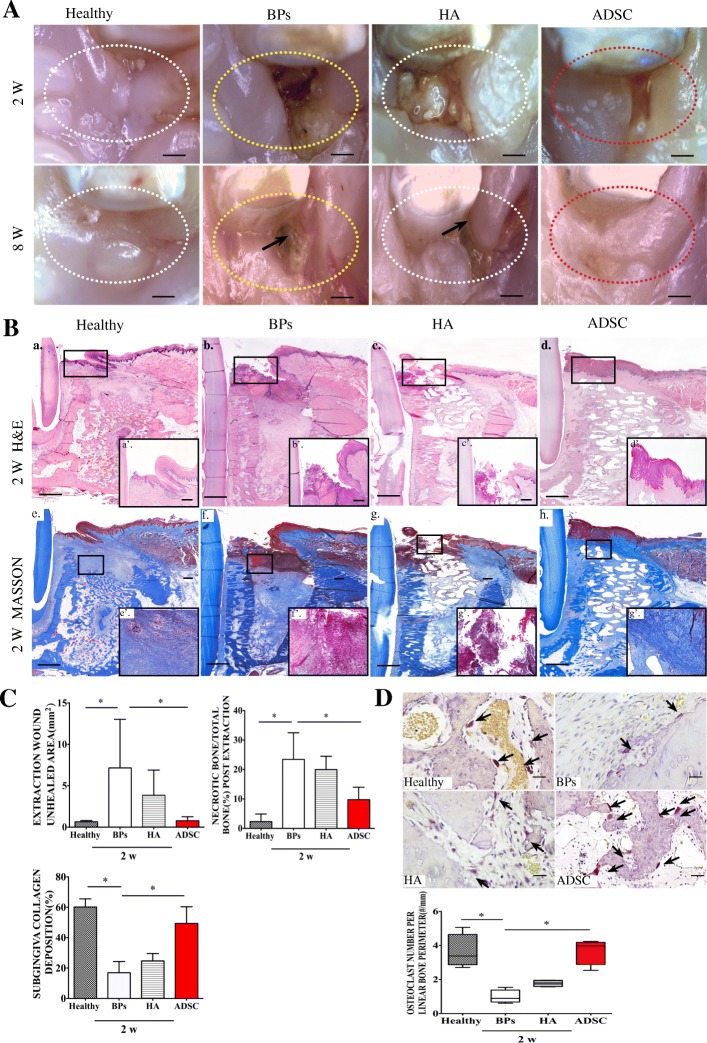
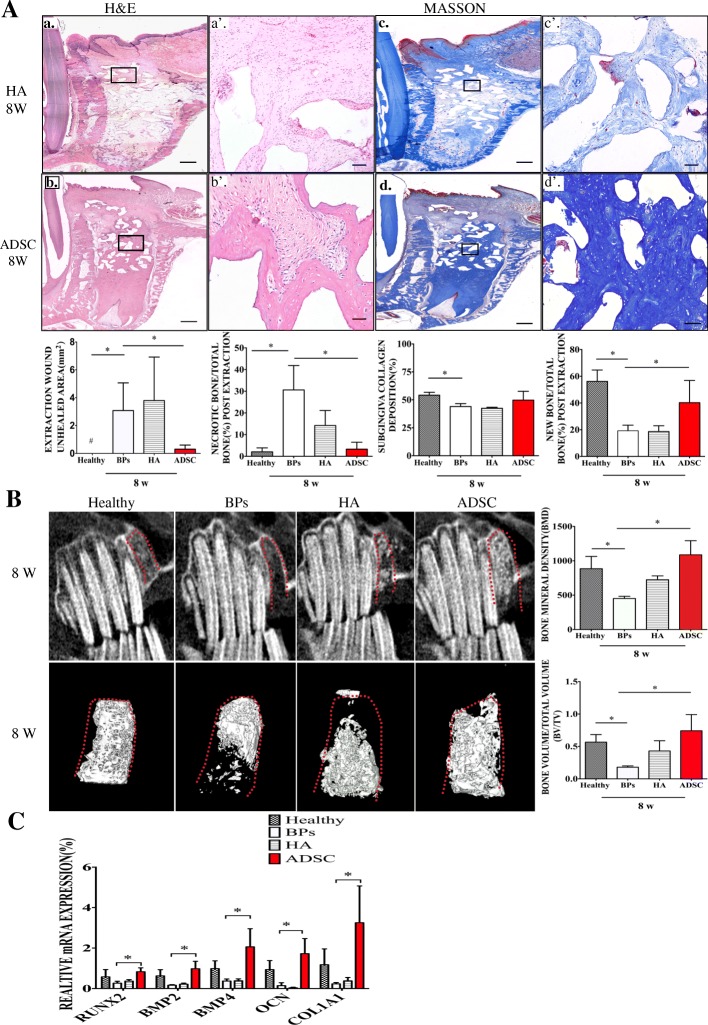
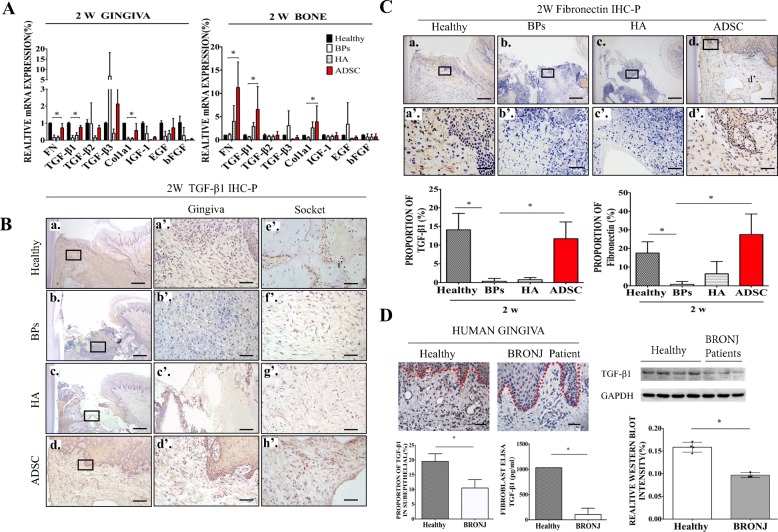
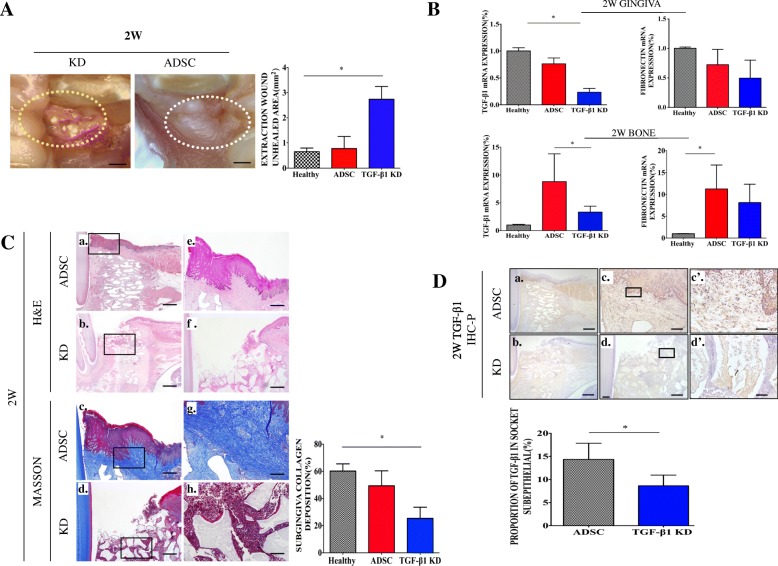
Results: At 8 weeks post transplantation, ADSCs prevented the occurrence of BRONJ, mainly through accelerating healing of the gingival epithelium at 2 weeks post extraction. We also found that ADSCs could upregulate the expression of transforming growth factor β1 (TGF-β1) and fibronectin in tissue from animals with a medication history by accelerating gingival healing of the extraction socket. A rescue assay further demonstrated that TGF-β1 and fibronectin expression decreased in TGF-β1-deficient ADSC-treated animals, which partially abolished the preventive effect of ADSCs on the onset of BRONJ.
Conclusion: ADSCs prevent the onset of BRONJ, mainly by upregulating the expression of TGF-β1 and fibronectin to promote primary gingival healing, ultimately leading to bone regeneration in the tooth extraction socket. Our new findings provide a novel stem cell treatment for the prevention of BRONJ.
Keywords: Adipose-derived mesenchymal stem cells; Bisphosphonate-related osteonecrosis of the jaw; Fibroblast; Fibronectin; Wound healing; Zoledronic acid.
Conflict of interest statement
The authors declare that they have no competing interests.
Figures
References
-
- Ruggiero SL, Dodson TB, Fantasia J, Goodday R, Aghaloo T, Mehrotra B, O'Ryan F, O American Association of and S Maxillofacial American Association of Oral and Maxillofacial Surgeons position paper on medication-related osteonecrosis of the jaw--2014 update. J Oral Maxillofac Surg. 2014;72:1938–1956. doi: 10.1016/j.joms.2014.04.031. - DOI - PubMed
-
- Berenson JR, Rosen LS, Howell A, Porter L, Coleman RE, Morley W, Dreicer R, Kuross SA, Lipton A, Seaman JJ. Zoledronic acid reduces skeletal-related events in patients with osteolytic metastases. Cancer. 2001;91:1191–1200. doi: 10.1002/1097-0142(20010401)91:7<1191::AID-CNCR1119>3.0.CO;2-0. - DOI - PubMed
-
- Ogata K, Katagiri W, Osugi M, Kawai T, Sugimura Y, Hibi H, Nakamura S, Ueda M. Evaluation of the therapeutic effects of conditioned media from mesenchymal stem cells in a rat bisphosphonate-related osteonecrosis of the jaw-like model. Bone. 2015;74:95–105. doi: 10.1016/j.bone.2015.01.011. - DOI - PubMed
-
- Kikuiri T, Kim I, Yamaza T, Akiyama K, Zhang Q, Li Y, Chen C, Chen W, Wang S, Le AD, Shi S. Cell-based immunotherapy with mesenchymal stem cells cures bisphosphonate-related osteonecrosis of the jaw-like disease in mice. J Bone Miner Res. 2010;25:1668–1679. doi: 10.1002/jbmr.37. - DOI - PMC - PubMed
Publication types
MeSH terms
Substances
LinkOut - more resources
Full Text Sources
