


Synaptic inhibition tunes contrast computation in the retina
- PMID: 31199207
- PMCID: PMC6578594
- DOI: 10.1017/S095252381900004X
Synaptic inhibition tunes contrast computation in the retina
Abstract
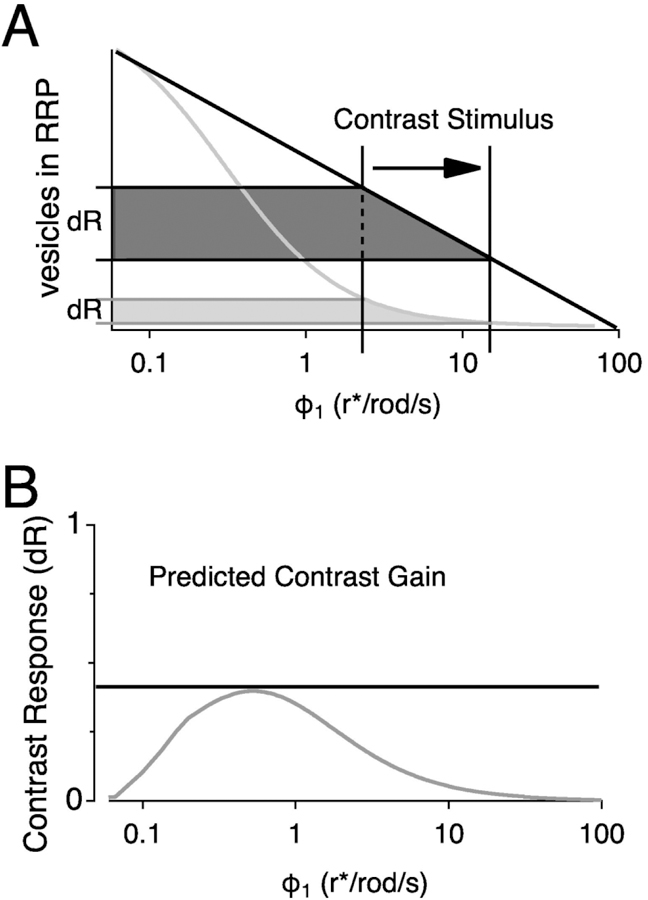
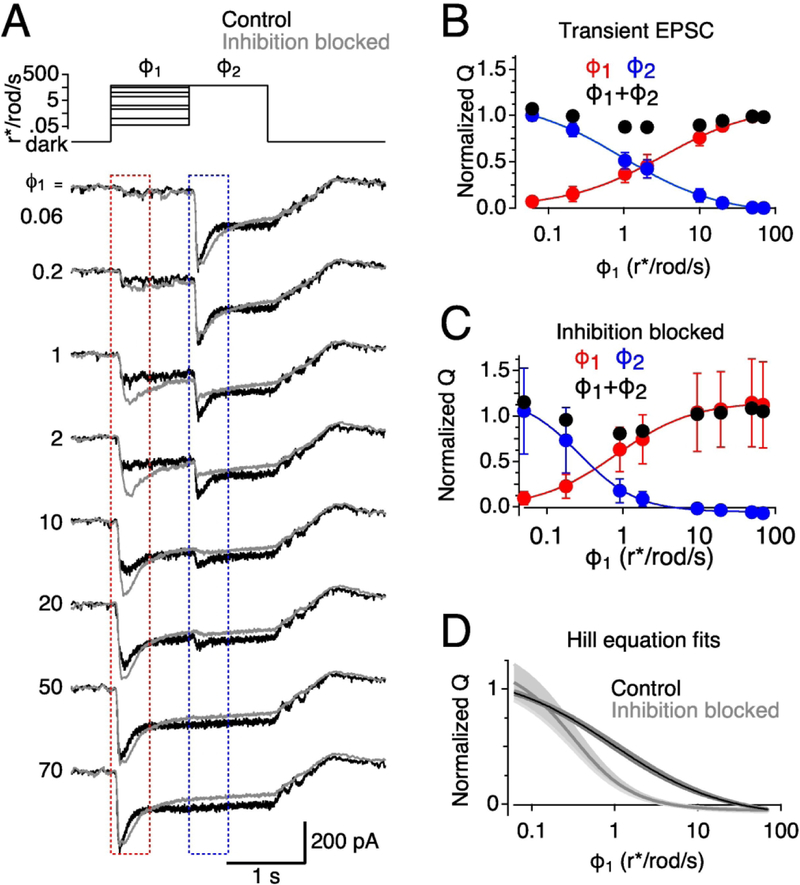
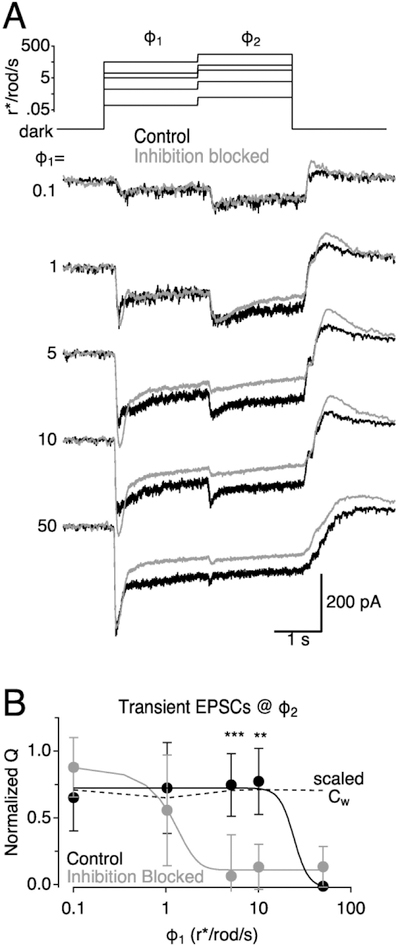
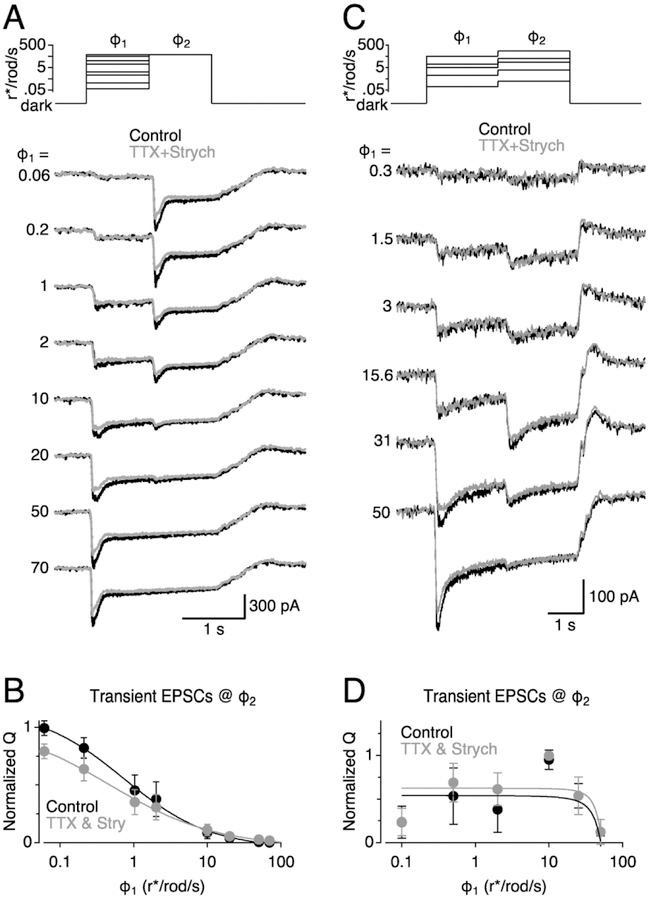
Inhibition shapes activity and signal processing in neural networks through numerous mechanisms mediated by many different cell types. Here, we examined how one type of GABAergic interneuron in the retina, the A17 amacrine cell, influences visual information processing. Our results suggest that A17s, which make reciprocal feedback inhibitory synapses onto rod bipolar cell (RBC) synaptic terminals, extend the luminance range over which RBC synapses compute temporal contrast and enhance the reliability of contrast signals over this range. Inhibition from other amacrine cells does not influence these computational features. Although A17-mediated feedback is mediated by both GABAA and GABAC receptors, the latter plays the primary role in extending the range of contrast computation. These results identify specific functions for an inhibitory interneuron subtype, as well as specific synaptic receptors, in a behaviorally relevant neural computation.
Keywords: Amacrine cell; Feedback inhibition; Ribbon synapse; Weber contrast.
Figures

References
-
- Aguilar M & Stiles W. (1954). Saturation of the Rod Mechanism of the Retina at High Levels of Stimulation. Optica Acta: International Journal of Optics 1, 59–65.
-
- Bloomfield SA. (1992) . Relationship between receptive and dendritic field size of amacrine cells in the rabbit retina. J Neurophysiol 68, 711–725. - PubMed
Publication types
MeSH terms
Grants and funding
LinkOut - more resources
Full Text Sources
