


Impact of telephone delivered case-management on the effectiveness of collaborative care for depression and anti-depressant use: A systematic review and meta-regression
- PMID: 31199827
- PMCID: PMC6568394
- DOI: 10.1371/journal.pone.0217948
Impact of telephone delivered case-management on the effectiveness of collaborative care for depression and anti-depressant use: A systematic review and meta-regression
Abstract
Background: The health service delivery framework collaborative care is an effective intervention for depression. However, uncertainties remain about how to optimise its delivery at scale. Structured case management is a core component of collaborative care; its delivery via the telephone may improve access.
Aims: To examine using meta-regression if telephone delivered case management diminishes the clinical effectiveness of collaborative care on depressive symptoms and anti-depressant use relative to face-to-face delivery methods.
Methods: Randomised controlled trials were eligible if they included collaborative care interventions for adults with depression identified using self-report measures or diagnostic interviews and reported depression outcomes. Sociodemographics, intervention characteristics, depressive symptoms, and anti-depressant use were extracted. Random effects univariable and multivariable meta-regression analyses were used to examine the moderating effect of telephone delivered case-management on outcomes.
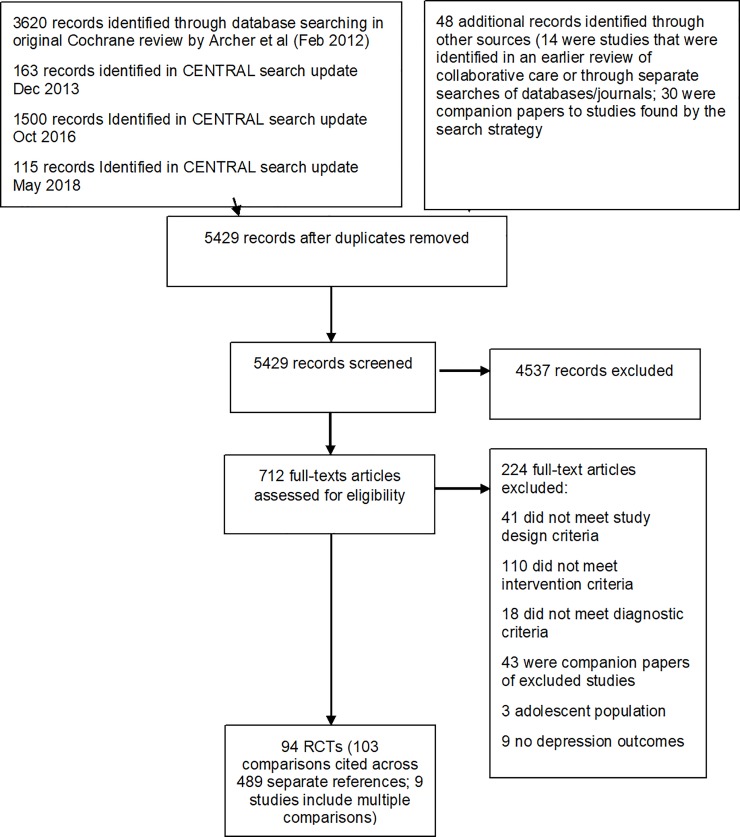
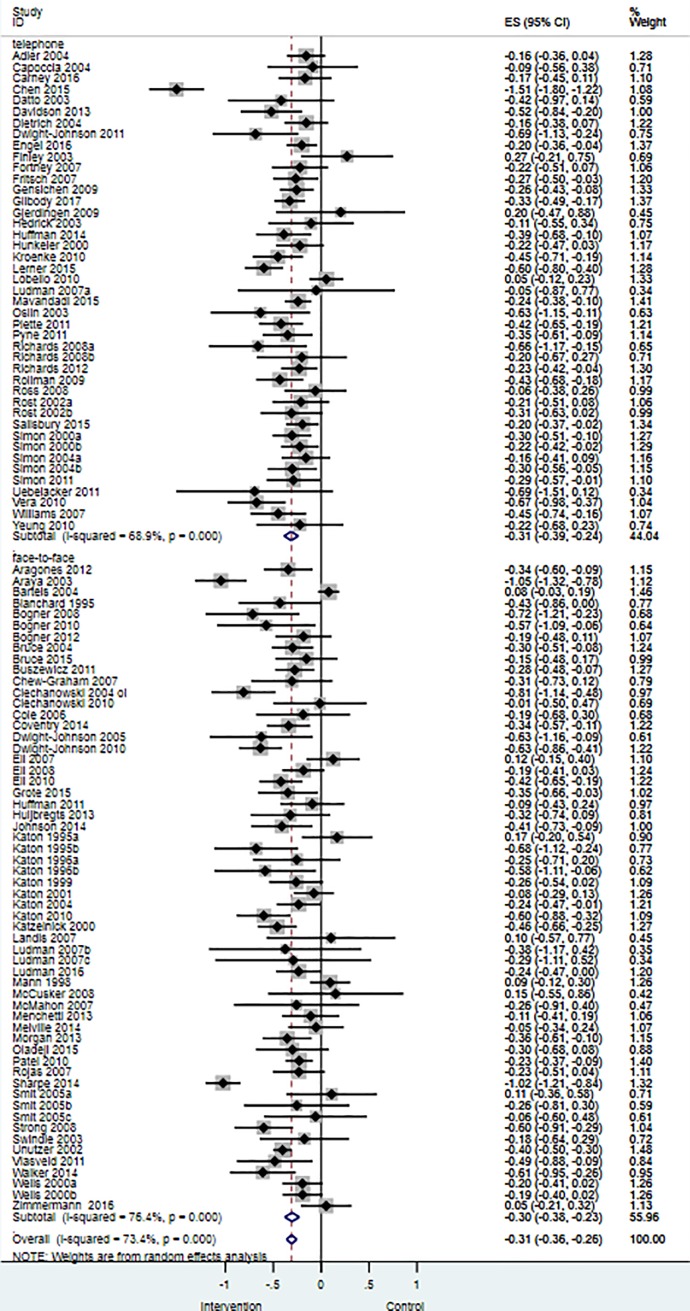
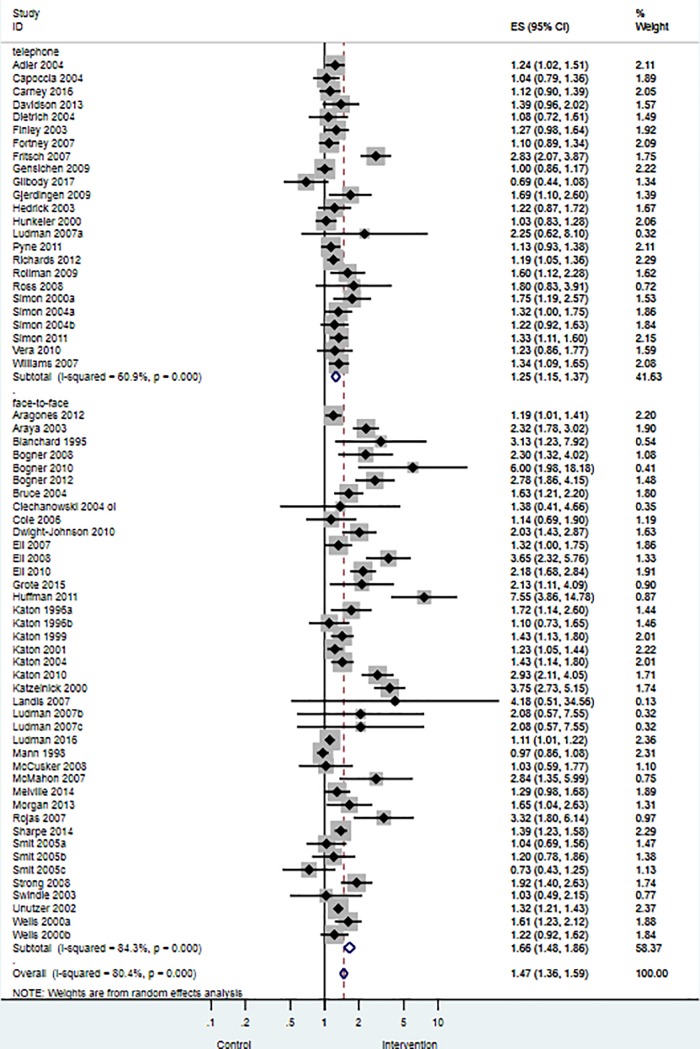
Results: Ninety-four trials were identified comprising of 103 comparisons across 24, 132 participants with depression outcomes and 67 comparisons from 15,367 participants with anti-depressant use outcomes. Telephone delivered case management did not diminish the effects of collaborative care on depressive symptoms (β = -0.01, 95% CI -0.12 to 0.10; p = 0.86). Telephone delivered case management decreased anti-depressant medication use (relative risk 0.76, 95% CI 0.63 to 0.92; p = 0.005); this effect remained when assessed simultaneously alongside other study-level moderators of collaborative care.
Conclusion: Using remote platforms such as the telephone to deliver case management may be a feasible way to implement collaborative care with no loss of effectiveness on depressive symptoms. However, adherence to anti-depressant medication may decrease when telephone case management is used.
Conflict of interest statement
The authors have declared that no competing interests exist.
Figures
References
-
- World Health Organization. Depression and other common mental disorders: global health estimates Geneva: World Health Organisation; 2017.
-
- Simon GE, VonKorff M. Recognition, management, and outcomes of depression in primary care. Arch Fam Med. 1995;4(2):99 - PubMed
-
- Donoghue J, Tylee A. The treatment of depression: prescribing patterns of antidepressants in primary care in the UK. Br J Psychiatry. 1996;168(2):164–8. - PubMed
Publication types
MeSH terms
Substances
Grants and funding
LinkOut - more resources
Full Text Sources
Medical
