


The value of radiographic markers in the diagnostic work-up of rotator cuff tears, an arthroscopic correlated study
- PMID: 31201467
- PMCID: PMC6858903
- DOI: 10.1007/s00256-019-03251-8
The value of radiographic markers in the diagnostic work-up of rotator cuff tears, an arthroscopic correlated study
Abstract
Objective: To evaluate the value of radiographs during the diagnostic work-up of rotator cuff tears, using arthroscopy as reference standard.
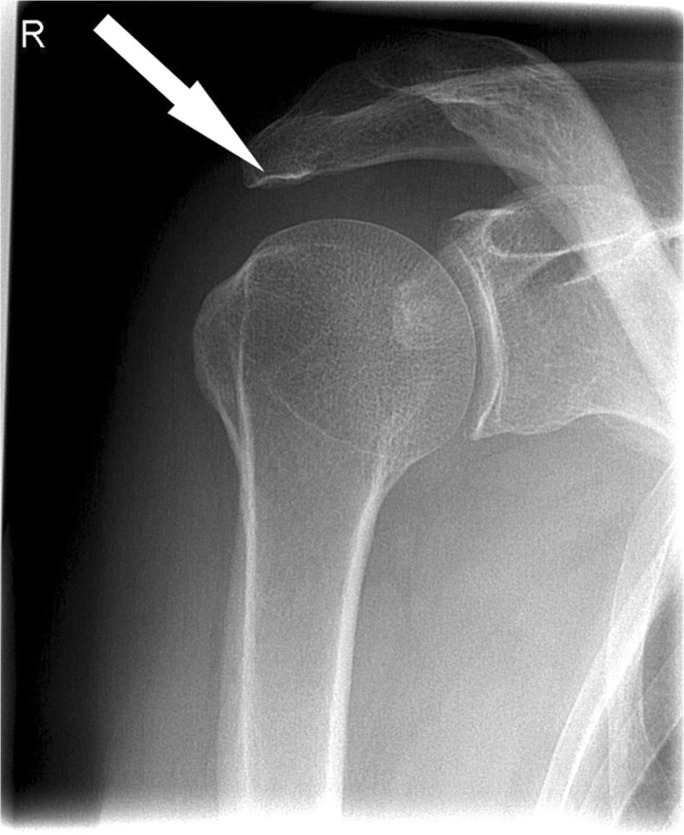
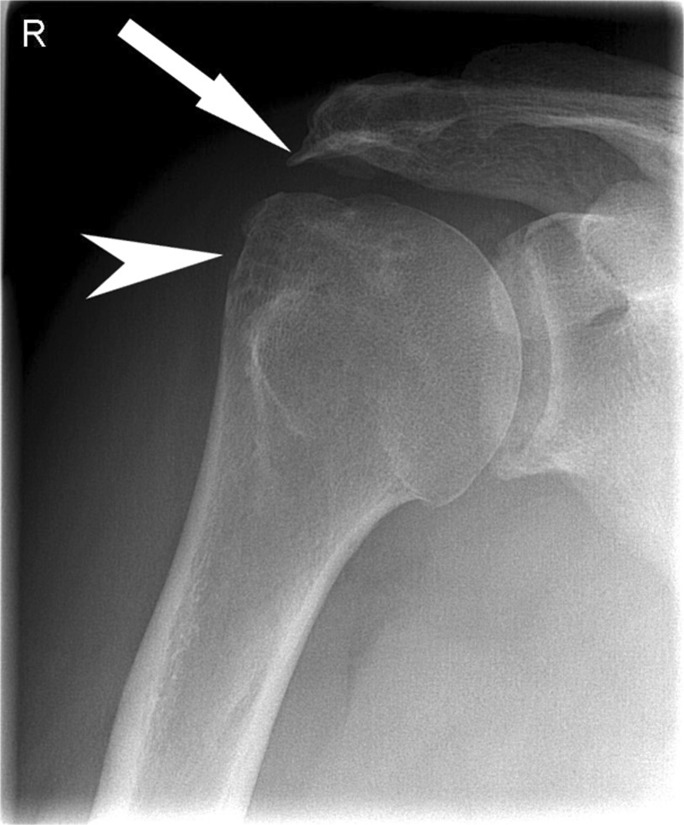
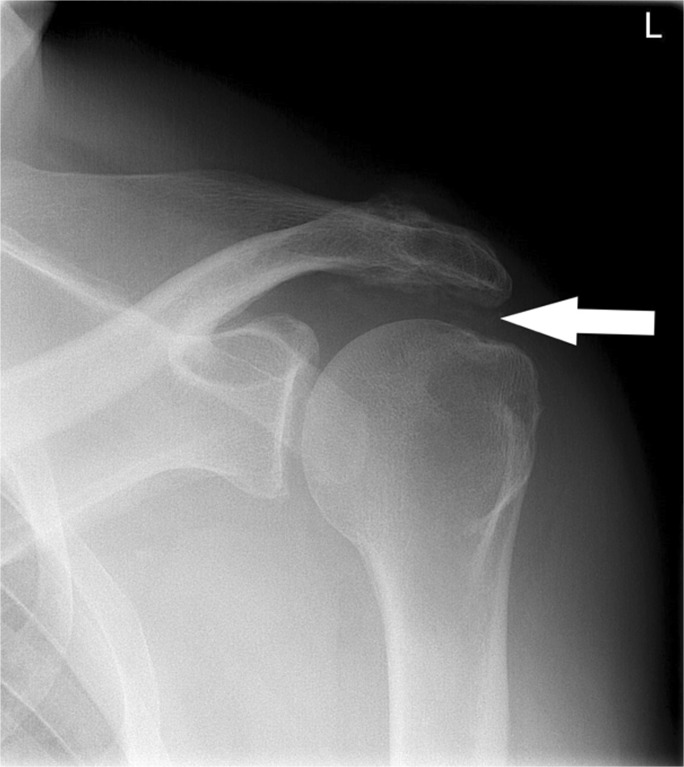
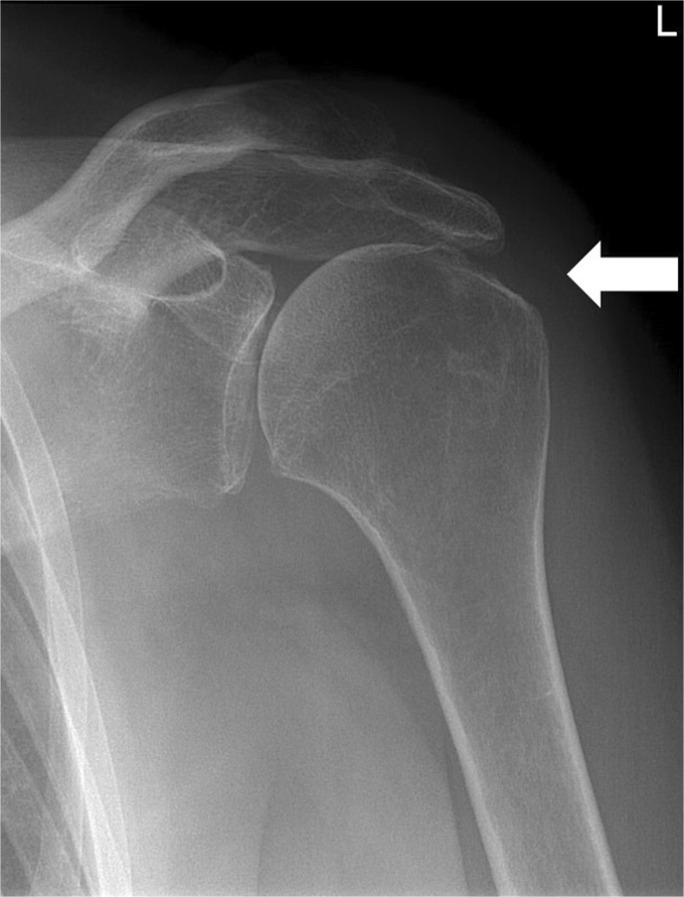
Materials and methods: This retrospective study included 236 shoulders of 236 patients. All radiographs were evaluated for inferior cortical acromial sclerosis, lateral acromial spur, superior migration of the humeral head, greater tubercle cysts, and subacromial space calcifications. Predictive value of these radiographic signs in predicting rotator cuff tears was determined with arthroscopy as reference standard.
Results: According to arthroscopy, 131 shoulders were diagnosed with rotator cuff tears. Seventy-two out of 131 shoulders (55%) had inferior cortical acromial sclerosis, 37 (28%) lateral acromial spur, 21 (16%) superior migration of the humeral head, 7 (5%) greater tubercle cysts and 15 subacromial space calcifications (11%). Inferior cortical acromial sclerosis (P = 0.001), lateral spur (P = 0.001), superior migration (P = 0.002), and cysts (P = 0.03) were significantly and independently associated with rotator cuff tears, whereas subacromial calcifications (p = 0.21) was not. Inferior cortical acromial sclerosis, superior migration, lateral acromial spur, and cysts combined have a positive predictive value of 78%.
Conclusions: The combination of inferior cortical acromial sclerosis, lateral acromial spur, superior migration of the humeral head, and greater tubercle cysts has a high positive predictive value for the presence of full-thickness rotator cuff tears. In patients with a high suspicion for having a rotator cuff tear based on radiographic findings, MRI can be performed directly without the delay and costs caused by an additional ultrasound exam.
Keywords: Arthroscopy; Diagnostic test; Predictive value; Radiographic markers; Rotator cuff tear; Shoulder pathology.
Conflict of interest statement
Jeroen J. van der Reijden, Syert L. Nienhuis, Matthijs P. Somford, Job N. Doornberg, Esther van’t Riet, Maaike P.J. van den Borne declare that they have no conflicts of interest.
Michel P.J. van den Bekerom reports a grant from Smith and Nephew and a grant from Wright/Tornier, during the conduct of the study.
Figures
References
-
- Smith C, Dattani R, Deans V, Drew S. The sourcil sign: a useful finding on plain X-ray? Should Elb. 2010;2:9–12. doi: 10.1111/j.1758-5740.2009.00034.x. - DOI
-
- Hamid N, Omid R, Yamaguchi K, Steger-May K, Stobbs G, Keener JD. Relationship of radiographic acromial characteristics and rotator cuff disease: a prospective investigation of clinical, radiographic, and sonographic findings. J Shoulder Elb Surg. 2012;21:1289–1298. doi: 10.1016/j.jse.2011.09.028. - DOI - PMC - PubMed
MeSH terms
LinkOut - more resources
Full Text Sources
Medical
