


Immunosenescence: A systems-level overview of immune cell biology and strategies for improving vaccine responses
- PMID: 31201918
- PMCID: PMC6849399
- DOI: 10.1016/j.exger.2019.110632
Immunosenescence: A systems-level overview of immune cell biology and strategies for improving vaccine responses
Abstract
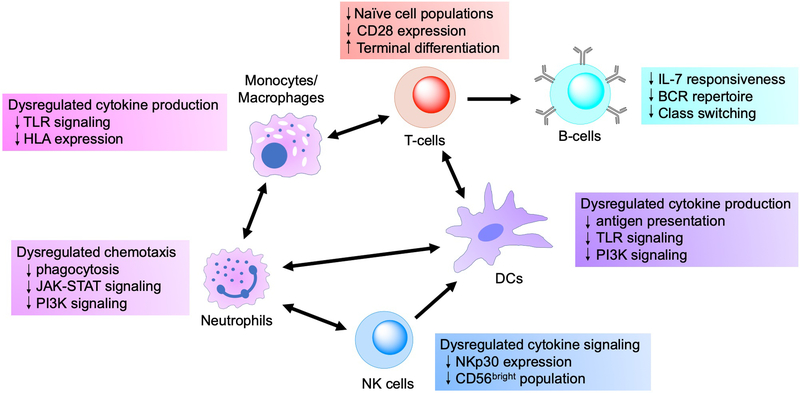
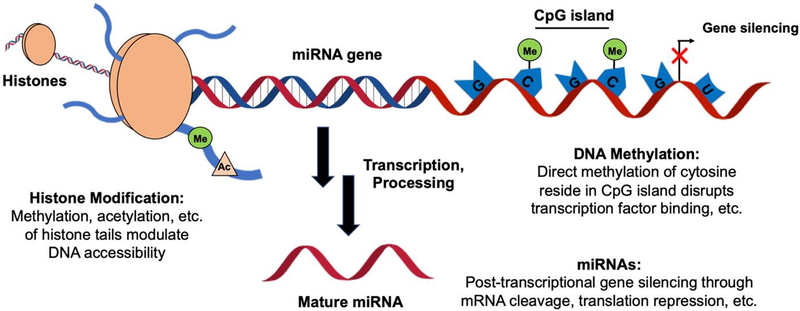
Immunosenescence contributes to a decreased capacity of the immune system to respond effectively to infections or vaccines in the elderly. The full extent of the biological changes that lead to immunosenescence are unknown, but numerous cell types involved in innate and adaptive immunity exhibit altered phenotypes and function as a result of aging. These manifestations of immunosenescence at the cellular level are mediated by dysregulation at the genetic level, and changes throughout the immune system are, in turn, propagated by numerous cellular interactions. Environmental factors, such as nutrition, also exert significant influence on the immune system during aging. While the mechanisms that govern the onset of immunosenescence are complex, systems biology approaches allow for the identification of individual contributions from each component within the system as a whole. Although there is still much to learn regarding immunosenescence, systems-level studies of vaccine responses have been highly informative and will guide the development of new vaccine candidates, novel adjuvant formulations, and immunotherapeutic drugs to improve vaccine responses among the aging population.
Keywords: Adjuvants; Aging; Immunity; Immunosenescence; Senolytics; Systems biology; Vaccinology.
Copyright © 2019. Published by Elsevier Inc.
Conflict of interest statement
COMPETING INTERESTS
Dr. Poland is the chair of a Safety Evaluation Committee for novel investigational vaccine trials being conducted by Merck Research Laboratories. Dr. Poland offers consultative advice on vaccine development to Merck & Co. Inc., Avianax, Adjuvance, Valneva, Medicago, Sanofi Pasteur, GlaxoSmithKline, and Emergent Biosolutions. Drs. Poland and Ovsyannikova hold patents related to vaccinia and measles peptide vaccines. Dr. Kennedy holds a patent related to vaccinia peptide vaccines. Dr. Kennedy has received research funding from Merck Research Laboratories to study waning immune responses to mumps vaccine. These activities have been reviewed by the Mayo Clinic Conflict of Interest Review Board and are conducted in compliance with Mayo Clinic Conflict of Interest policies. All other authors declare no competing interests.
Figures
References
Publication types
MeSH terms
Grants and funding
LinkOut - more resources
Full Text Sources
Medical
