


Co-stimulatory and co-inhibitory pathways in cancer immunotherapy
- PMID: 31202358
- PMCID: PMC7336166
- DOI: 10.1016/bs.acr.2019.03.003
Co-stimulatory and co-inhibitory pathways in cancer immunotherapy
Abstract
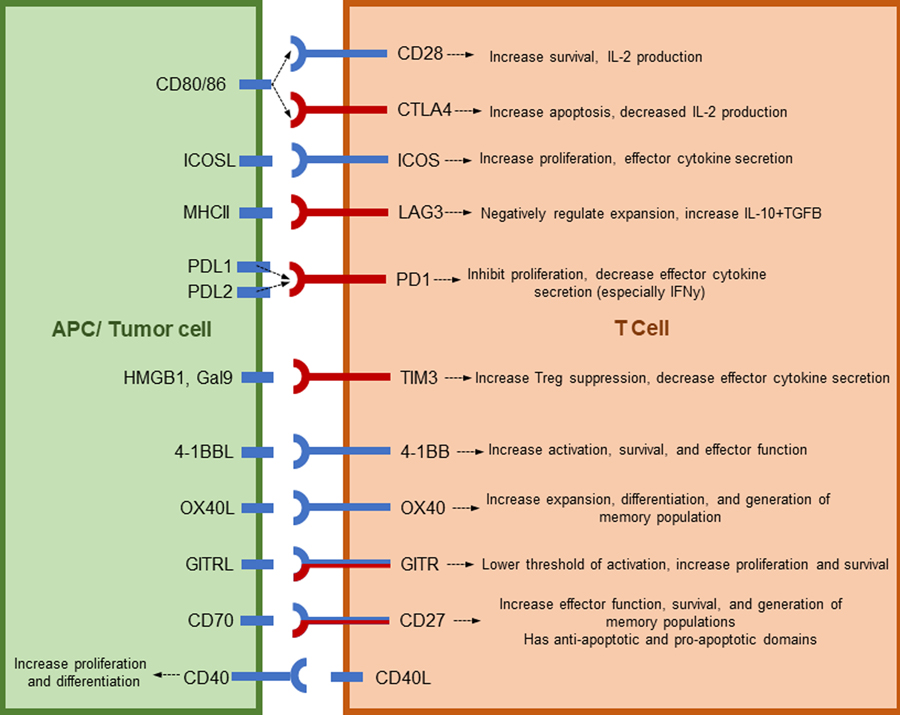
Cancer remains the leading cause of death worldwide. Traditional treatments such as surgery, radiation, and chemotherapy have had limited efficacy, especially with late stage cancers. Cancer immunotherapy and targeted therapy have revolutionized how cancer is treated, especially in patients with late stage disease. In 2013 cancer immunotherapy was named the breakthrough of the year, partially due to the established efficacy of blockade of CTLA-4 and PD-1, both T cell co-inhibitory molecules involved in tumor-induced immunosuppression. Though early trials promised success, toxicity and tolerance to immunotherapy have hindered long-term successes. Optimizing the use of co-stimulatory and co-inhibitory pathways has the potential to increase the effectiveness of T cell-mediated antitumor immune response, leading to increased efficacy of cancer immunotherapy. This review will address major T cell co-stimulatory and co-inhibitory pathways and the role they play in regulating immune responses during cancer development and treatment.
Keywords: Autoimmunity; Cancer immunotherapy; Co-inhibition; Co-stimulation; Combination therapy.
© 2019 Elsevier Inc. All rights reserved.
Conflict of interest statement
Conflict of Interest
Authors have declared that there is no conflict of interest.
Figures
References
-
- Sharpe AH, Abbas AK: T-Cell Costimulation — Biology, Therapeutic Potential, and Challenges. New England Journal of Medicine 2006, 355(10):973–975. - PubMed
-
- Vinay DS, Ryan EP, Pawelec G, Talib WH, Stagg J, Elkord E, Lichtor T, Decker WK, Whelan RL, Kumara H et al.: Immune evasion in cancer: Mechanistic basis and therapeutic strategies. Seminars in cancer biology 2015, 35 Suppl:S185–s198. - PubMed
-
- Sharpe AH, Freeman GJ: The B7–CD28 superfamily. Nature Reviews Immunology 2002, 2:116. - PubMed
Publication types
MeSH terms
Substances
Grants and funding
LinkOut - more resources
Full Text Sources
Other Literature Sources
