


Modifying Graft-versus-Host Disease in a Humanized Mouse Model by Targeting Macrophages or B-Cells
- PMID: 31205954
- PMCID: PMC6530157
- DOI: 10.1155/2019/3538963
Modifying Graft-versus-Host Disease in a Humanized Mouse Model by Targeting Macrophages or B-Cells
Abstract
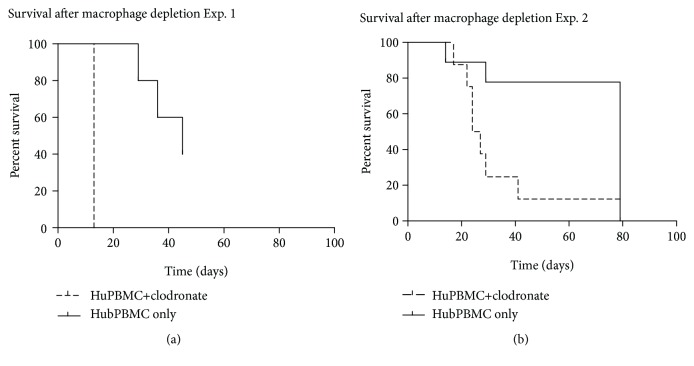
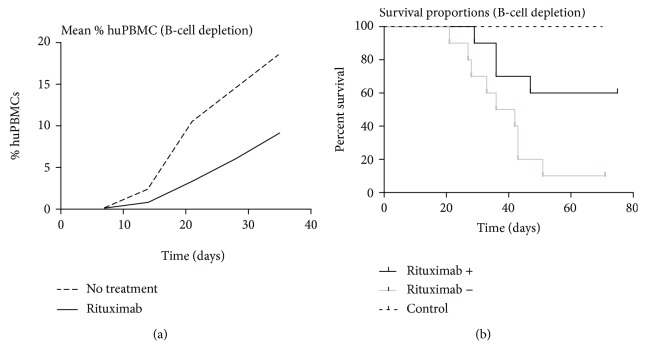
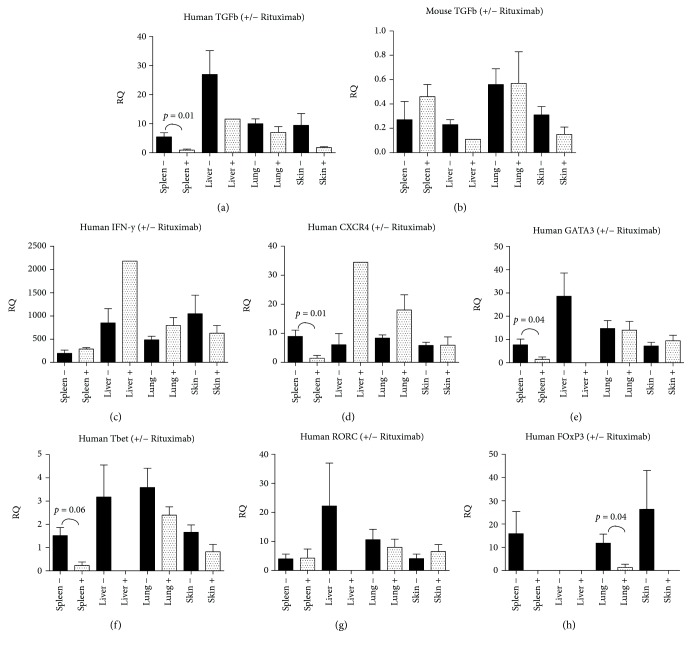
Humanized mouse models can well be modified to study specific aspects of Graft-versus-Host Disease (GvHD). This paper shows the results of both macrophage depletion and (early) B-cell depletion in a humanized mouse model using RAG2-/- γc-/- mice injected with HuPBMCs. Macrophage depletion showed a significant decrease in survival and also lead to a change in the histomorphology of the xenogeneic reaction. Higher levels of infiltrating B-cells were observed in various organs of mice depleted for macrophages. With (early) B-cell depletion using Rituximab, a clear improvement on clinical symptoms was observed, even when probably only inactivated B-cells were deleted. However, the histological examinations only showed a significant morphological effect on liver fibrosis. This may be related to a difference in the mRNA levels of TGF-β. Also, lower mRNA levels of Tregs in some organs were observed after Rituximab treatment, which contradicts that a higher number of Tregs would always be related to less severe GvHD. Our data show that both macrophage depletion and (early) B-cell depletion in a xenogeneic mouse model can influence the clinical, histological, and cytokine production of a GvHD response.
Figures


References
-
- Canninga-van Dijk M. R., van der Straaten H. M., Fijnheer R., Sanders C. J., van den Tweel J. G., Verdonck L. F. Anti-CD20 monoclonal antibody treatment in 6 patients with therapy-refractory chronic graft-versus-host disease. Blood. 2004;104(8):2603–2606. doi: 10.1182/blood-2004-05-1855. - DOI - PubMed
MeSH terms
LinkOut - more resources
Full Text Sources
Medical
