


Socio-demographic, health and institutional determinants of caesarean section among the poorest segment of the urban population: Evidence from selected slums in Dhaka, Bangladesh
- PMID: 31206004
- PMCID: PMC6558294
- DOI: 10.1016/j.ssmph.2019.100415
Socio-demographic, health and institutional determinants of caesarean section among the poorest segment of the urban population: Evidence from selected slums in Dhaka, Bangladesh
Erratum in
-
Erratum regarding missing Declaration of Competing Interest statements in previously published articles.SSM Popul Health. 2020 Dec 10;12:100710. doi: 10.1016/j.ssmph.2020.100710. eCollection 2020 Dec. SSM Popul Health. 2020. PMID: 33381633 Free PMC article.
Abstract
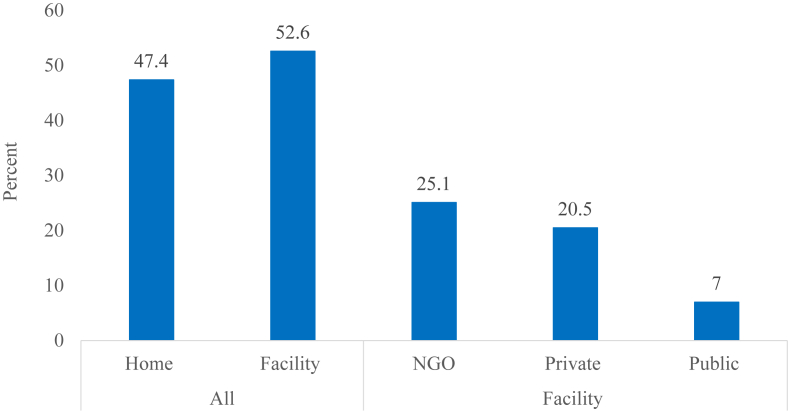
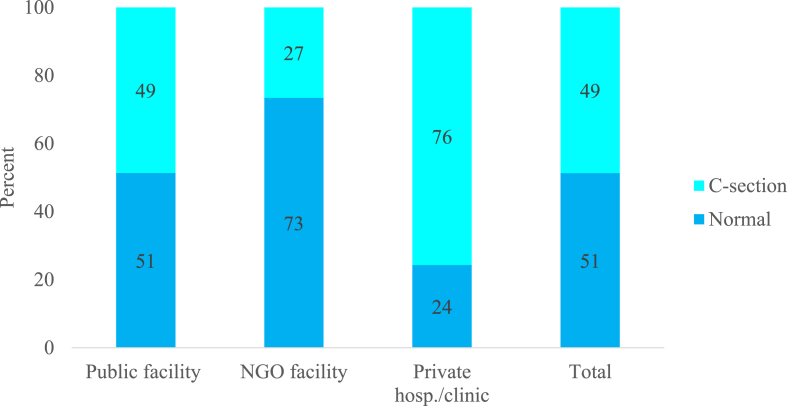
Caesarean sections (CS) is the most common lifesaving surgeries for obstructed labour and other emergency obstetrical conditions. The WHO had recommended ideal rate for CS to be between 5% and 15%. The rate higher than 15% indicates overused other than lifesaving. Bangladesh has experienced a dramatic increase in CS delivery from 4% in 2004 to 23% in 2014. This increase is elevated by the several factors including maternal education, maternal request or elective CS, and by the urban richest population. However, little is known about the use CS by the urban poorest population. Therefore, the study aimed to examine and identify the factors associated with CS among the urban disadvantaged section of the population. A total of 1063 randomly chosen women aged 15-49 years from the population of 121,912 residing five-different slums were interviewed during November-December 2016. CS delivery was considered as outcome variable. Both bivariate and multivariable statistical analyses were carried-out. We performed logistic regression analyses to examine the net-effect of independent variables on outcome variable. Over 25% of total deliveries and 50% of facility-based deliveries were CS. The odds of CS delivery was 3.4-fold greater among better-off women than poorest. Women who had 4 + ANC checks-up during pregnancy had a 2-fold higher odds of CS delivery than women of ANC check-up. In private facilities, 76% of births were delivered as CS, followed by 51% in public facilities and 24% in NGO facilities. The likelihood of CS delivery in private facilities was 9.2-fold greater than NGO facilities after controlling for women socio-demographic, pregnancy and delivery characteristics. Thus, the high use of CS is largely associated with private facility, ANC visits and household wealth. Therefore, the Government of Bangladesh should take immediate actions by designing new policies and regulations to ensure CS for the lifesaving condition, not for financial gain.
Keywords: Bangladesh; Caesarean section; Delivery and institutional characteristics; Demographic surveillance systems; Maternal pregnancy; Urban slums.
Figures
References
-
- Ahmed S.M., Alam B.B., Iqbal A. Bangladesh Health Systems Review. 2015;5(3) 2015.
-
- Ajeet S., Nandkishore K. The boom in unnecessary caesarean surgeries is jeopardizing women's health. Health Care for Women International. 2013;34(6):513–521. - PubMed
-
- Andaleeb S.S. Public and private hospitals in Bangladesh: Service quality and predictors of hospital choice. Health Policy and Planning. 2000;15(1):95–102. - PubMed
-
- Barros F.C., Victora C.G., Barros A.J., Santos I.S., Albernaz E., Matijasevich A. The challenge of reducing neonatal mortality in middle-income countries: Findings from three Brazilian birth cohorts in 1982, 1993, and 2004. The Lancet. 2005;365(9462):847–854. - PubMed
LinkOut - more resources
Full Text Sources
