The maternal prepregnancy body mass index and the risk of attention deficit hyperactivity disorder among children and adolescents: a systematic review and meta-analysis
- PMID: 31208166
- PMCID: PMC6801198
- DOI: 10.3345/kjp.2019.00185
The maternal prepregnancy body mass index and the risk of attention deficit hyperactivity disorder among children and adolescents: a systematic review and meta-analysis
Abstract
Background: Attention deficit hyperactivity disorder (ADHD) symptoms have a major impact on individuals, families, and society. Therefore identification risk factors of ADHD are a public health priority.
Purpose: This is meta-analysis evaluated the association between maternal prepregnancy body mass index and the risk of ADHD among the resulting offspring.
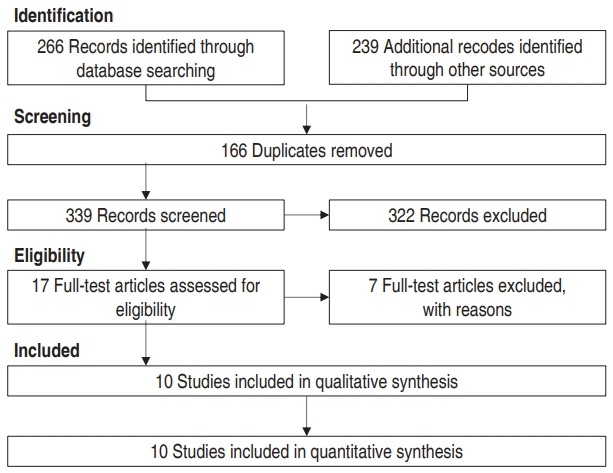
Methods: The search identified studies published through December 2018 in the PubMed, Web of Science, and Scopus databases. The odds ratios (ORs) or hazard ratios (HRs) with 95% confidence intervals (CI) extracted from eligible studies were used as the common measure of association among studies.
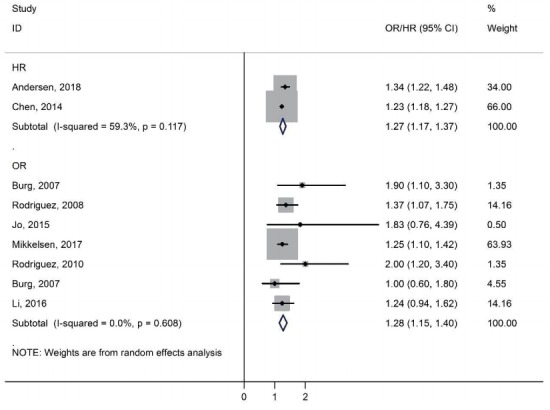
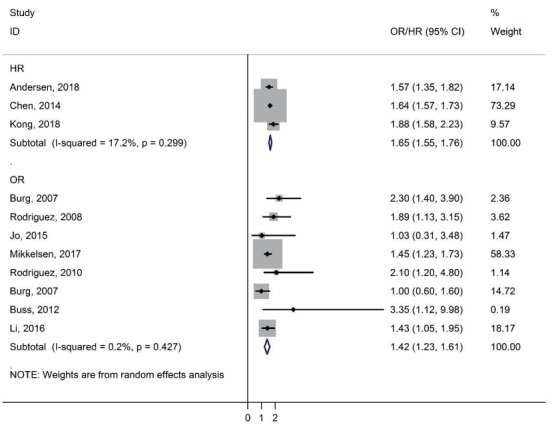
Results: A significant association was found between overweight women and the risk of ADHD among children with the pooled HR and OR estimates (HR, 1.27 and 95% CI, 1.17-1.37; OR, 1.28 and 95% CI, 1.15-1.40, respectively). This association was significant between obese women and the risk of ADHD among children and adolescents with the pooled estimates of HR and OR (HR, 1.65 and 95% CI, 1.55-1.76; OR, 1.42 and 95% CI, 1.23-1.61).
Conclusion: The current epidemiological studies present sufficient evidence that prepregnancy overweight and obesity are significantly associated with an increased risk of ADHD among children and adolescents. These findings provide a new approach to preventing ADHD by controlling weight gain in the prenatal period, which should be considered by policymakers.
Keywords: Attention deficit disorder with hyperactivity; Body mass index; Pregnancy.
Conflict of interest statement
No potential conflict of interest relevant to this article was reported.
Figures
References
-
- Polanczyk G, de Lima MS, Horta BL, Biederman J, Rohde LA. The worldwide prevalence of ADHD: a systematic review and metaregression analysis. Am J Psychiatry. 2007;164:942–8. - PubMed
-
- Sciberras E, Mulraney M, Silva D, Coghill D. Prenatal risk factors and the etiology of ADHD-review of existing evidence. Curr Psychiatry Rep. 2017;19:1. - PubMed
-
- Plomp E, Van Engeland H, Durston S. Understanding genes, environment and their interaction in attention-deficit hyperactivity disorder: is there a role for neuroimaging? Neuroscience. 2009;164:230–40. - PubMed
Grants and funding
LinkOut - more resources
Full Text Sources