Protective factors of marital stability in long-term marriage globally: a systematic review
- PMID: 31208194
- PMCID: PMC6702121
- DOI: 10.4178/epih.e2019023
Protective factors of marital stability in long-term marriage globally: a systematic review
Abstract
Objectives: In recent decades, due to the high prevalence of divorce in numerous countries and the detrimental aftermath thereof, it has become increasingly important to study the components of marital stability. The current study explored fundamental protective factors in long-term marriage through a systematic review.
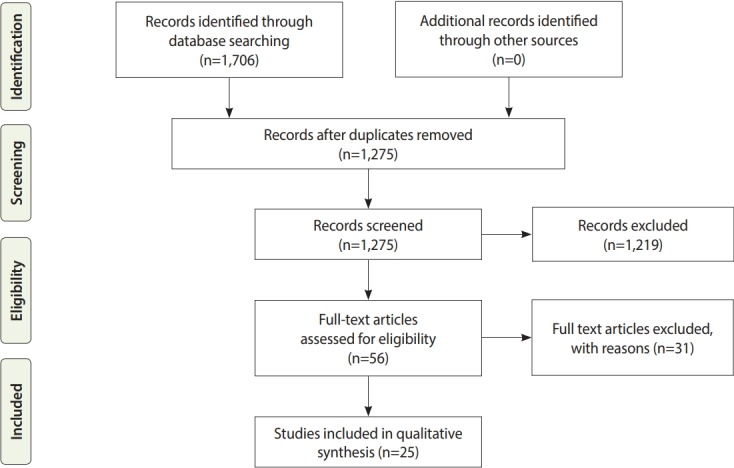
Methods: Searches for relevant publications were conducted in Embase, Web of Science, PubMed, Scopus, Science Direct, Magiran, and Scientific Information Database from their inception through January 30, 2019. Through the keyword search, 1,706 articles were found, of which 25 articles remained after screening based on the eligibility criteria.
Results: The extracted protective factors associated with marital stability in long-term marriage were classified as interpersonal and intrapersonal. Notable extracted factors included spirituality and religion, commitment, sexual relationship, communication, children, love and attachment, intimacy, and conflict resolution approach. These findings show that some aspects of relationships, such as commitment, act to preserve the pillars of marriage in critical situations, while other aspects, such as intimacy, help to construct marital identity and satisfaction.
Conclusions: The identified components of marital stability are structures that enhance a couple's identity and sense of togetherness. Identifying the specific aspects of marital relationships that contribute to marital stability may help specialists and researchers to target specific types of marital interaction that may enhance the happiness and longevity of relationships, thereby preventing avoidable divorces.
Keywords: Divorce; Long-term marriage; Marital stability; Protective factors; Systematic review.
Conflict of interest statement
The authors have no conflicts of interest to declare for this study.
Figures
References
-
- Benson JJ, Coleman M. Older adults developing a preference for living apart together. J Marriage Fam. 2016;78:797–812.
-
- Bachand LL, Caron SL. Ties that bind: a qualitative study of happy long-term marriages. Contemp Fam Ther. 2001;23:105–121.
-
- Cohen O, Geron Y, Farchi A. A typology of marital quality of enduring marriages in Israel. J Fam Issues. 2010;31:727–747.
-
- Lawrence E, Nylen K, Cobb RJ. Prenatal expectations and marital satisfaction over the transition to parenthood. J Fam Psychol. 2007;21:155–164. - PubMed
-
- Hollist CS, Miller RB. Perceptions of attachment style and marital quality in midlife marriage. Fam Relat. 2005;54:46–57.
Publication types
MeSH terms
LinkOut - more resources
Full Text Sources