


Cerebrovascular plasticity: Processes that lead to changes in the architecture of brain microvessels
- PMID: 31208241
- PMCID: PMC6681538
- DOI: 10.1177/0271678X19855875
Cerebrovascular plasticity: Processes that lead to changes in the architecture of brain microvessels
Abstract
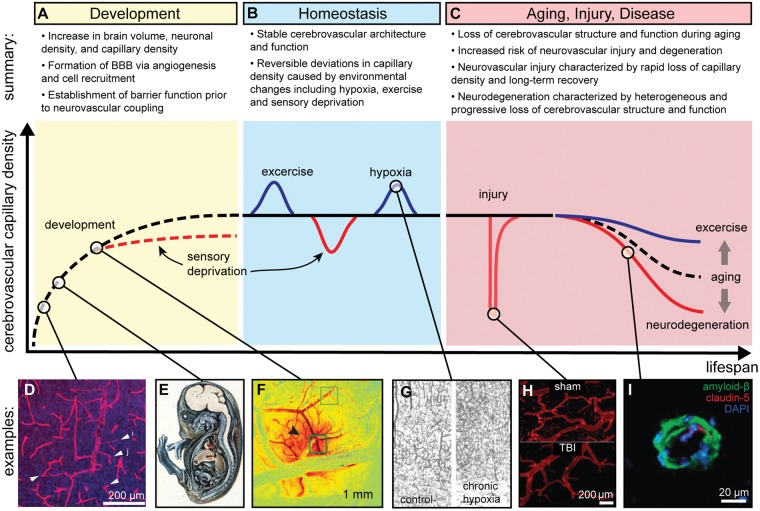
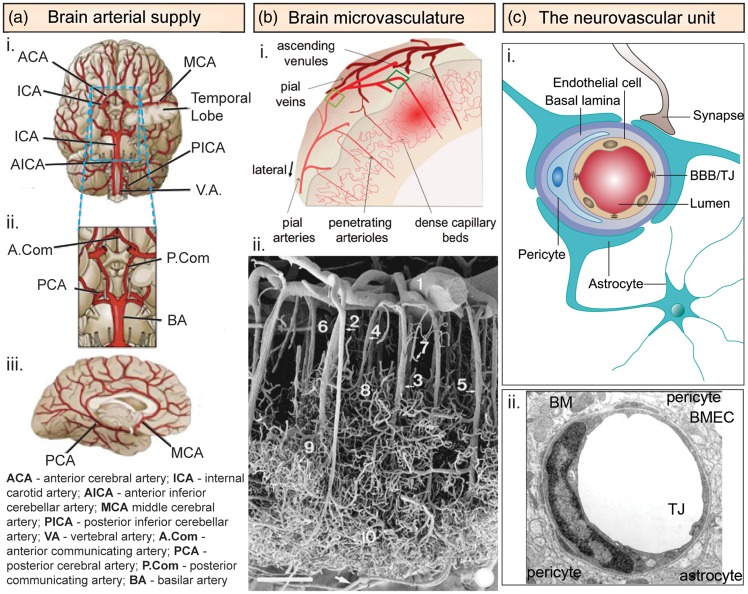
The metabolic demands of the brain are met by oxygen and glucose, supplied by a complex hierarchical network of microvessels (arterioles, capillaries, and venules). Transient changes in neural activity are accommodated by local dilation of arterioles or capillaries to increase cerebral blood flow and hence nutrient availability. Transport and communication between the circulation and the brain is regulated by the brain microvascular endothelial cells that form the blood-brain barrier. Under homeostatic conditions, there is very little turnover in brain microvascular endothelial cells, and the cerebrovascular architecture is largely static. However, changes in the brain microenvironment, due to environmental factors, disease, or trauma, can result in additive or subtractive changes in cerebrovascular architecture. Additions occur by angiogenesis or vasculogenesis, whereas subtractions occur by vascular pruning, injury, or endothelial cell death. Here we review the various processes that lead to changes in the cerebrovascular architecture, including sustained changes in the brain microenvironment, development and aging, and injury, disease, and repair.
Keywords: Cerebrovascular plasticity; blood–brain barrier; brain microvascular endothelial cells; cerebrovascular architecture; neurovascular coupling.
Figures
References
-
- Aiello LC, Wheeler P. The expensive-tissue hypothesis – The brain and the digestive-system in human and primate evolution. Curr Anthropol 1995; 36(2): 199–221.
-
- Zlokovic BV. Neurovascular mechanisms of Alzheimer’s neurodegeneration. Trends Neurosci 2005; 28(4): 202–208. - PubMed
Publication types
MeSH terms
Grants and funding
LinkOut - more resources
Full Text Sources
Miscellaneous
