


Novel interconnections of HOG signaling revealed by combined use of two proteomic software packages
- PMID: 31208443
- PMCID: PMC6572760
- DOI: 10.1186/s12964-019-0381-z
Novel interconnections of HOG signaling revealed by combined use of two proteomic software packages
Abstract
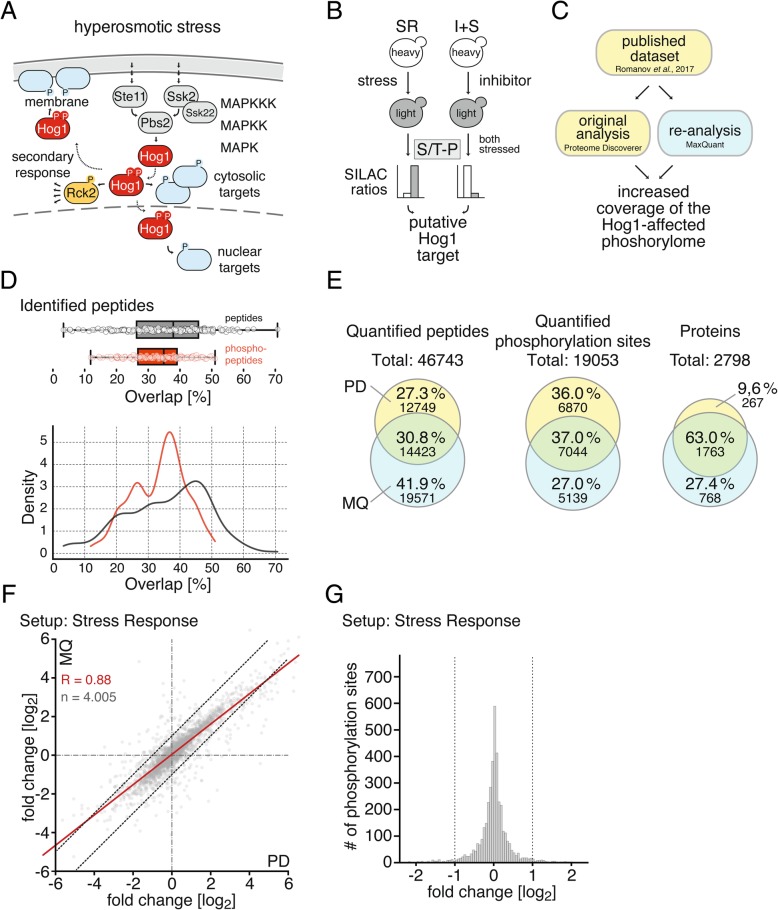
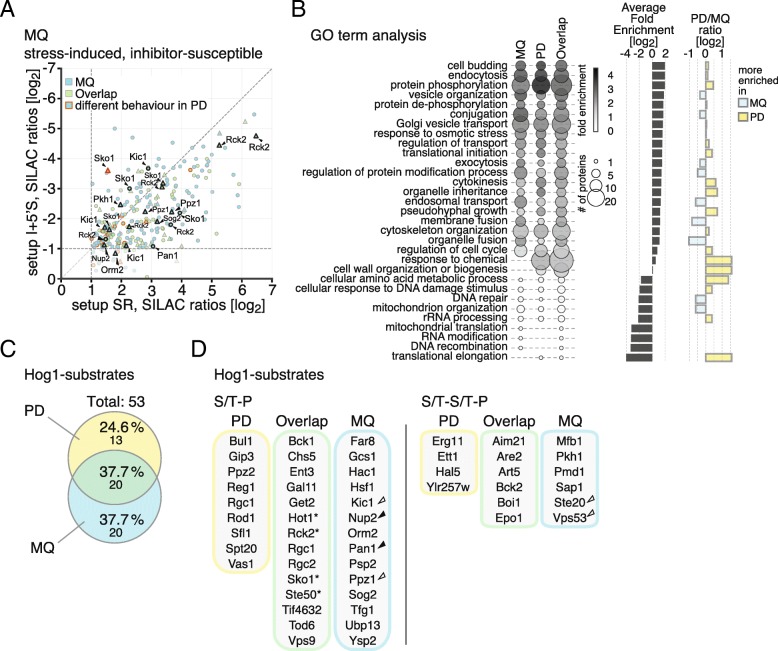
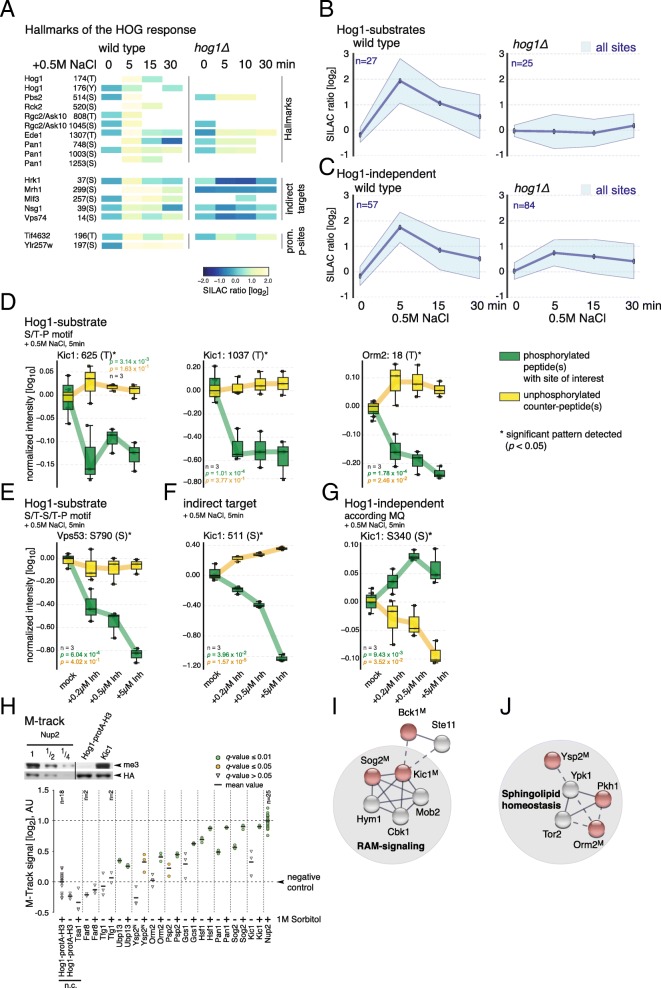
Modern quantitative mass spectrometry (MS)-based proteomics enables researchers to unravel signaling networks by monitoring proteome-wide cellular responses to different stimuli. MS-based analysis of signaling systems usually requires an integration of multiple quantitative MS experiments, which remains challenging, given that the overlap between these datasets is not necessarily comprehensive. In a previous study we analyzed the impact of the yeast mitogen-activated protein kinase (MAPK) Hog1 on the hyperosmotic stress-affected phosphorylome. Using a combination of a series of hyperosmotic stress and kinase inhibition experiments, we identified a broad range of direct and indirect substrates of the MAPK. Here we re-evaluate this extensive MS dataset and demonstrate that a combined analysis based on two software packages, MaxQuant and Proteome Discoverer, increases the coverage of Hog1-target proteins by 30%. Using protein-protein proximity assays we show that the majority of new targets gained by this analysis are indeed Hog1-interactors. Additionally, kinetic profiles indicate differential trends of Hog1-dependent versus Hog1-independent phosphorylation sites. Our findings highlight a previously unrecognized interconnection between Hog1 signaling and the RAM signaling network, as well as sphingolipid homeostasis.
Keywords: High-osmolarity glycerol (HOG); Hog1; Hyperosmotic stress response; Kic1; MaxQuant; Mitogen-activated protein kinase (MAPK); ORMDL; Orm2; Proteome discoverer; Proteomics; p38.
Conflict of interest statement
The authors declare that they have no competing interests.
Figures
References
Publication types
MeSH terms
Substances
LinkOut - more resources
Full Text Sources
Molecular Biology Databases
Miscellaneous
