


Increased risk of non-multiple sclerosis demyelinating syndromes in patients with preexisting septicaemia: a nationwide retrospective cohort study
- PMID: 31209183
- PMCID: PMC6613738
- DOI: 10.1136/postgradmedj-2019-136667
Increased risk of non-multiple sclerosis demyelinating syndromes in patients with preexisting septicaemia: a nationwide retrospective cohort study
Abstract
Background: Growing evidence shows links between septicaemia and non-multiple sclerosis demyelinating syndromes (NMSDS); nevertheless, epidemiological data are still very limited. This study aimed to explore the relationship between septicaemia and NMSDS in a general population.
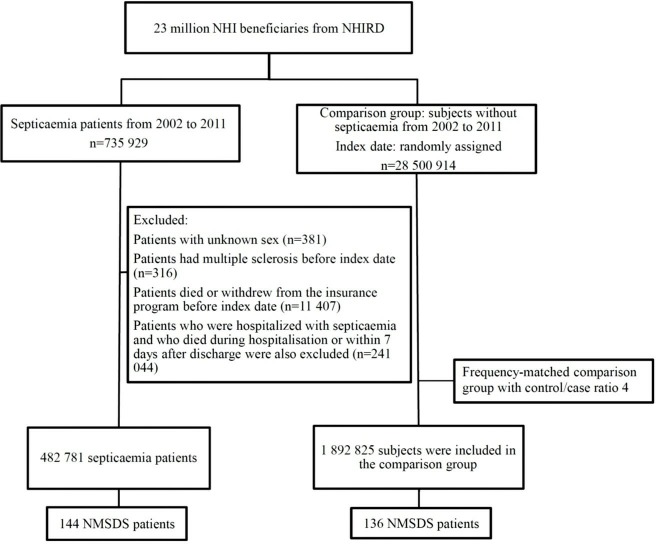
Methods: The study included 482 781 individuals diagnosed with septicaemia and 1 892 825 age/sex-matched non-septicaemia patients for the comparison. Data were drawn from a population-based nationwide National Health Insurance Research Database Taiwan, from 1 January 2002 to 31 December 2011. The two cohorts of patients with and without septicaemia were followed up for the occurrence of NMSDS. The Cox-proportional hazard regression model was performed to estimate adjusted HR after multivariate adjustment.
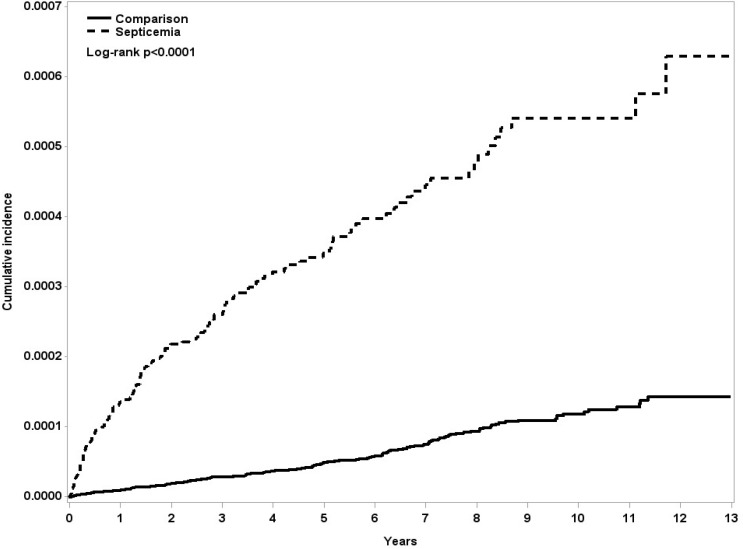
Results: Individuals with septicaemia had a 4.17-fold (95% CI 3.21 to 5.4, p < 0.001) higher risk to develop NMSDS compared with those without septicaemia. Patients aged <65 years had a greater NMSDS risk (<45 years: HR = 6.41, 95% CI 3.65 to 11.3, p < 0.001; 45-64 years: HR = 6.66, 95% CI 3.98 to 11.2, p < 0.001). Furthermore, females with septicaemia and individuals with higher severity of septicaemia were associated with increased risks of developing NMSDS.
Conclusions: Our results indicated that patients with septicaemia were likely to develop NMSDS. A possible contributing role of septicaemia in increasing the hazard of NMSDS is proposed, based on the outcome that individuals with higher severity of septicaemia carried elevated threat of encountering NMSDS.
Keywords: acute disseminated encephalomyelitis; demyelination; septicaemia; transverse myelitis.
© Author(s) (or their employer(s)) 2019. Re-use permitted under CC BY-NC. No commercial re-use. See rights and permissions. Published by BMJ.
Conflict of interest statement
Competing interests: No, there are no competing interests for any author.
Figures
References
MeSH terms
Substances
LinkOut - more resources
Full Text Sources
Medical
