


A Hierarchical Watershed Model of Fluid Intelligence in Childhood and Adolescence
- PMID: 31211362
- PMCID: PMC7029679
- DOI: 10.1093/cercor/bhz091
A Hierarchical Watershed Model of Fluid Intelligence in Childhood and Adolescence
Abstract
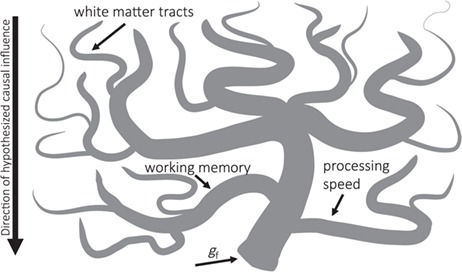
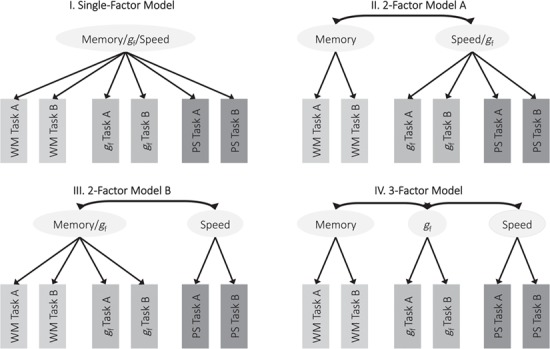
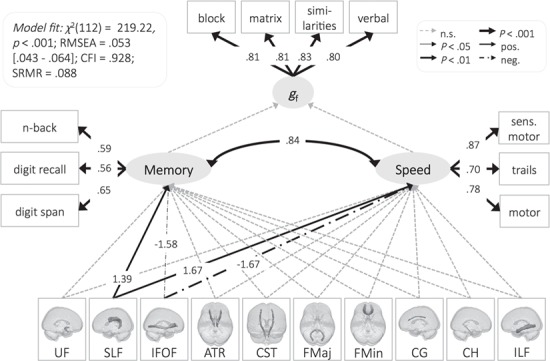
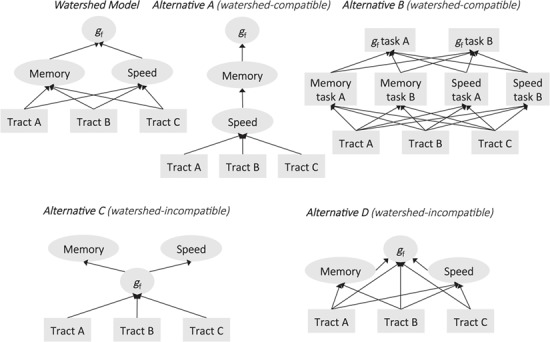
Fluid intelligence is the capacity to solve novel problems in the absence of task-specific knowledge and is highly predictive of outcomes like educational attainment and psychopathology. Here, we modeled the neurocognitive architecture of fluid intelligence in two cohorts: the Centre for Attention, Leaning and Memory sample (CALM) (N = 551, aged 5-17 years) and the Enhanced Nathan Kline Institute-Rockland Sample (NKI-RS) (N = 335, aged 6-17 years). We used multivariate structural equation modeling to test a preregistered watershed model of fluid intelligence. This model predicts that white matter contributes to intermediate cognitive phenotypes, like working memory and processing speed, which, in turn, contribute to fluid intelligence. We found that this model performed well for both samples and explained large amounts of variance in fluid intelligence (R2CALM = 51.2%, R2NKI-RS = 78.3%). The relationship between cognitive abilities and white matter differed with age, showing a dip in strength around ages 7-12 years. This age effect may reflect a reorganization of the neurocognitive architecture around pre- and early puberty. Overall, these findings highlight that intelligence is part of a complex hierarchical system of partially independent effects.
Keywords: fractional anisotropy; processing speed; structural equation modeling; watershed model; working memory.
© The Author(s) 2019. Published by Oxford University Press.
Figures



References
-
- Ackerman PL, Beier ME, Boyle MO. 2005. Working memory and intelligence: the same or different constructs? Psychol Bull. 131:30–60. - PubMed
-
- Alloway TP. 2007. Automated working memory assessment. London: The Psychological Corporation
-
- Blum D, Holling H. 2017. Spearman’s law of diminishing returns. A meta-analysis. Intelligence. 65:60–66.
Publication types
MeSH terms
Grants and funding
LinkOut - more resources
Full Text Sources
