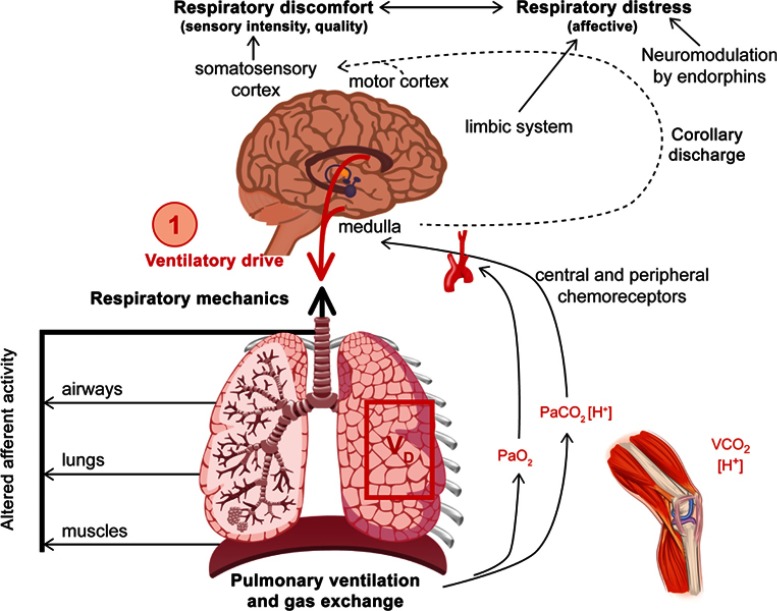
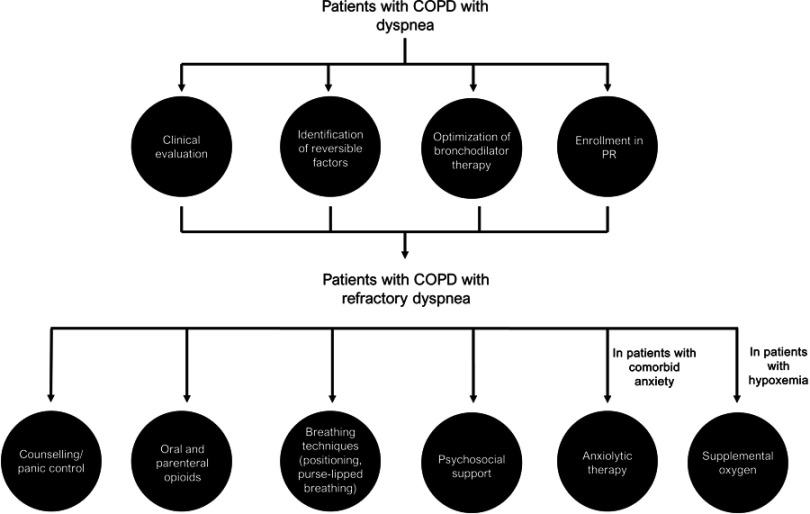
Activity-related dyspnea in chronic obstructive pulmonary disease: physical and psychological consequences, unmet needs, and future directions
- PMID: 31213793
- PMCID: PMC6538882
- DOI: 10.2147/COPD.S188141
Activity-related dyspnea in chronic obstructive pulmonary disease: physical and psychological consequences, unmet needs, and future directions
Abstract
Dyspnea is a distressing, debilitating, and near-ubiquitous symptom affecting patients with COPD. In addition to the functional consequences of dyspnea, which include activity limitation and reduced exercise tolerance, it is important to consider its psychological impact on patients with COPD, such as onset of depression or anxiety. Moreover, the anticipation of dyspnea itself can have a significant effect on patients' emotions and behavior, with patients frequently self-limiting physical activity to avoid what has become the hallmark symptom of COPD. Dyspnea is, therefore, a key target for COPD treatments. Pharmacologic treatments can optimize respiratory mechanics, provide symptom relief, and reduce patients' increased inspiratory neural drive to breathe. However, it is important to acknowledge the value of non-pharmacologic interventions, such as pulmonary rehabilitation and patient self-management education, which have proven to be invaluable tools for targeting the affective components of dyspnea. Furthermore, it is important to encourage maintenance of physical activity to optimize long-term patient outcomes. Here, we review the physiological and psychological consequences of activity-related dyspnea in COPD, assess the efficacy of modern management strategies in improving this common respiratory symptom, and discuss key unmet clinical and research needs that warrant further immediate attention.
Keywords: chronic obstructive pulmonary disease; dyspnea; management; physiology; psychology.
Conflict of interest statement
NAH has received honoraria for serving on an advisory board or as a consultant for Genentech Inc., Roche, Sunovion Pharmaceuticals Inc., Novartis AG, AstraZeneca plc, and GlaxoSmithKline plc. His institution has received research grants on his behalf from Genentech, GlaxoSmithKline plc, Boehringer Ingelheim GmbH, Mylan., Sunovion Pharmaceuticals Inc., and AstraZeneca plc. DEO serves as a consultant to AstraZeneca plc, Boehringer Ingelheim GmbH, GlaxoSmithKline plc, and Novartis AG, and serves on the advisory boards of AstraZeneca plc, and Boehringer Ingelheim GmbH. His institution has received grant support from Boehringer Ingelheim GmbH and Novartis AG. DEO co-edited a book titled Dyspnea: Mechanisms, Measurement, and Management, 3rd edition, published by CRC Press, Taylor and Francis Group, and may receive royalties from sales of this book. The authors report no other conflicts of interest in this work.
Figures