. 2019 Aug:146:104295.
doi: 10.1016/j.phrs.2019.104295. Epub 2019 Jun 16.

Inhibition of FPR2 impaired leukocytes recruitment and elicited non-resolving inflammation in acute heart failure

Affiliations

Inhibition of FPR2 impaired leukocytes recruitment and elicited non-resolving inflammation in acute heart failure

Vasundhara Kain et al. Pharmacol Res. 2019 Aug.

Abstract

Lifestyle or age-related risk factors over-activate the inflammation that triggers acute heart failure (HF)-related mortality following myocardial infarction (MI). Post-MI activated leukocytes express formyl peptide receptor 2 (FPR2) that is essential for inflammation-resolution and in cardiac healing. However, the role of FPR2 in acute HF is incomplete and remain of interest. Here, we aimed to determine whether pharmacological inhibition of FPR2 perturb leukocyte trafficking in acute HF. Male C57BL/6 (8-12 weeks) mice were subjected to acute HF (MI-d1) using permanent coronary artery ligation that develops irreversible acute and chronic heart failure. FPR2 antagonist WRW4 (1 μg/kg/day) was subcutaneously injected 3 h post-MI maintaining saline-injected MI-controls. Leukocytes were quantitated using flow cytometry, and acute decompensated HF was confirmed using echocardiography and histology. FPR2 inhibition decreased the expression of FPR2 in the LV and spleen tissues. Administration of WRW4 inhibitor to mice primed immature and inactive neutrophils infiltration Ly6Gint and intensified the Ccl2 expression compared to MI-control in the infarcted LV post-MI. Leukocyte profiling revealed an overall decrease in monocytes (23.3 ± 2%) in WRW4-injected mice compared with MI-control (49.1 ± 2%) in infarcted LV. FPR2 inhibition increased F4/80+/Ly6Chi pro-inflammatory macrophages (14.8 ± 2%) compared with MI-control (10 ± 1%) with increased transcripts of pro-inflammatory markers TNF-α and IL-1β, and decreased Arg-1 expression in the infarcted LV compared to MI-controls is suggestive of the impaired acute inflammatory response. Inhibition of FPR2 using WRW4 also disturbed splenocardiac leukocytes recruitment by priming immature neutrophils leading to the onset of incomplete resolution signaling in acute decompensated HF post-MI.

Keywords: Formyl peptide receptor; Inflammation; Leukocytes; Myocardial infarction; Resolution of inflammation.


Conflict of interest statement

Conflict of interest - none.

Figures

Figure 1.
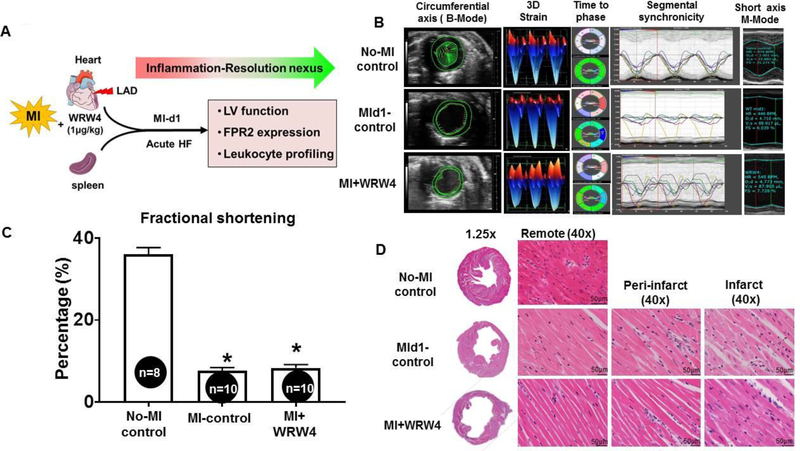
Figure 1.. FPR2-antagonist WRW4 leads to LV dysfunction post-MI.
A. An experimental design indicating WRW4 injection strategy in coronary artery ligation model with time points. B. Speckle tracking-based LV function analyses using echocardiography. C. Bar graph representing percentage fractional shortening at d1 in MI-control and WRW4-injected mice post-MI compared to no-MI naïve controls. D. Hematoxylin and eosin images of no-MI, MI-control, and MI+WRW4-injected mice LV (remote area, peri-infarct, and infarct) post-MI. Images are taken at 40X; scale=50μM. *p<0.05 vs no-MI controls; values are means ±SEM; n=6–8 mice/group.
Figure 2.
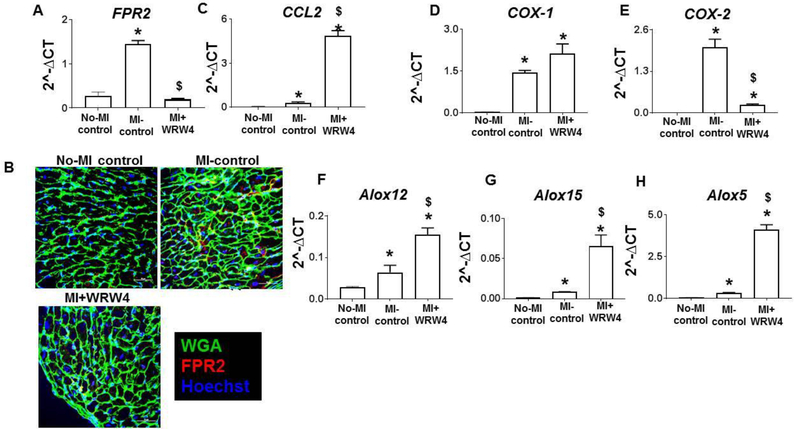
Figure 2.. WRW4 upregulated monocyte marker ccl2 along with LOXs with COX-1 post-MI.
A. Bar graph representing mRNA expression of FPR2 normalized with HPRT-1 in LV. B. representative LV images indicating FPR2 (red) expression with wheat germ agglutinin (WGA) and hoechst (blue) from MI-control and MI+RvD1-injected mice (scale bars: 20 μm). Bar graph representing mRNA expression of C. CCL2 D. COX-1 E. COX-2 F. ALOX12 G. ALOX15 H. ALOX5 in LV normalized with HPRT-1. *p<0.05 versus no-MI. $p < 0.05 versus post MI-D1 group. Values are means ±SEM; n=5 mice/group.
Figure 3.
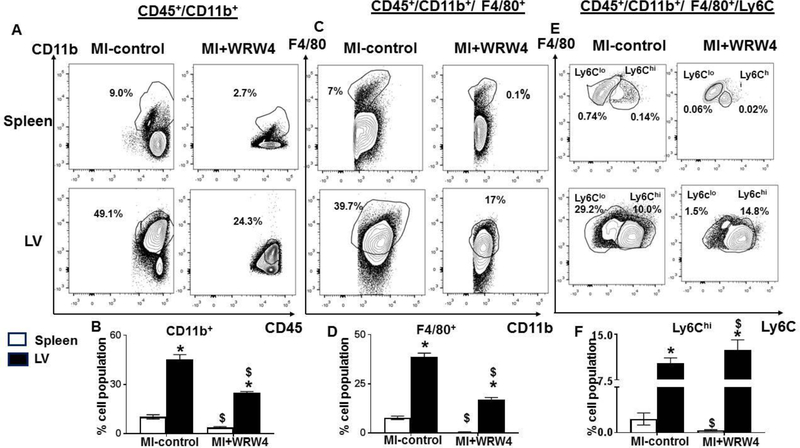
Figure 3.. FPR2 inhibition using WRW4 activated F4/80+/Ly6Chi in the infarcted LV with a decrease in CD11b+ and F4/80+ population post-MI.
A. Representative FACs counter plots are identifying spleen and LV CD45+/CD11b+population in MI+WRW4–injected mice compared with MI-control mice. B. Bar graph displaying CD45+/CD11b+ population in spleen and LV. C. Representative counter plots showing CD45+/CD11b+/F4/80+population in spleen and LV in MI+WRW4-injected mice compared with no-MI control. D. Bar graph displaying CD45+/CD11b+/F4/80+population in spleen and LV. E. Representative FACs counter plots identifying spleen and LV CD45+/CD11b+/F4/80+/Ly6C population in MI+WRW4–injected mice compared with MI-control mice. F. Bar graph displaying CD45+/CD11b+/F4/80+/Ly6Chi population in spleen and LV. *p<0.05 versus spleen; $ p<0.05 respective-MI-control. Values are means ±SEM; n=4 mice/group.
Figure 4.
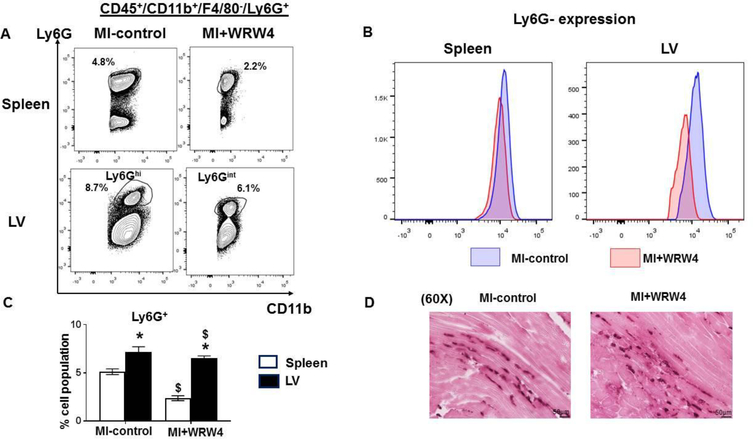
Figure 4.. WRW4 dysregulated neutrophils clearance post-MI.
A. Representative flow cytometry (FACs) counterplots showing spleen and LV neutrophils population (CD45+/CD11b+/F4/80/Ly6G+) population in MI-control and MI+WRW4-injected mice post-MI. B. Representative spleen and LV FACs histogram displaying Ly6G expression. C. Bar graphs shows percentage of Ly6G+ population in LV and spleen post-MI. D. Representative neutrophil immunohistochemistry images of LV transverse section of MI-control and WRW4-injected mice post-MI (Magnification 40X, scale = 50 μm). *p<0.05 vs spleen; $ p<0.05 respective MI-control. Values are means ±SEM; n=4 mice/group.
Figure 5.
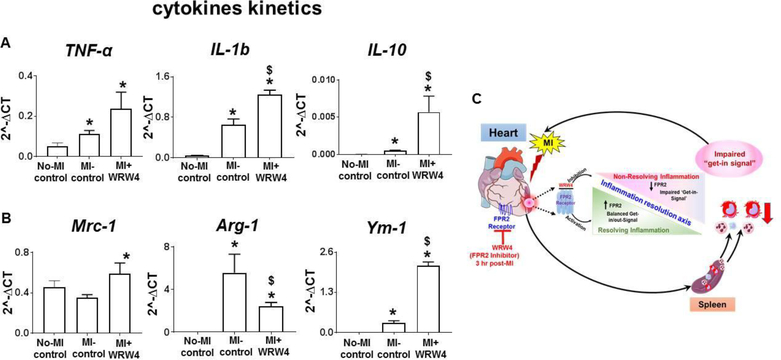
Figure 5.. WRW4 modulated chemokine kinetics post-MI in acute HF.
A. Bar graph representing mRNA expression of A. Tnf-α, IL-1β, and IL-10 B. Mrc-1, Arg-1 and Ym-1 in LV-infarct post-MI. C. Schematic representation of inflammation-resolution axis depicting the role of WRW4 and non-resolving mechanism in acute HF. *p<0.05 versus no-MI control post-MI. Values are means ±SEM; n=4 mice/group.

References

    1. Degoricija V, Trbusic M, Potocnjak I, Radulovic B, Teresak SD, Pregartner G, Berghold A, Tiran B, Frank S. Acute Heart Failure developed as worsening of Chronic Heart Failure is associated with increased mortality compared to de novo cases. Sci Rep. 2018;8(1):9587. - PMC - PubMed
    1. Halade GV, Norris PC, Kain V, Serhan CN, Ingle KA. Splenic leukocytes define the resolution of inflammation in heart failure. Sci Signal. 2018;11(520). - PMC - PubMed
    1. Serhan CN, Brain SD, Buckley CD, Gilroy DW, Haslett C, O’Neill LA, Perretti M, Rossi AG, Wallace JL. Resolution of inflammation: state of the art, definitions and terms. FASEB J. 2007;21(2):325–332. - PMC - PubMed
    1. He H-Q, Liao D, Wang Z-G, Wang Z-L, Zhou H-C, Wang M-W, Ye RD. Functional characterization of three mouse formyl peptide receptors. Molecular pharmacology. 2013;83(2):389–398. - PMC - PubMed
    1. Cui Y-H, Le Y, Gong W, Proost P, Van Damme J, Murphy WJ, Wang JM. Bacterial Lipopolysaccharide Selectively Up-Regulates the Function of the Chemotactic Peptide Receptor Formyl Peptide Receptor 2 in Murine Microglial Cells. The Journal of Immunology. 2002;168(1):434–442. - PubMed

Publication types