


High Burden of Non-communicable Diseases among a Young Slum Population in Haiti
- PMID: 31218502
- PMCID: PMC6904710
- DOI: 10.1007/s11524-019-00368-y
High Burden of Non-communicable Diseases among a Young Slum Population in Haiti
Abstract
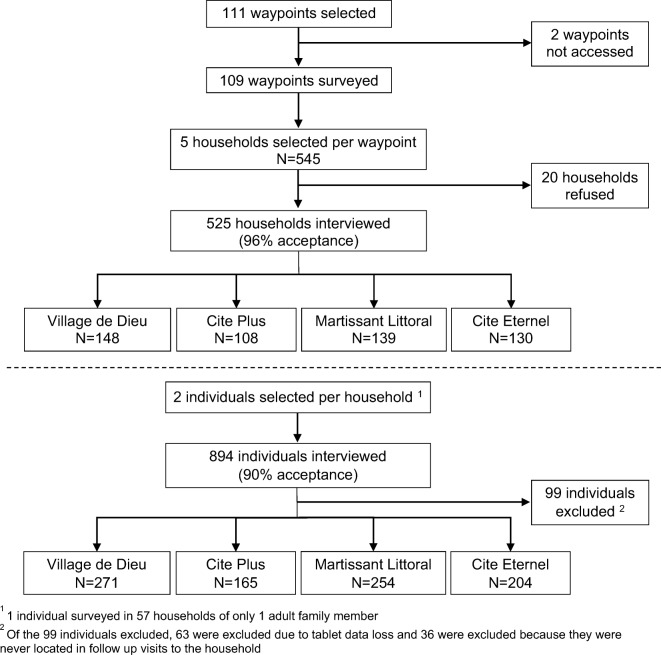
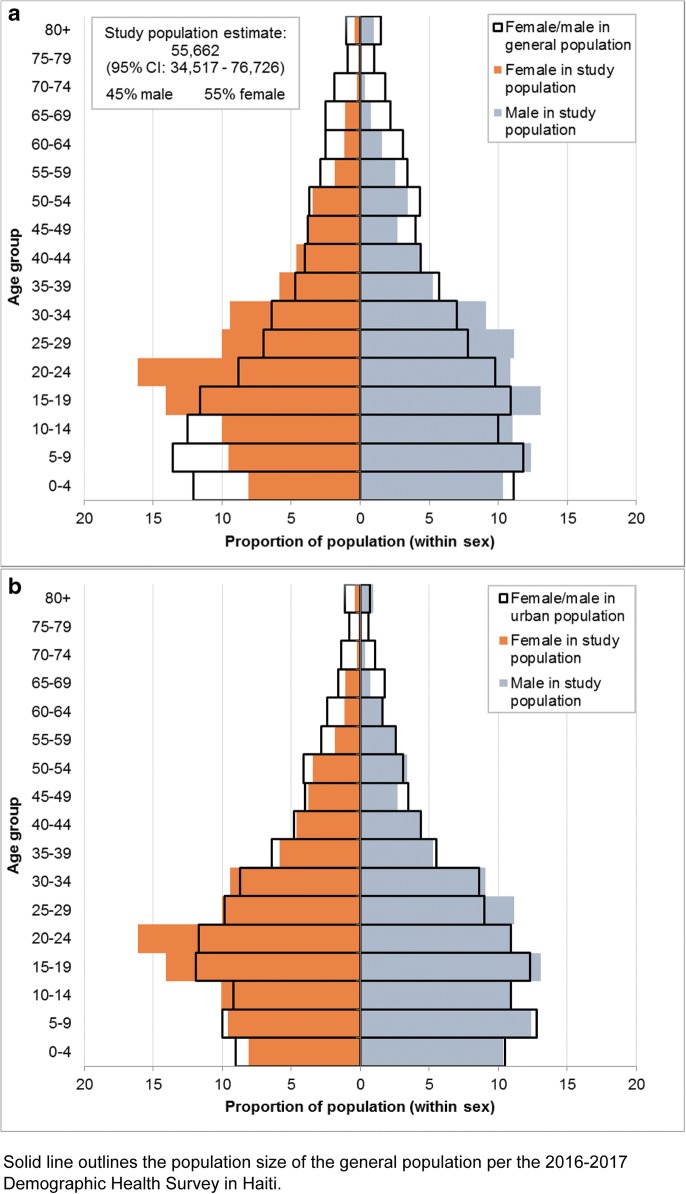
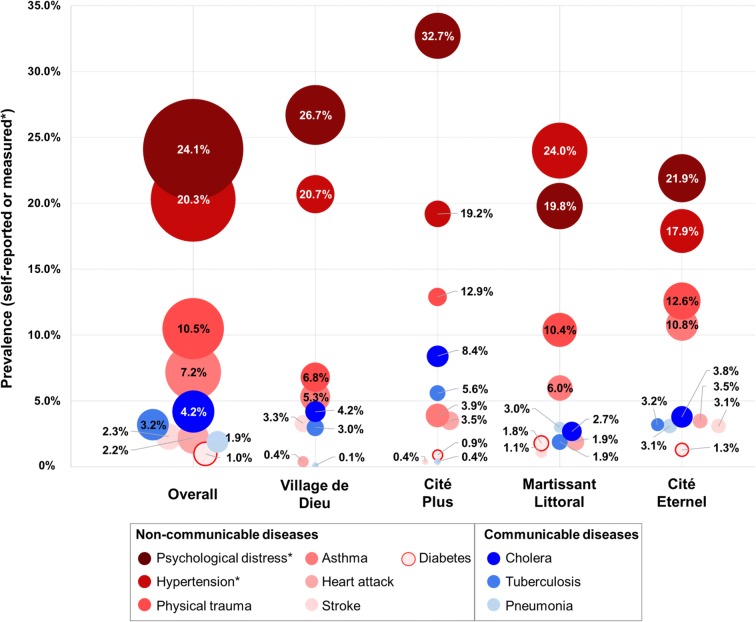
The objective of this study was to characterize the demographics and population health of four slum communities in Port-au-Prince, Haiti, including population density and the burden of communicable and non-communicable diseases. Four urban slums were surveyed using a population-representative design between July and October 2016. A multistage cluster area random sampling process was used to identify households and individuals for the survey. Household surveys included rosters of residents, household characteristics, adult and child deaths in the past year, child health, and healthcare access and utilization. Individual surveys of two randomly sampled adults from each household included sociodemographic data, maternal health, and adult health. Additionally, blood pressure, height, weight, and psychological distress were measured by study staff. Data were weighted for complex survey design and non-response. A total of 525 households and 894 individuals completed the survey (96% household and 90% individual response rate, respectively). The estimated population density was 58,000 persons/km2. Across slums, 55% of all residents were female, and 38% were adolescents and youth 10-24 years. Among adults, 58% were female with median age 29 years (22-38). The most common adult illnesses were severe psychological distress (24%), hypertension (20%), history of physical injury/trauma (10%), asthma (7%), history of cholera (4%), and history of tuberculosis (3%). Ten percent of adults had obesity (BMI > 30 kg/m2), and 7% currently smoked. The most common under-5 diseases during the last 3 months were respiratory and gastrointestinal illnesses (50% and 28%, respectively). One-third of households reported needing medical care for a child in the past year but not being able to access it, largely due to financial constraints. Unique features of these slums are a population structure dominated by adolescents and youth, a high proportion of females, and a high burden of non-communicable diseases including hypertension and psychological distress. Screening, diagnostic, and disease management interventions are urgently needed to protect and promote improved population health outcomes in these slum communities.
Keywords: Slums, Non-communicable disease, Urban health.
Figures
Comment in
-
Systematic Surveys in Informal Settlements: Challenges in Moving Toward Health Equity.J Urban Health. 2019 Dec;96(6):795-796. doi: 10.1007/s11524-019-00393-x. J Urban Health. 2019. PMID: 31664602 Free PMC article. No abstract available.
References
-
- UN-Habitat The challenge of slums: global report on human settlements 2003. United Nations-Habitat. 2004;15(3):337–338.
-
- The Lancet Health in slums: understanding the unseen. Lancet (London, England) 2017;389(10068):478. - PubMed
-
- United Nations. United Nations Sustainability and Development Goals: https://www.un.org/sustainabledevelopment/cities/. Published 2018. Accessed September 14, 2018.
-
- United Nations Development Programme. UNDP Human Development Reports 2016. http://hdr.undp.org/en/countries/profiles/HTI. Published 2018. Accessed August 20, 2018.
Publication types
MeSH terms
Grants and funding
LinkOut - more resources
Full Text Sources
Medical
Miscellaneous
