


Concentration, distribution, and influence of aging on the 18 kDa translocator protein in human brain: Implications for brain imaging studies
- PMID: 31220997
- PMCID: PMC7181090
- DOI: 10.1177/0271678X19858003
Concentration, distribution, and influence of aging on the 18 kDa translocator protein in human brain: Implications for brain imaging studies
Abstract
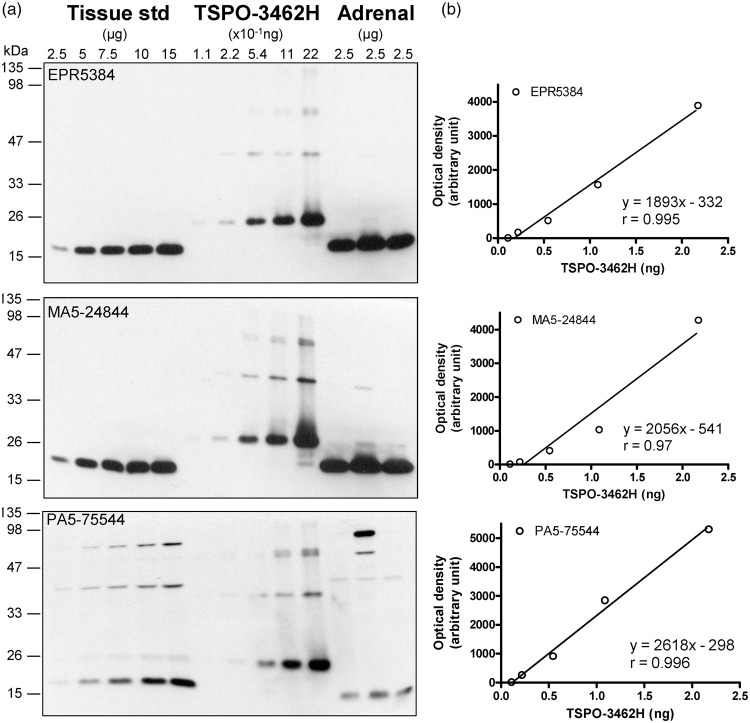
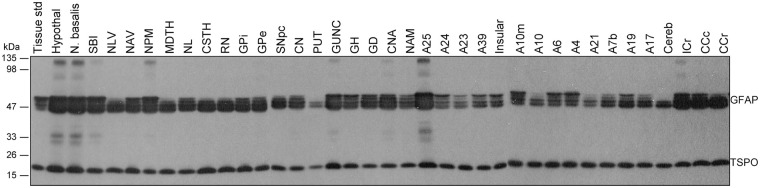
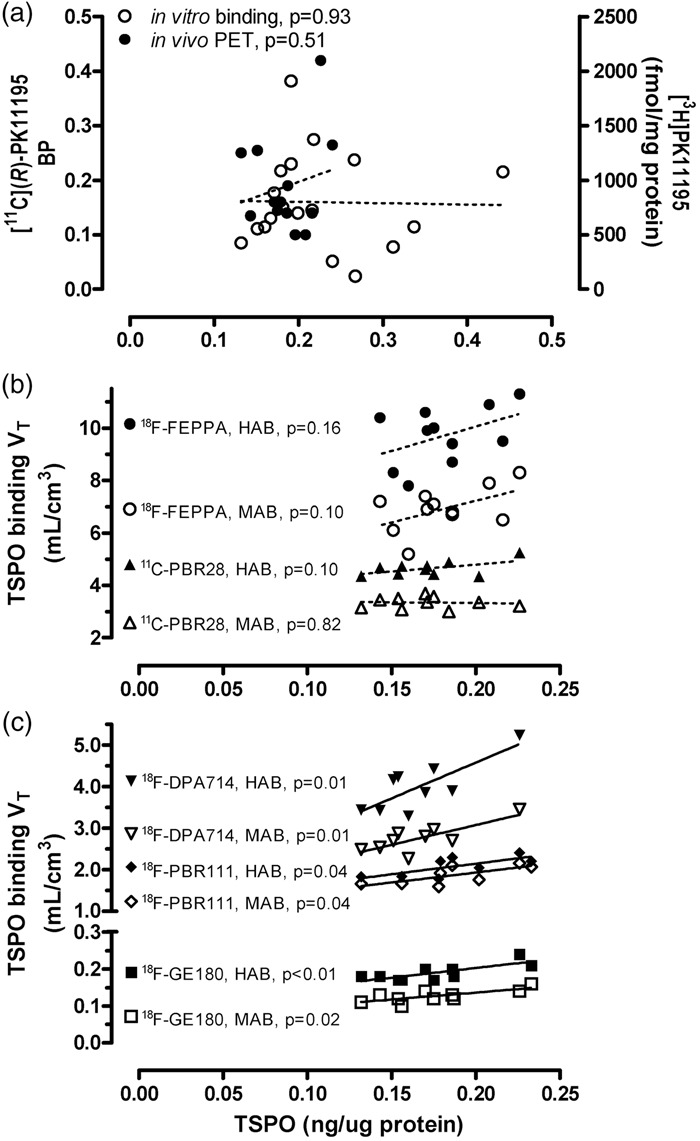
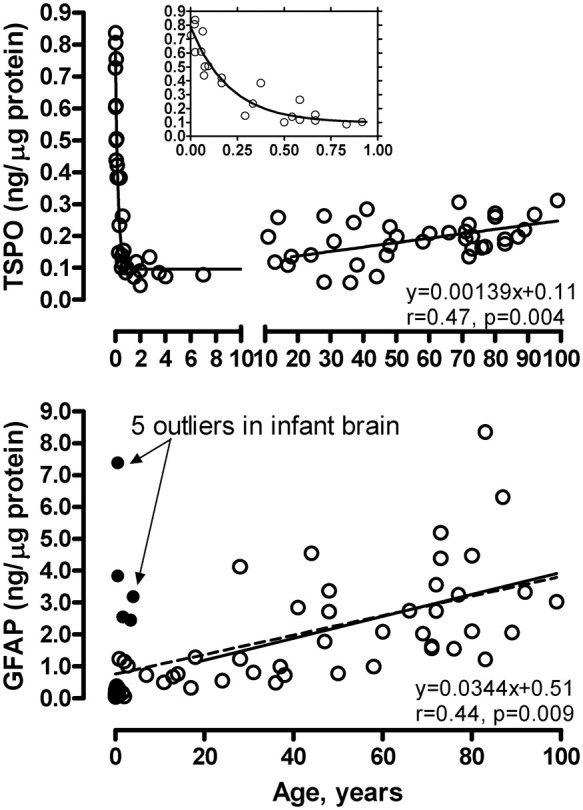
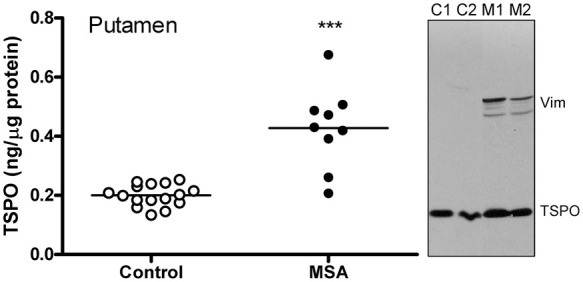
Positron emission tomography (PET) imaging of the translocator protein (TSPO) is widely used as a biomarker of microglial activation. However, TSPO protein concentration in human brain has not been optimally quantified nor has its regional distribution been compared to TSPO binding. We determined TSPO protein concentration, change with age, and regional distribution by quantitative immunoblotting in autopsied human brain. Brain TSPO protein concentration (>0.1 ng/µg protein) was higher than those reported by in vitro binding assays by at least 2 to 70 fold. TSPO protein distributed widely in both gray and white matter regions, with distribution in major gray matter areas ranked generally similar to that of PET binding in second-generation radiotracer studies. TSPO protein concentration in frontal cortex was high at birth, declined precipitously during the first three months, and increased modestly during adulthood/senescence (10%/decade; vs. 30% for comparison astrocytic marker GFAP). As expected, TSPO protein levels were significantly increased (+114%) in degenerating putamen in multiple system atrophy, providing further circumstantial support for TSPO as a gliosis marker. Overall, findings show some similarities between TSPO protein and PET binding characteristics in the human brain but also suggest that part of the TSPO protein pool might be less available for radioligand binding.
Keywords: Translocator protein TSPO; aging; multiple system atrophy; positron emission tomography; postmortem human brain.
Figures
References
-
- Papadopoulos V, Baraldi M, Guilarte TR, et al.Translocator protein (18kDa): new nomenclature for the peripheral-type benzodiazepine receptor based on its structure and molecular function. Trends Pharmacol Sci 2006; 27: 402–409. - PubMed
-
- Braestrup C, Albrechtsen R, Squires RF. High densities of benzodiazepine receptors in human cortical areas. Nature 1977; 269: 702–704. - PubMed
-
- Schoemaker H, Bliss M, Yamamura HI. Specific high-affinity saturable binding of [3H] R05-4864 to benzodiazepine binding sites in the rat cerebral cortex. Eur J Pharmacol 1981; 71: 173–175. - PubMed
-
- Benavides J, Quarteronet D, Imbault F, et al.Labelling of “peripheral-type” benzodiazepine binding sites in the rat brain by using [3H]PK 11195, an isoquinoline carboxamide derivative: kinetic studies and autoradiographic localization. J Neurochem 1983; 41: 1744–1750. - PubMed
-
- Schoemaker H, Morelli M, Deshmukh P, et al.[3H]Ro5-4864 benzodiazepine binding in the kainate lesioned striatum and Huntington’s diseased basal ganglia. Brain Res 1982; 248: 396–401. - PubMed
Publication types
MeSH terms
Substances
LinkOut - more resources
Full Text Sources
Medical
Research Materials
Miscellaneous
