


Brain leptin reduces liver lipids by increasing hepatic triglyceride secretion and lowering lipogenesis
- PMID: 31222048
- PMCID: PMC6586634
- DOI: 10.1038/s41467-019-10684-1
Brain leptin reduces liver lipids by increasing hepatic triglyceride secretion and lowering lipogenesis
Abstract
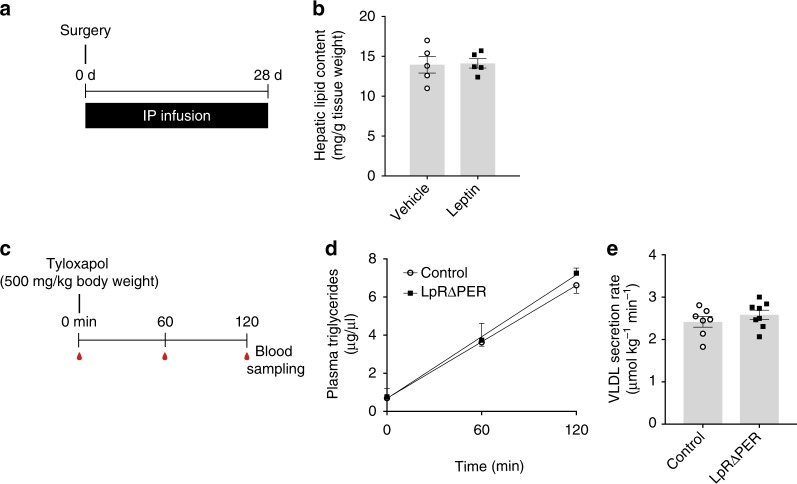
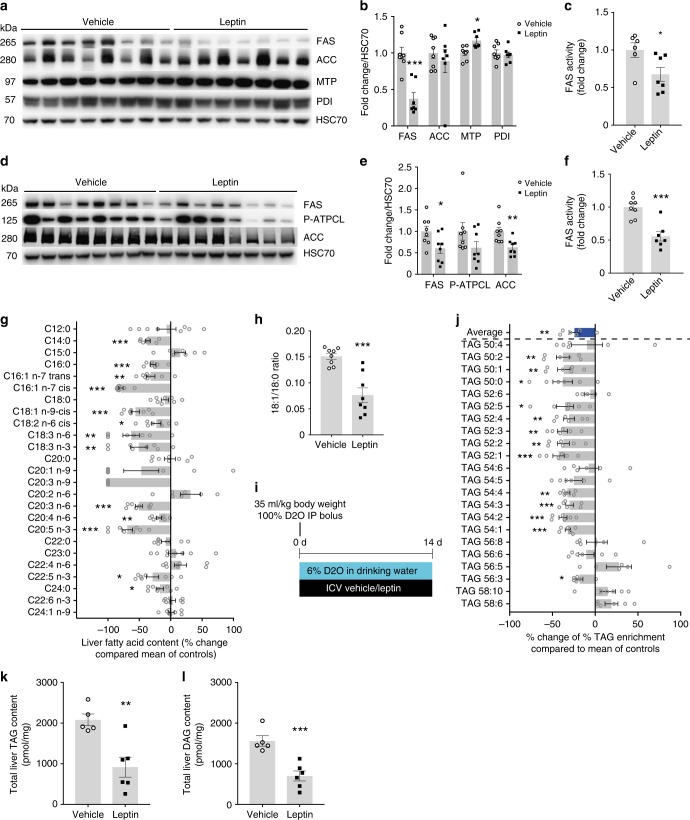
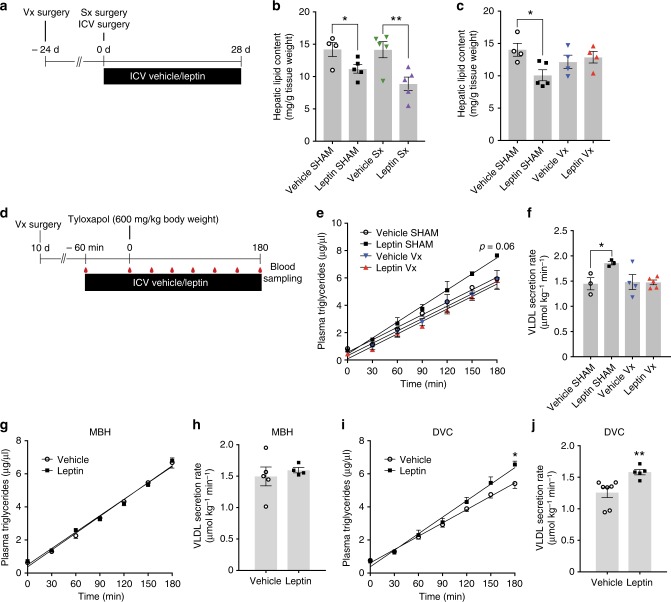
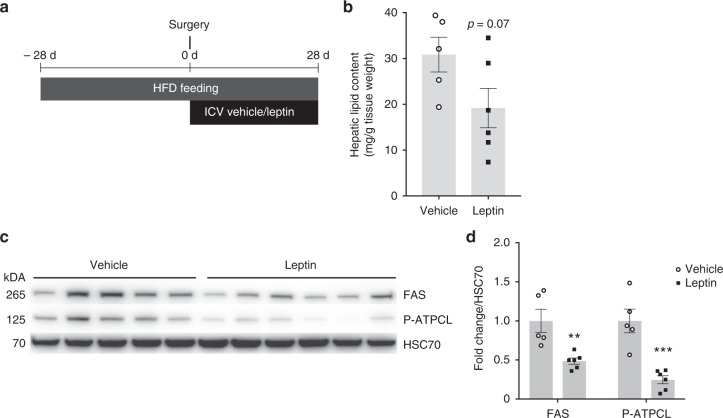
Hepatic steatosis develops when lipid influx and production exceed the liver's ability to utilize/export triglycerides. Obesity promotes steatosis and is characterized by leptin resistance. A role of leptin in hepatic lipid handling is highlighted by the observation that recombinant leptin reverses steatosis of hypoleptinemic patients with lipodystrophy by an unknown mechanism. Since leptin mainly functions via CNS signaling, we here examine in rats whether leptin regulates hepatic lipid flux via the brain in a series of stereotaxic infusion experiments. We demonstrate that brain leptin protects from steatosis by promoting hepatic triglyceride export and decreasing de novo lipogenesis independently of caloric intake. Leptin's anti-steatotic effects are generated in the dorsal vagal complex, require hepatic vagal innervation, and are preserved in high-fat-diet-fed rats when the blood brain barrier is bypassed. Thus, CNS leptin protects from ectopic lipid accumulation via a brain-vagus-liver axis and may be a therapeutic strategy to ameliorate obesity-related steatosis.
Conflict of interest statement
The authors declare no competing interests.
Figures


References
Publication types
MeSH terms
Substances
Grants and funding
- 634413/EC | Horizon 2020 Framework Programme (EU Framework Programme for Research and Innovation H2020)/International
- P30 DK020541/DK/NIDDK NIH HHS/United States
- P30 DK026687/DK/NIDDK NIH HHS/United States
- P26766/Austrian Science Fund (Fonds zur Förderung der Wissenschaftlichen Forschung)/International
- P 30830/FWF_/Austrian Science Fund FWF/Austria
LinkOut - more resources
Full Text Sources
Medical
