


Adiponectin improves long-term potentiation in the 5XFAD mouse brain
- PMID: 31222110
- PMCID: PMC6586823
- DOI: 10.1038/s41598-019-45509-0
Adiponectin improves long-term potentiation in the 5XFAD mouse brain
Abstract
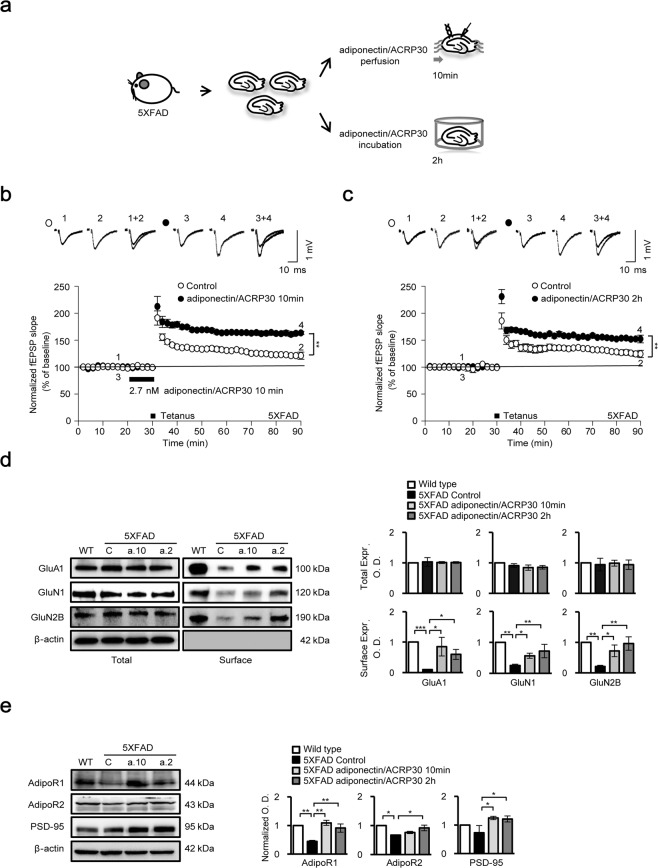
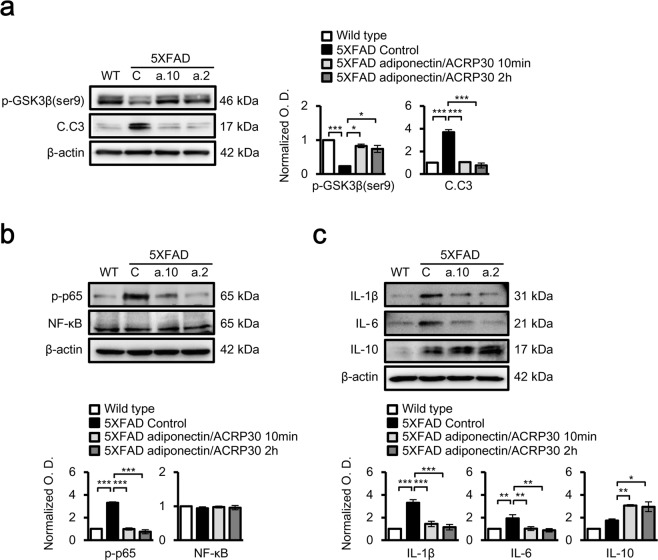
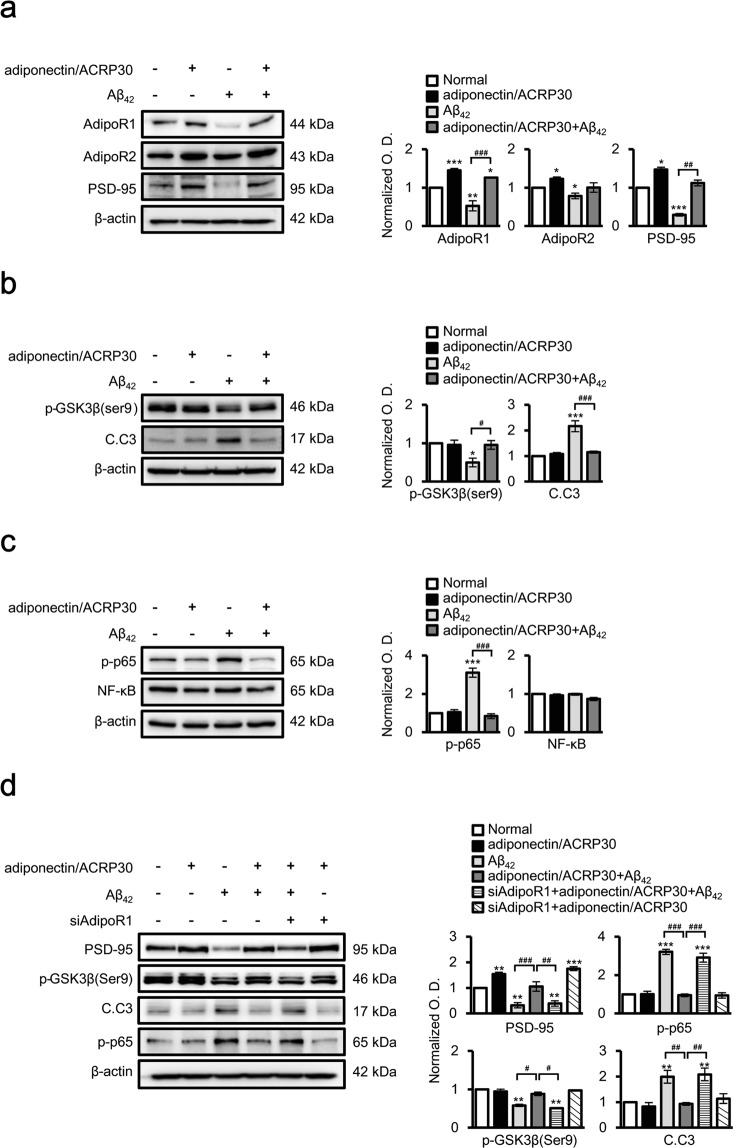
Adiponectin is an adipokine that regulates apoptosis, glucose and lipid metabolism, and insulin sensitivity in metabolic diseases. As recent studies have associated changes in adipokines and other metabolites in the central nervous system with a risk for Alzheimer's disease (AD), we investigated the effects of adiponectin treatment on hippocampal cells in the 5XFAD mouse model of AD and neuronal SH-SY5Y cells under amyloid beta toxicity. Adiponectin treatment reduced levels of cleaved caspase 3 and nuclear factor kappa-light-chain-enhancer of activated B cells (NF-κB) apoptosis signalling and decreased glycogen synthase kinase 3 beta (GSK3β) activation. Moreover, adiponectin treatment triggered long-term potentiation in the hippocampi of 5XFAD mice, which was associated with reduced expression of N-methyl-D-aspartate and its receptor as well as surface expression of the α-amino-3-hydroxy-5-methylisoxazole-4-propionic acid receptor. These findings suggest that adiponectin inhibits neuronal apoptosis and inflammatory mechanisms and promotes hippocampal long-term potentiation. Thus, adiponectin exhibits beneficial effect on hippocampal synaptic plasticity in Alzheimer's disease mouse model.
Conflict of interest statement
The authors declare no competing interests.
Figures
References
Publication types
MeSH terms
Substances
LinkOut - more resources
Full Text Sources
Medical
Molecular Biology Databases
Research Materials
