


Discovery of SHR1653, a Highly Potent and Selective OTR Antagonist with Improved Blood-Brain Barrier Penetration
- PMID: 31223461
- PMCID: PMC6580551
- DOI: 10.1021/acsmedchemlett.9b00186
Discovery of SHR1653, a Highly Potent and Selective OTR Antagonist with Improved Blood-Brain Barrier Penetration
Abstract
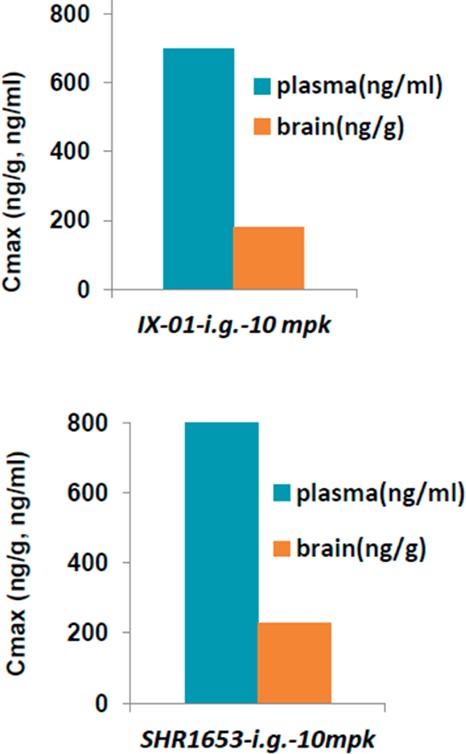
The oxytocin receptor (OTR) plays a major role in the control of male sexual responses. Antagonists of the OTR have been reported to inhibit ejaculation in animal models and serve as a potential treatment for premature ejaculation (PE). Herein, we describe a novel scaffold featuring an aryl substituted 3-azabicyclo [3.1.0] hexane structure. The lead compound, SHR1653, was shown to be a highly potent OTR antagonist, which exhibited excellent selectivity over V1AR, V1BR, and V2R. This novel molecule was shown to have a favorable pharmacokinetic profile across species, as well as robust in vivo efficacy in a rat uterine contraction model. Interestingly, SHR1653 exhibited excellent blood-brain barrier penetration, which might be beneficial for the treatment of CNS-related PE.
Conflict of interest statement
The authors declare no competing financial interest.
Figures



References
-
- Gullam J. E.; Chatterjee J.; Thornton S. Preterm labor: novel treatments. Drug Discovery Today: Ther. Strategies 2005, 2, 47–52. 10.1016/j.ddstr.2005.05.023. - DOI
-
- Lamont R. F.; Kam K. Y. R. Atosiban as a tocolytic for the treatment of spontaneous preterm labor. Expert Rev. Obstet. Gynecol. 2008, 3, 163–174. 10.1586/17474108.3.2.163. - DOI
LinkOut - more resources
Full Text Sources
Other Literature Sources
Chemical Information
