


A longitudinal assessment of periodontal disease in Yorkshire terriers
- PMID: 31226991
- PMCID: PMC6588847
- DOI: 10.1186/s12917-019-1923-8
A longitudinal assessment of periodontal disease in Yorkshire terriers
Abstract
Background: Periodontal disease is the most common oral disease of dogs and has been associated with systemic disease. The purpose of the present study was to determine the extent of periodontal disease in a population of Yorkshire terrier dogs with and without a tooth brushing regimen. Each dog was assessed under general anaesthesia two to five times between 37 and 78 weeks of age. The extent of gingivitis and periodontitis was ascertained for every tooth in the mouth. Gingivitis was measured using time to bleeding on probing, and periodontitis was based on extent of clinical attachment loss (probing depth, gingival recession and furcation exposure).
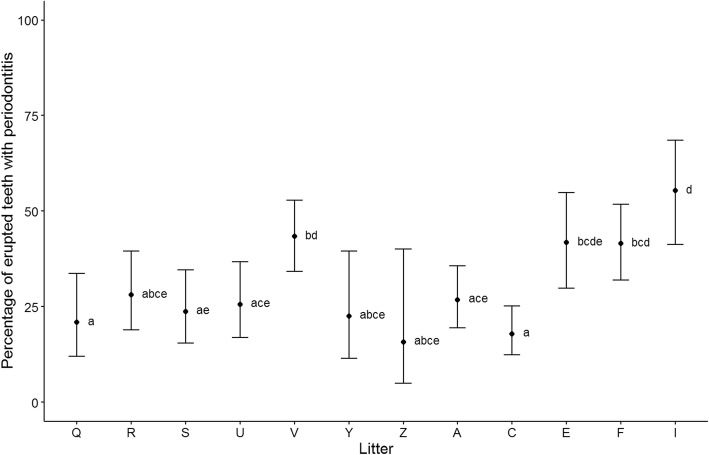
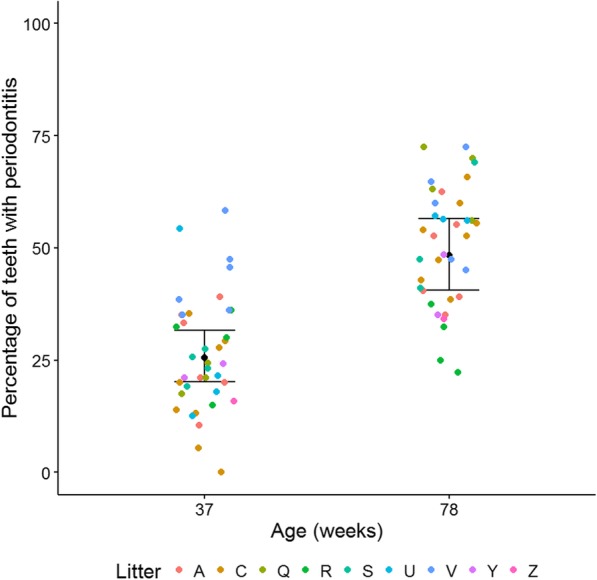
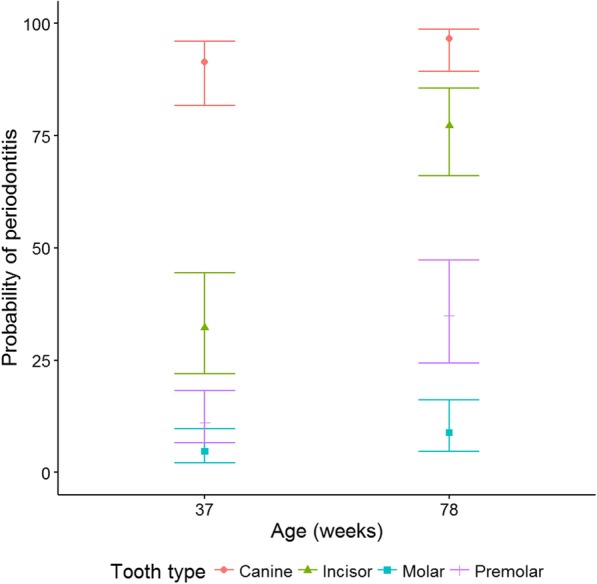
Results: Of the 49 dogs assessed at 37 weeks of age, 98% had at least one tooth or aspect with early periodontitis (PD2, < 25% attachment loss). The average percentage of teeth with periodontitis in the mouth was 29.6% with 95% confidence interval (23.6, 36.4). The odds of early periodontitis was 2.74 (2.23, 3.37) times higher at 78 weeks of age compared to 37 weeks of age. The canine teeth had a significantly higher probability of periodontitis compared to all other tooth types at both 37 and 78 weeks of age (p < 0.001). In addition, at the same time points, the incisors had a significantly higher probability of periodontitis compared to the molars and premolars (p < 0.001).
Conclusions: Breeds of dog that are susceptible to developing periodontitis, such as Yorkshire terriers, require effective treatments for the prevention of periodontal disease from a young age. Although tooth brushing is one of the most effective methods when it comes to preventative homecare, this is not always realistic, as was found in this study. Therefore alternative ways to retard or prevent plaque accumulation that are practical for both dogs and their owners are required.
Keywords: Canine; Dog; Gingivitis; Periodontal disease; Periodontitis; Yorkshire terrier.
Conflict of interest statement
This work was funded by the WALTHAM Centre for Pet Nutrition (Mars Petcare), the employer of CW, IP, AC, LH and ND at the time of the study.
Figures



References
-
- Butković V, Šimpraga M, Šehić M, Stanin D, Sušić V, Capak D, Kos J. Dental diseases of dogs: a retrospective study of radiological data. Acta Vet Brno. 2001;70(2):203–208. doi: 10.2754/avb200170020203. - DOI
-
- Kyllar M, Witter K. Prevalence of dental disorders in pet dogs. Veterinarni Medicina. 2005;50(11):496–505. doi: 10.17221/5654-VETMED. - DOI
-
- Hamp SE, Olsson SE, Farsø-Madsen K, Viklands P, Fornell J. A macroscopic and radiological investigation of dental diseases of the dog. Vet Radiol. 1984;25(2):86–92. doi: 10.1111/j.1740-8261.1984.tb01916.x. - DOI
Publication types
MeSH terms
LinkOut - more resources
Full Text Sources
Other Literature Sources
