


Mild acute stress improves response speed without impairing accuracy or interference control in two selective attention tasks: Implications for theories of stress and cognition
- PMID: 31229636
- PMCID: PMC6707871
- DOI: 10.1016/j.psyneuen.2019.06.001
Mild acute stress improves response speed without impairing accuracy or interference control in two selective attention tasks: Implications for theories of stress and cognition
Abstract
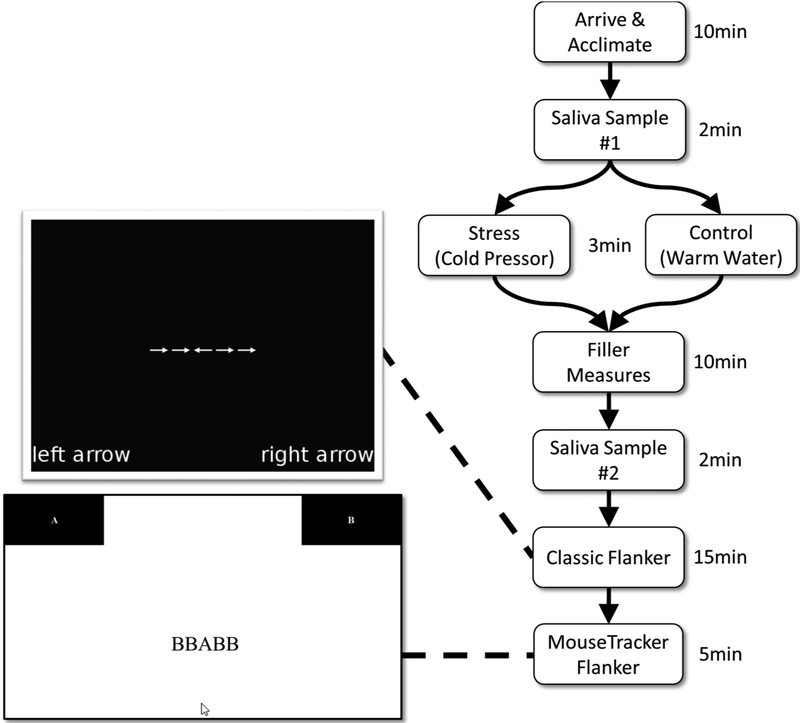
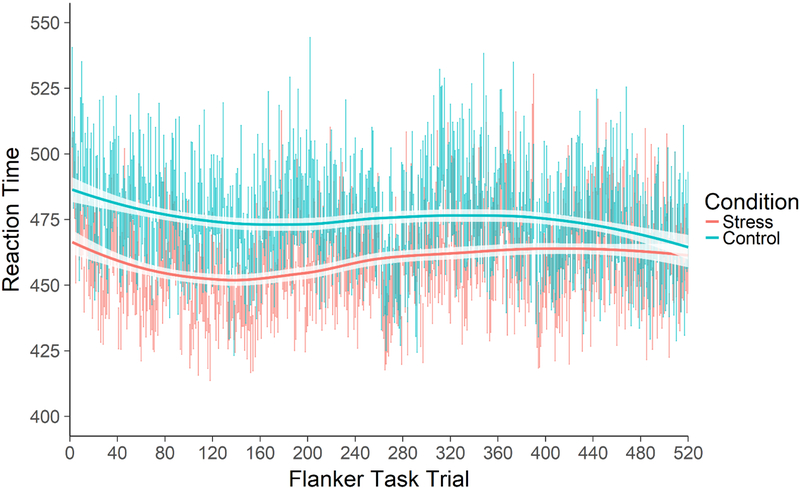
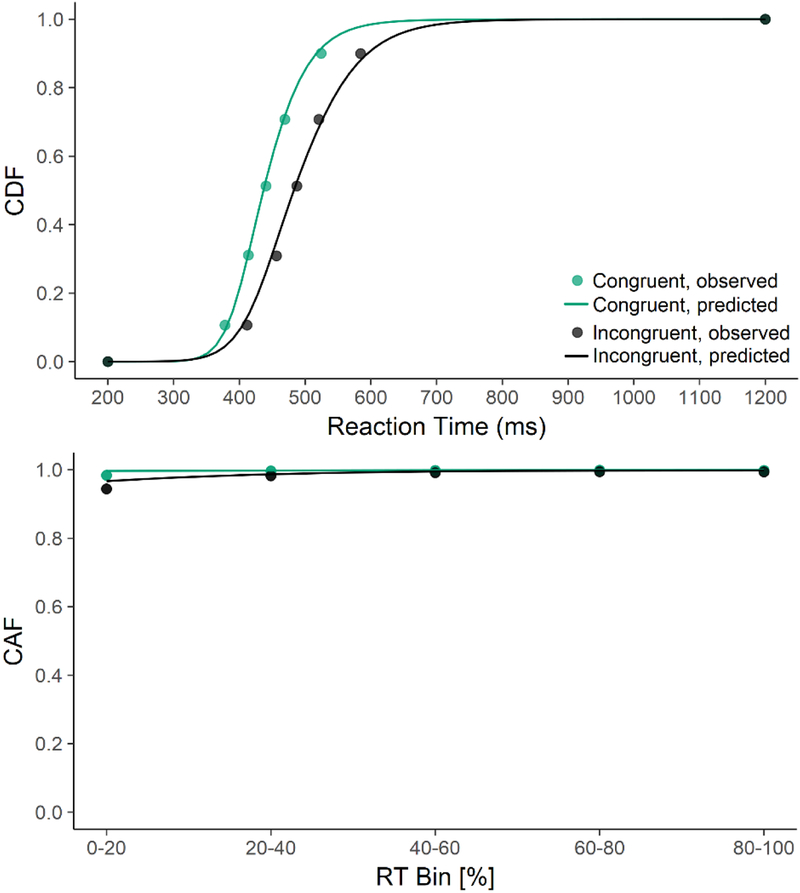
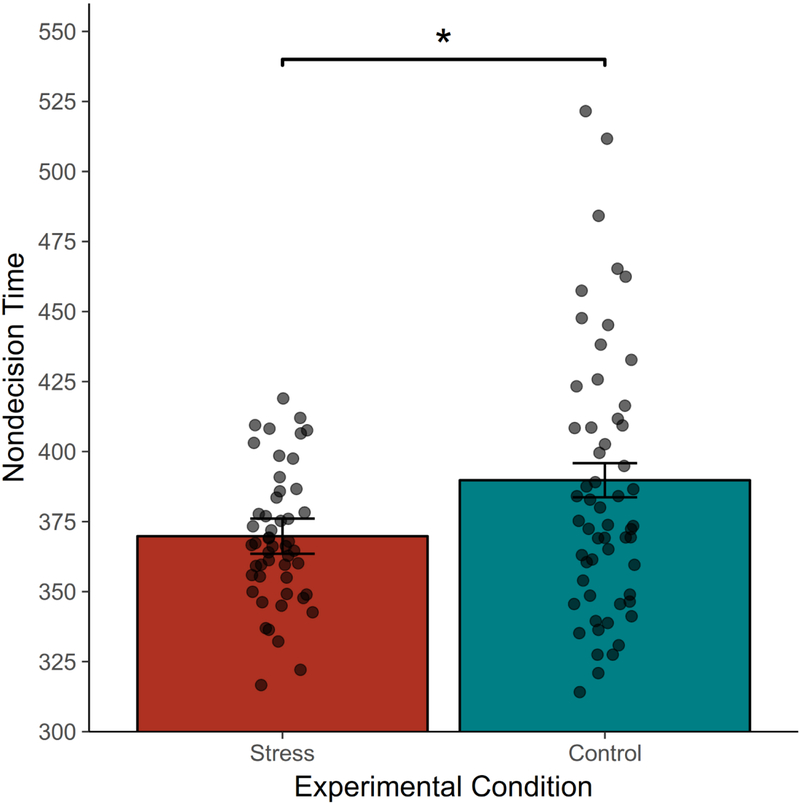
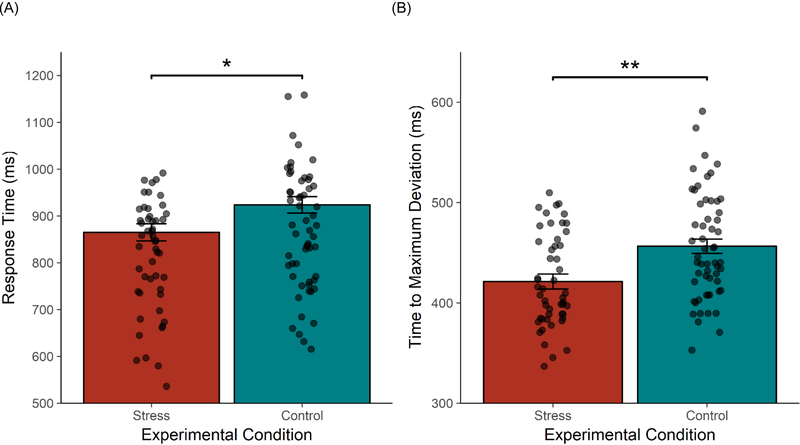
Acute stress is generally thought to impair performance on tasks thought to rely on selective attention. This effect has been well established for moderate to severe stressors, but no study has examined how a mild stressor-the most common type of stressor-influences selective attention. In addition, no study to date has examined how stress influences the component processes involved in overall selective attention task performance, such as controlled attention, automatic attentional activation, decision-making, and motor abilities. To address these issues, we randomly assigned 107 participants to a mild acute stress or control condition. As expected, the mild acute stress condition showed a small but significant increase in cortisol relative to the control condition. Following the stressor, we assessed attention with two separate flanker tasks. One of these tasks was optimized to investigate component attentional processes using computational cognitive modeling, whereas the other task employed mouse-tracking to illustrate how response conflict unfolded over time. The results for both tasks showed that mild acute stress decreased response time (i.e., increased response speed) without influencing accuracy or interference control. Further, computational modeling and mouse-tracking analyses indicated that these effects were due to faster motor action execution time for chosen actions. Intriguingly, however, cortisol responses were unrelated to any of the observed effects of mild stress. These results have implications for theories of stress and cognition, and highlight the importance of considering motor processes in understanding the effects of stress on cognitive task performance.
Keywords: Acute stress; Attention; Motor control; Reaction time; Response speed; Stress severity.
Copyright © 2019 Elsevier Ltd. All rights reserved.
Conflict of interest statement
Conflict of Interest Statement
The authors declare no conflict of interest in this work.
Figures
References
-
- Buchanan TW, Tranel D, 2008. Stress and emotional memory retrieval: Effects of sex and cortisol response. Neurobiol. Learn. Mem 89, 134–141. https://doi.Org/10.1016/j.nlm.2007.07.003 - DOI - PMC - PubMed
Publication types
MeSH terms
Substances
Grants and funding
LinkOut - more resources
Full Text Sources
Medical
Research Materials
