Review
. 2019 Oct:130:104515.
doi: 10.1016/j.nbd.2019.104515. Epub 2019 Jun 21.

New pathologic mechanisms in nucleotide repeat expansion disorders

Affiliations
Review

New pathologic mechanisms in nucleotide repeat expansion disorders

C M Rodriguez et al. Neurobiol Dis. 2019 Oct.

Abstract

Tandem microsatellite repeats are common throughout the human genome and intrinsically unstable, exhibiting expansions and contractions both somatically and across generations. Instability in a small subset of these repeats are currently linked to human disease, although recent findings suggest more disease-causing repeats await discovery. These nucleotide repeat expansion disorders (NREDs) primarily affect the nervous system and commonly lead to neurodegeneration through toxic protein gain-of-function, protein loss-of-function, and toxic RNA gain-of-function mechanisms. However, the lines between these categories have blurred with recent findings of unconventional Repeat Associated Non-AUG (RAN) translation from putatively non-coding regions of the genome. Here we review two emerging topics in NREDs: 1) The mechanisms by which RAN translation occurs and its role in disease pathogenesis and 2) How nucleotide repeats as RNA and translated proteins influence liquid-liquid phase separation, membraneless organelle dynamics, and nucleocytoplasmic transport. We examine these topics with a particular eye on two repeats: the CGG repeat expansion responsible for Fragile X syndrome and Fragile X-associated Tremor Ataxia Syndrome (FXTAS) and the intronic GGGGCC repeat expansion in C9orf72, the most common inherited cause of amyotrophic lateral sclerosis (ALS) and frontotemporal dementia (FTD). Our thesis is that these emerging disease mechanisms can inform a broader understanding of the native roles of microsatellites in cellular function and that aberrations in these native processes provide clues to novel therapeutic strategies for these currently untreatable disorders.


Figures

Figure 1:
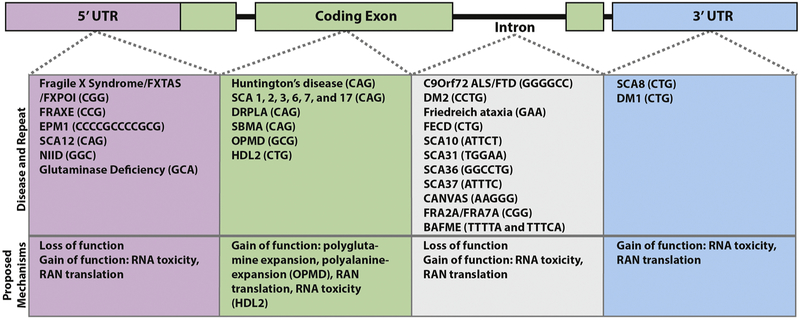
Figure 1:. Nucleotide repeat expansion disorders.
Disorders are listed by their genomic location on an illustrated simplified gene. Each disorder is accompanied by the unstable repeat sequence that elicits disease. The prevailing disease mechanism is listed below each group to illustrate that genomic location of the expansion influences but does not completely determine the potential effects of any given repeat. Abbreviations: Fragile X-associated tremor/ataxia syndrome (FXTAS), Fragile X-primary ovarian insufficiency (FXPOI), progressive myoclonic epilepsy type 1/Unverricht-Lundborg disease (EPM1), spinocerebellar ataxia (SCA), neuronal intranuclear inclusion disease (NIID), dentatorubral-pallidoluysian atrophy (DRPLA), spinal-bulbar muscular atrophy (SBMA), oculopharyngeal muscular dystrophy (OPMD), Huntington disease-like 2 (HDL2), amyotrophic lateral sclerosis (ALS), frontotemporal dementia (FTD), myotonic dystrophy (DM), Fuchs endothelial corneal dystrophy (FECD), cerebellar ataxia, neuropathy and vestibular areflexia yndrome (CANVAS), benign adult familial myoclonic epilepsy (BAFME), and FRAXE, FRA2A and FRA7A refer to disease associated fragile sites in the genome that result from CGG repeat expansions.
Figure 2:
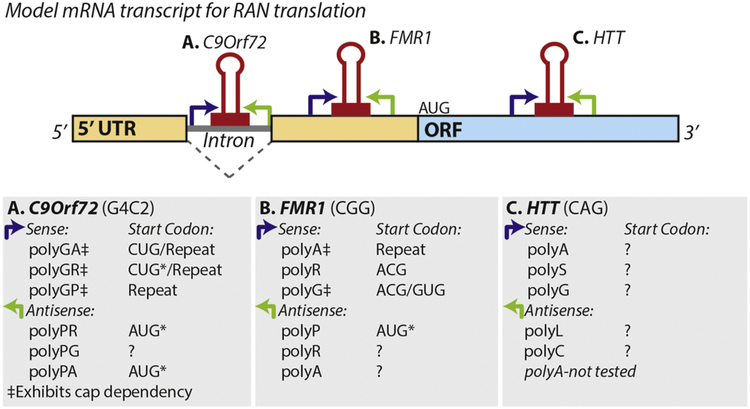
Figure 2:. RAN translation in repeat expansion disorders.
Repeat associated non-AUG translation at three repeat expansions are laid out schematically. Experimentally determined initiation sites are listed for individual reading frames where determined, although in all cases initiation may also occur within the repeat itself. A) A G4C2 hexanucleotide repeat in the first intron of C9Orf72 is bidirectionally transcribed. Whether the repeat is translated as a spliced intron or as part of a retained intron or other aberrant transcript is not known. A CUG located just 5’ to the repeat is utilized for initiation of poly(GA). It may also be utilized for poly(GR) translation with subsequent frameshifting. AUG codons reside upstream of poly(PR) and poly(PG) in the most common antisense transcripts. B) A CGG repeat in the 5’ leader/ 5’ UTR of FMR1 is also bidirectionally transcribed. An AUG in the poly(P) reading frame of ASFMR1 is utilized for initiation in this reading frame but it can also undergo RAN translation in this reading frame. FMRpolyR expression is nearly undetectable from reporter constructs. C) The CAG repeat in Huntington’s disease is located in the coding region of the HTT transcript and is also bidirectionally transcribed. ?: initiation site unknown, ‡: initiation in this frame exhibits cap-dependency.
Figure 3:
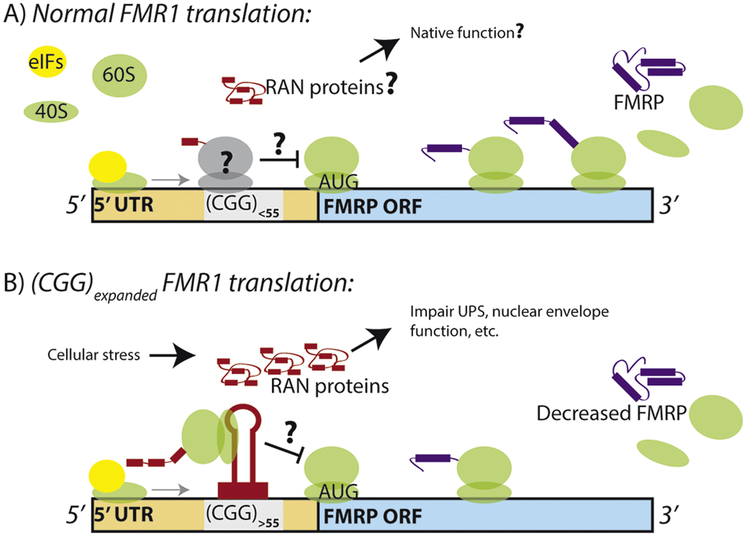
Figure 3:. RAN translation as a regulatory element.
A) Translation from the FMR1 transcript produces both RAN translation products and FMRP. Reporter constructs and ribosome profiling data suggests that this process occurs at the normal repeat size in humans. As both cistrons utilize a scanning- and cap-dependent initiation mechanism, preinitiation complexes must bypass RAN initiation sites and the CGG repeat to make FMRP. As such, RAN translation of FMRpolyG might serve a regulatory upstream open reading frame (uORF) to control FMRP synthesis. B) At expanded repeats, RAN translation is more efficient, which is correlates with less FMRP translation per transcript.
Figure 4:
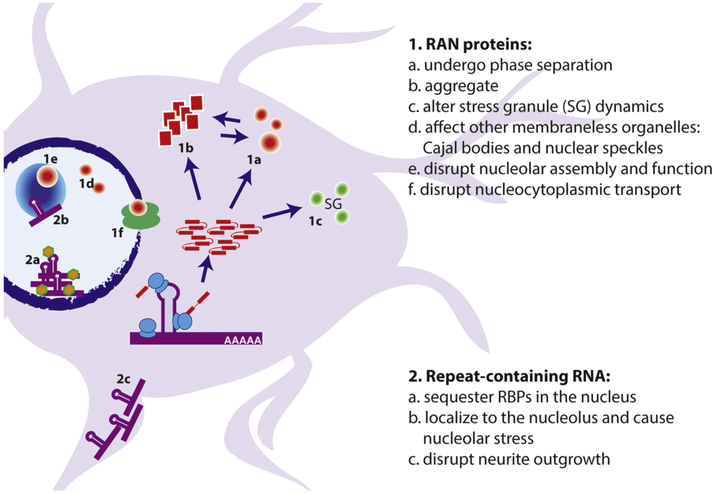
Figure 4:. Mechanisms by which transcribed repeats elicit neurodegeneration.
Expanded repeats can be toxic as RNA or as protein. 1) poly(GR) and poly(PR) containing RAN DPR proteins undergo phase separation (1a) into liquid-like droplets (LLPS) in vitro and in vivo. Poly(GA), poly(GR), and poly(PR) RAN proteins can also alter stress granule assembly and dynamics (1b) and form insoluble aggregates (1c). In the nucleus, RAN proteins can impair the dynamics of Cajal bodies and membraneless organelles (1d), and disrupt nucleolar function and ribosomal biogenesis (1e). They can also disrupt the nuclear envelope and nuclear pore complex (1f). Repeat containing RNAs can sequester important RNA-binding proteins in the nucleus and can themselves undergo LLPS, perhaps in concert with RBPs (2a). Repeat RNAs that exit the nucleus can be exported to neuronal processes where they can impair neurite outgrowth and potentially alter mRNP dynamics (2b).

References

    1. Akbar U, and Ashizawa T. 2015. 'Ataxia', Neurol Clin, 33: 225–48. - PMC - PubMed
    1. Anderson P, and Kedersha N. 2009. 'RNA granules: post-transcriptional and epigenetic modulators of gene expression', Nat Rev Mol Cell Biol, 10: 430–6. - PubMed
    1. Andrew SE, Goldberg YP, Kremer B, Telenius H, Theilmann J, Adam S, Starr E, Squitieri F, Lin B, Kalchman MA, and et al. 1993. 'The relationship between trinucleotide (CAG) repeat length and clinical features of Huntington's disease', Nat Genet, 4: 398–403. - PubMed
    1. Arocena DG, Iwahashi CK, Won N, Beilina A, Ludwig AL, Tassone F, Schwartz PH, and Hagerman PJ. 2005. 'Induction of inclusion formation and disruption of lamin A/C structure by premutation CGG-repeat RNA in human cultured neural cells', Hum Mol Genet, 14: 3661–71. - PubMed
    1. Ascano M Jr., Mukherjee N, Bandaru P, Miller JB, Nusbaum JD, Corcoran DL, Langlois C, Munschauer M, Dewell S, Hafner M, Williams Z, Ohler U, and Tuschl T. 2012. 'FMRP targets distinct mRNA sequence elements to regulate protein expression', Nature, 492: 382–6. - PMC - PubMed

Publication types