


The role of mouse tumour models in the discovery and development of anticancer drugs
- PMID: 31231121
- PMCID: PMC6738037
- DOI: 10.1038/s41416-019-0495-5
The role of mouse tumour models in the discovery and development of anticancer drugs
Abstract
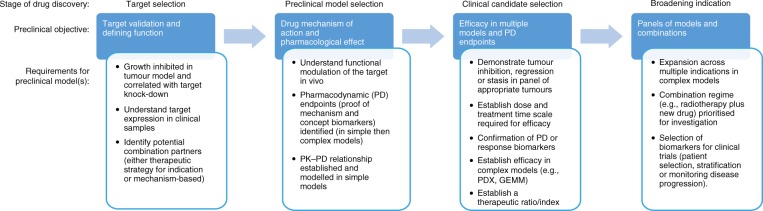
Our understanding of cancer biology has increased substantially over the past 30 years. Despite this, and an increasing pharmaceutical company expenditure on research and development, the approval of novel oncology drugs during the past decade continues to be modest. In addition, the attrition of agents during clinical development remains high. This attrition can be attributed, at least in part, to the clinical development being underpinned by the demonstration of predictable efficacy in experimental models of human tumours. This review will focus on the range of models available for the discovery and development of anticancer drugs, from traditional subcutaneous injection of tumour cell lines to mice genetically engineered to spontaneously give rise to tumours. It will consider the best time to use the models, along with practical applications and shortcomings. Finally, and most importantly, it will describe how these models reflect the underlying cancer biology and how well they predict efficacy in the clinic. Developing a line of sight to the clinic early in a drug discovery project provides clear benefit, as it helps to guide the selection of appropriate preclinical models and facilitates the investigation of relevant biomarkers.
Conflict of interest statement
Drs. Alavijeh and Ireson are employees of Pharmidex Pharmaceutical Services Limited. Dr. Jones is an employee of AstraZeneca. Professor Alan Palmer is a visiting professor at the University of Reading. Ms. Fowler, a doctoral student, is funded by the BBSRC. The authors do not declare any other conflicts of interest.
Figures

References
-
- Mullard A. Cancer model consortium debuts. Nat. Rev. Drug Disco. 2016;15:523. - PubMed
Publication types
MeSH terms
Substances
Grants and funding
LinkOut - more resources
Full Text Sources
Other Literature Sources
Miscellaneous
