Review
. 2019 Jun 7:10:346.
doi: 10.3389/fendo.2019.00346. eCollection 2019.

Nutrition and Female Fertility: An Interdependent Correlation

Affiliations
Review

Nutrition and Female Fertility: An Interdependent Correlation

Erica Silvestris et al. Front Endocrinol (Lausanne). .

Abstract

Besides aging, a number of non-modifiable lifestyle-related factors, such as smoking, elevated consumption of caffeine and alcohol, stress, agonist sports, chronic exposure to environmental pollutants, and other nutritional habits exert a negative impact on a women's fertility. In particular, metabolic disorders including diabetes, obesity, and hyperlipidemia commonly associated to hypercaloric diets are suspected to affect a woman's fertility either by direct damage to oocyte health and differentiation, or by indirect interference with the pituitary-hypothalamic axis, resulting in dysfunctional oogenesis. Obese women show decreased insulin sensitivity determining persistent hyperinsulinemia, which may be involved in the pathogenesis of Polycystic Ovary Syndrome. Thus, the reduced insulin secretion induced by dietary adjustments is an attractive non-pharmacological treatment to prevent infertility, and a Mediterranean diet aimed at maintaining normal body mass may be effective in the preservation of ovarian health and physiology. Furthermore, in relation to the oxidative stress as a co-factor of defective oocyte maturation, an appropriate intake of proteins, antioxidants and methyl-donor supplements (1-Carbon Cycle) may decrease the bioavailability of toxic oxidants resulting in the protection of oocyte maturation.

Keywords: anovulation; diet; infertility; nutrition; obesity; oocytes.


Figures
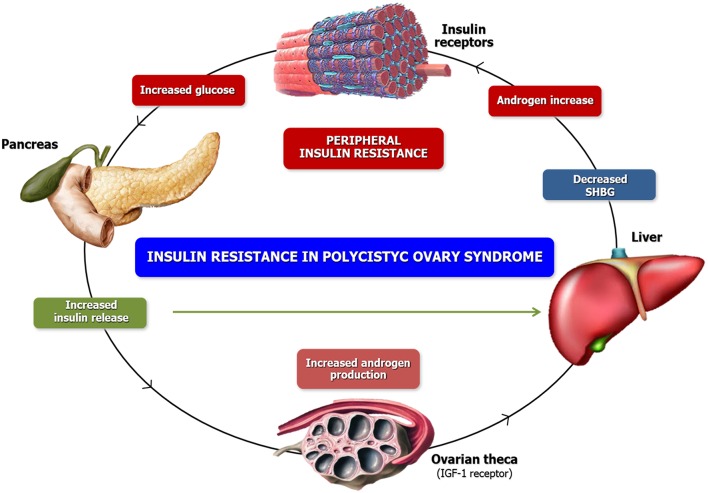
Figure 1
Figure 1
Phatogenesis of Hyperandrogenism. Similar to the high bio-availability of androgens, high insulin concentrations inhibit SHBG production. However, the combined activity of insulin and androgens reduces the SHGB concentrations yielding increased free androgen levels which aggravate the underlying insulin resistance. These conditions ultimately foster a self-propagating positive feed-back loop that increases in severity over time. On the other side, insulin stimulates ovarian androgen production acting via insulin receptors on theca/interstitial cells in ovarian stroma. At high levels, insulin also binds to IGF-1 receptors or possible hybrid receptors, which are structurally similar and use a similar signaling mechanism.
Figure 2
Figure 2
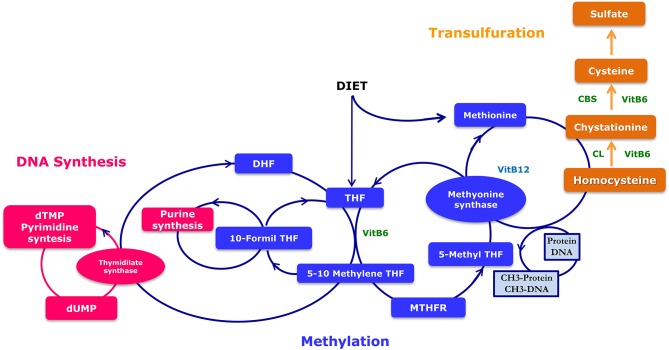
Metabolism of folates. Folic acid cycle involves the recycling of homocysteine to methionine and contains the methyltetrahydrofolate receptor (MTHFR) necessary for the formation of 5-THF. MTHFR catalyzes the reduction of methylentetrahydrofolate (5,10-methylen-THF) to methyl (5-methyl THF) by donating a methyl group. MS can catalyze the transfer of the methyl group from 5-methyl THF to homocysteine, which generates methionine and THF. The cystathionine-beta synthase pathway allows the formation of cysteine from homocysteine, that is a precursor of glutathione and hypotaurine. Impaired methylation will thus lead to a number of major genetic health problems. DHF, Dihydrofolate reductase; THF, Tetrahydrofolate; MTHFR, Methylene Tetrahydrofolate Reductase; CBS, Cystathionine-beta synthase; Cystathionine lyase.
Figure 3
Figure 3
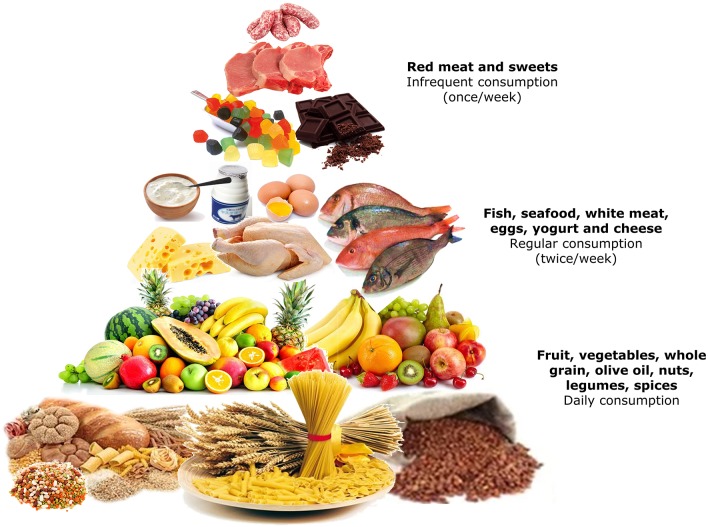
The Mediterranean pyramid of nutrition style and weekly organization of meals.
Figure 4
Figure 4
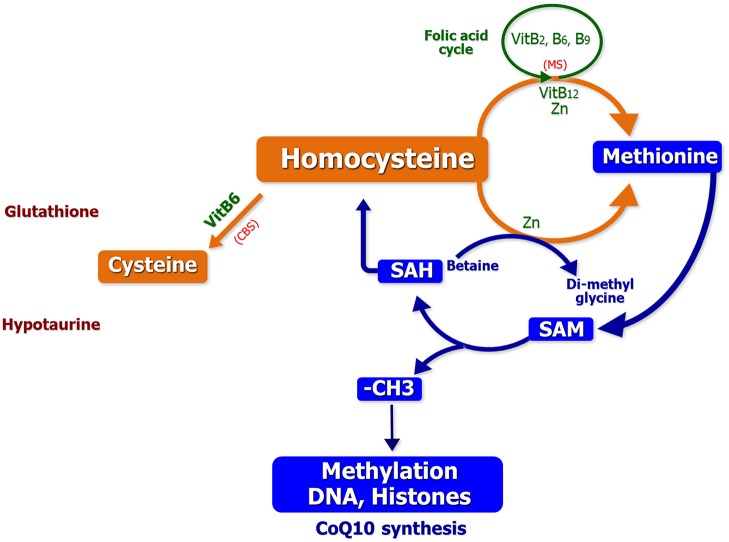
The one carbon cycle: contribution to methylation process and genesis of major antioxidant molecules (76).

References

    1. Habbema JD, Collins J, Leridon H, Evers JL, Lunenfeld B, te Velde ER. Towards less confusing terminology in reproductive medicine: a proposal. Hum Reproduc. (2004) 19:1497–501. 10.1093/humrep/deh303 - DOI - PubMed
    1. Ombelet W, Cooke I, Dyer S, Serour G, Devroey P. Infertility and the provision of infertility medical services in developing countries. Hum Reproduc Update. (2008) 14:605–21. 10.1093/humupd/dmn042 - DOI - PMC - PubMed
    1. Anderson K, Nisenblat V, Norman R. Lifestyle factors in people seeking infertility treatment - a review. Austr N Zeal J Obstetr Gynaecol. (2010) 50:8–20. 10.1111/j.1479-828X.2009.01119.x - DOI - PubMed
    1. Vander Borght M, Wyns C. Fertility and infertility: definition and epidemiology. Clin Biochem. (2018) 62:2–10. 10.1016/j.clinbiochem.2018.03.012 - DOI - PubMed
    1. Firns S, Cruzat VF, Keane KN, Joesbury KA, Lee AH, Newsholme P, et al. . The effect of cigarette smoking, alcohol consumption and fruit and vegetable consumption on IVF outcomes: a review and presentation of original data. Reproduc Biol Endocrinol. (2015) 13:134. 10.1186/s12958-015-0133-x - DOI - PMC - PubMed

LinkOut - more resources