


Neuropsychological and socioeconomic outcomes in adult survivors of pediatric low-grade glioma
- PMID: 31231797
- PMCID: PMC6690772
- DOI: 10.1002/cncr.32186
Neuropsychological and socioeconomic outcomes in adult survivors of pediatric low-grade glioma
Abstract
Background: Current estimates suggest that 75% of children diagnosed with a central nervous system (CNS) tumor will become 5-year survivors. However, survivors of childhood CNS tumors are at increased risk for long-term morbidity.
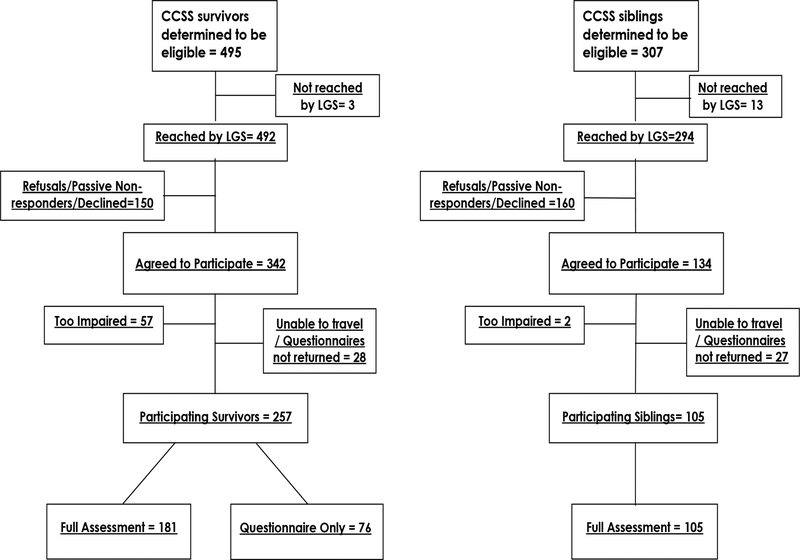
Methods: To determine long-term neuropsychological and socioeconomic status (SES) outcomes, adult survivors of pediatric low-grade gliomas (n = 181) in the Childhood Cancer Survivor Study and a sibling comparison group that was frequency-matched by age and sex (n = 105) completed a comprehensive battery of standardized neuropsychological tests and an SES assessment. Multivariable regression models compared treatment-specific groups for neuropsychological and SES outcomes and evaluated associations with tumor location, age at diagnosis, sex, and age at evaluation.
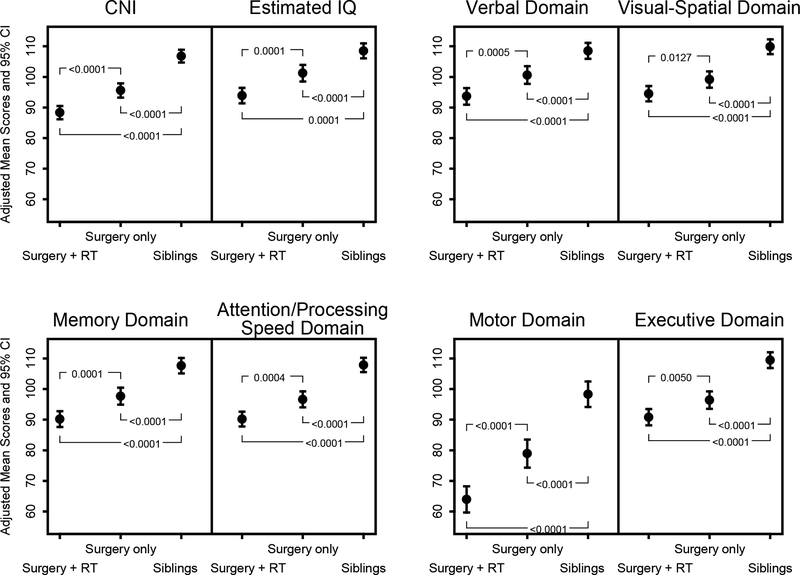
Results: In adjusted models, survivors treated with surgery and radiotherapy (surgery+RT; median age at diagnosis, 7 years; median age at assessment, 41 years) scored lower on estimated IQ than survivors treated with surgery only, who scored lower than siblings (surgery+RT, 93.9; surgery only, 101.2; siblings, 108.5; all P values <.0001). Survivors diagnosed at younger ages had low scores for all outcomes (P < .05) except for attention/processing speed. For SES outcomes, survivors treated with surgery+RT had lower occupation scores (odds ratio [OR], 2.6; 95% confidence interval [CI], 1.1-5.9), lower income (OR, 2.6; 95% CI, 1.3-5.0), and less education (OR, 2.1; 95% CI, 1.1-4.0) than those treated with surgery only.
Conclusions: Decades after treatment, survivors treated with radiotherapy and at younger ages had poorer neuropsychological and SES outcomes. Lifelong surveillance of survivors of pediatric low-grade gliomas may be warranted as life events, stages, and transitions (employment, family, and aging) present new challenges and risks.
Keywords: brain tumors; childhood astrocytoma; neuropsychological.
© 2019 American Cancer Society.
Conflict of interest statement
No conflicts of interest to report
Figures
References
-
- CBTRUS (2011). CBTRUS Statistical Report: Primary brain and central nervous system tumors diagnosed in the United States in 2004-2007. Source: Central Brain Tumor Registry of the United States, Hinsdale, IL: http://www.cbtrus.org
Publication types
MeSH terms
Grants and funding
LinkOut - more resources
Full Text Sources
Medical
