


Bridged Nucleic Acids Reloaded
- PMID: 31234313
- PMCID: PMC6630285
- DOI: 10.3390/molecules24122297
Bridged Nucleic Acids Reloaded
Abstract
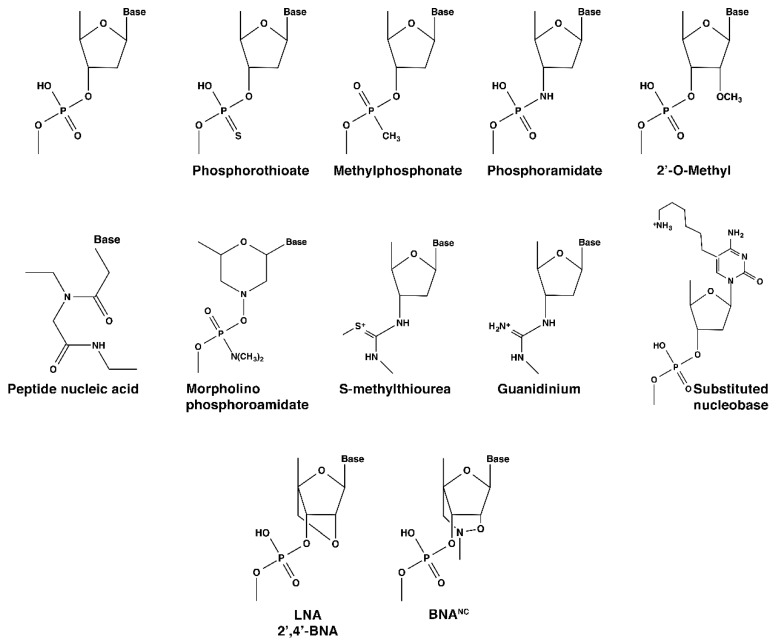
Oligonucleotides are key compounds widely used for research, diagnostics, and therapeutics. The rapid increase in oligonucleotide-based applications, together with the progress in nucleic acids research, has led to the design of nucleotide analogs that, when part of these oligomers, enhance their efficiency, bioavailability, or stability. One of the most useful nucleotide analogs is the first-generation bridged nucleic acids (BNA), also known as locked nucleic acids (LNA), which were used in combination with ribonucleotides, deoxyribonucleotides, or other analogs to construct oligomers with diverse applications. However, there is still room to improve their efficiency, bioavailability, stability, and, importantly, toxicity. A second-generation BNA, BNANC (2'-O,4'-aminoethylene bridged nucleic acid), has been recently made available. Oligomers containing these analogs not only showed less toxicity when compared to LNA-containing compounds but, in some cases, also exhibited higher specificity. Although there are still few applications where BNANC-containing compounds have been researched, the promising results warrant more effort in incorporating these analogs for other applications. Furthermore, newer BNA compounds will be introduced in the near future, offering great hope to oligonucleotide-based fields of research and applications.
Keywords: CRISPR; Cas9; antibiotic resistance; antisense; bridged nucleic acids; hematologic malignancies; hypercholesterolemia; locked nucleic acids; myotonic dystrophy; oligonucleotides.
Conflict of interest statement
The authors declare no conflict of interest. The funders had no role in the writing of the manuscript, or in the decision to publish the results.
Figures
References
Publication types
MeSH terms
Substances
Grants and funding
LinkOut - more resources
Full Text Sources
Other Literature Sources
