


Long non-coding RNA HOXB-AS3 promotes myeloid cell proliferation and its higher expression is an adverse prognostic marker in patients with acute myeloid leukemia and myelodysplastic syndrome
- PMID: 31234830
- PMCID: PMC6591843
- DOI: 10.1186/s12885-019-5822-y
Long non-coding RNA HOXB-AS3 promotes myeloid cell proliferation and its higher expression is an adverse prognostic marker in patients with acute myeloid leukemia and myelodysplastic syndrome
Abstract
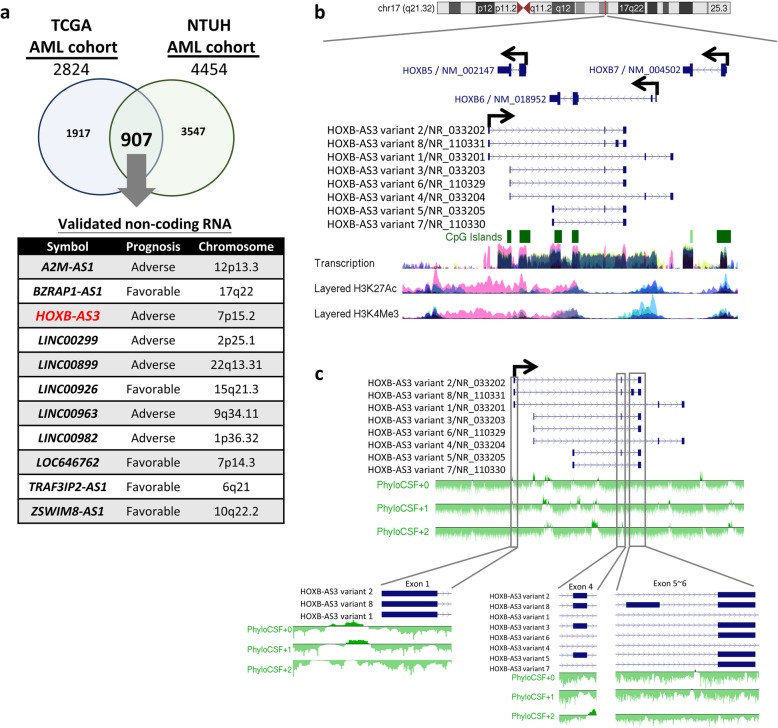
Background: Long non-coding RNAs (lncRNAs) represent the majority of cellular transcripts and play pivotal roles in hematopoiesis. However, their clinical relevance in acute myeloid leukemia (AML) and myelodysplastic syndrome (MDS) remains largely unknown. Here, we investigated the functions of HOXB-AS3, a lncRNA located at human HOXB cluster, in the myeloid cells, and analyzed the prognostic significances in patients with AML and MDS.
Methods: shRNAs were used to downregulate HOXB-AS3 in the cell lines and the effect was evaluated by quantitative polymerase chain reaction. The proliferation of the cell lines was illustrated by proliferation and BrdU flow assays. Further, we retrospectively analyzed the HOXB-AS3 expression in 193 patients with AML and 157 with MDS by microarray analysis, and evaluated its clinical importance.
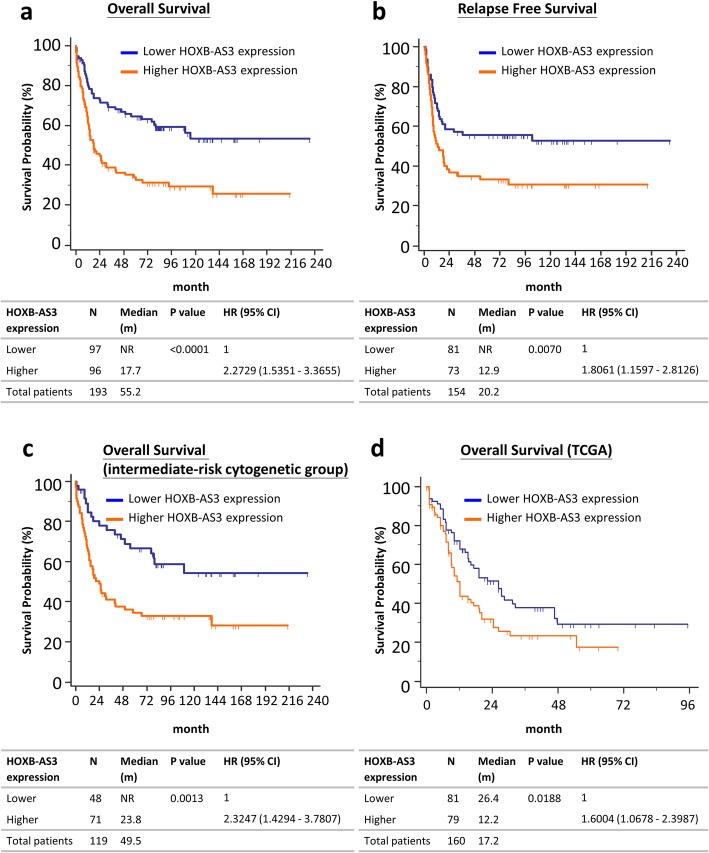
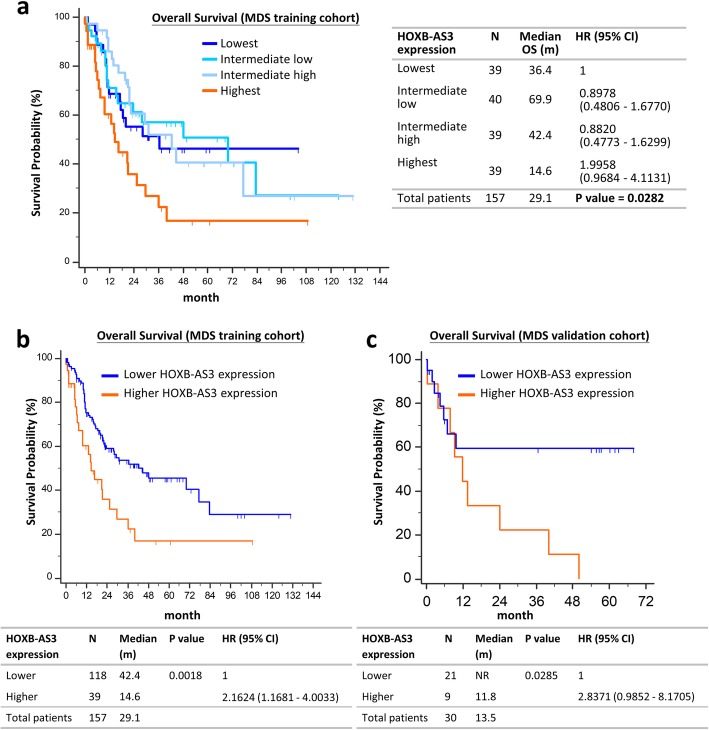
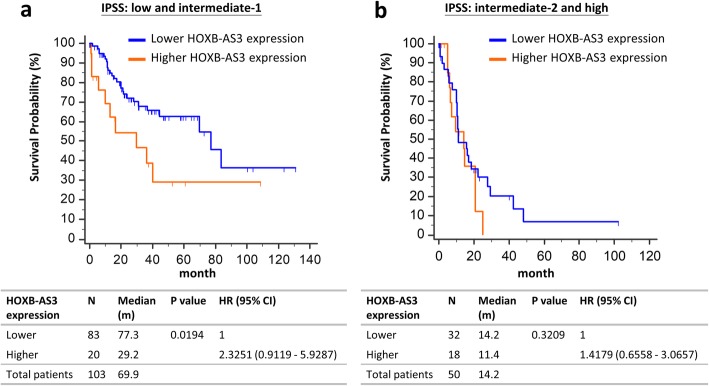
Results: Downregulation of HOXB-AS3 suppressed cell proliferation. Mechanistically, HOXB-AS3 potentiated the expressions of several key factors in cell cycle progression and DNA replication without affecting the expressions of HOX genes. In AML, patients with higher HOXB-AS3 expression had shorter survival than those with lower HOXB-AS3 expression (median overall survival (OS), 17.7 months versus not reached, P < 0.0001; median relapse-free survival, 12.9 months versus not reached, P = 0.0070). In MDS, patients with higher HOXB-AS3 expression also had adverse prognosis compared with those with lower HOXB-AS3 expression (median OS, 14.6 months versus 42.4 months, P = 0.0018). The prognostic significance of HOXB-AS3 expression was validated in the TCGA AML cohort and another MDS cohort from our institute. The subgroup analyses in MDS patients showed that higher HOXB-AS3 expressions could predict poor prognosis only in lower-risk (median OS, 29.2 months versus 77.3 months, P = 0.0194), but not higher-risk group.
Conclusions: This study uncovers a promoting role of HOXB-AS3 in myeloid malignancies and identifies the prognostic value of HOXB-AS3 expression in AML and MDS patients, particularly in the lower-risk group.
Keywords: Acute myeloid leukemia; HOXB-AS3; Myelodysplastic syndrome.
Conflict of interest statement
The authors declare that they have no competing interests.
Figures


References
-
- Greenberg P, Cox C, LeBeau MM, Fenaux P, Morel P, Sanz G, et al. International scoring system for evaluating prognosis in myelodysplastic syndromes. Blood. 1997;89:2079–2088. - PubMed
-
- Voso MT, Fenu S, Latagliata R, Buccisano F, Piciocchi A, Aloe-Spiriti MA, et al. Revised international prognostic scoring system (IPSS) predicts survival and leukemic evolution of myelodysplastic syndromes significantly better than IPSS and WHO prognostic scoring system: validation by the Gruppo Romano Mielodisplasie Italian regional database. J Clin Oncol. 2013;31:2671–2677. doi: 10.1200/JCO.2012.48.0764. - DOI - PubMed
MeSH terms
Substances
LinkOut - more resources
Full Text Sources
Medical
Molecular Biology Databases
Research Materials
Miscellaneous
