


Loss of skin elasticity is associated with pulmonary emphysema, biomarkers of inflammation, and matrix metalloproteinase activity in smokers
- PMID: 31234847
- PMCID: PMC6591816
- DOI: 10.1186/s12931-019-1098-7
Loss of skin elasticity is associated with pulmonary emphysema, biomarkers of inflammation, and matrix metalloproteinase activity in smokers
Abstract
Background: Elastin breakdown and the resultant loss of lung elastic recoil is a hallmark of pulmonary emphysema in susceptible individuals as a consequence of tobacco smoke exposure. Systemic alterations to the synthesis and degradation of elastin may be important to our understanding of disease phenotypes in chronic obstructive pulmonary disease. We investigated the association of skin elasticity with pulmonary emphysema, obstructive lung disease, and blood biomarkers of inflammation and tissue protease activity in tobacco-exposed individuals.
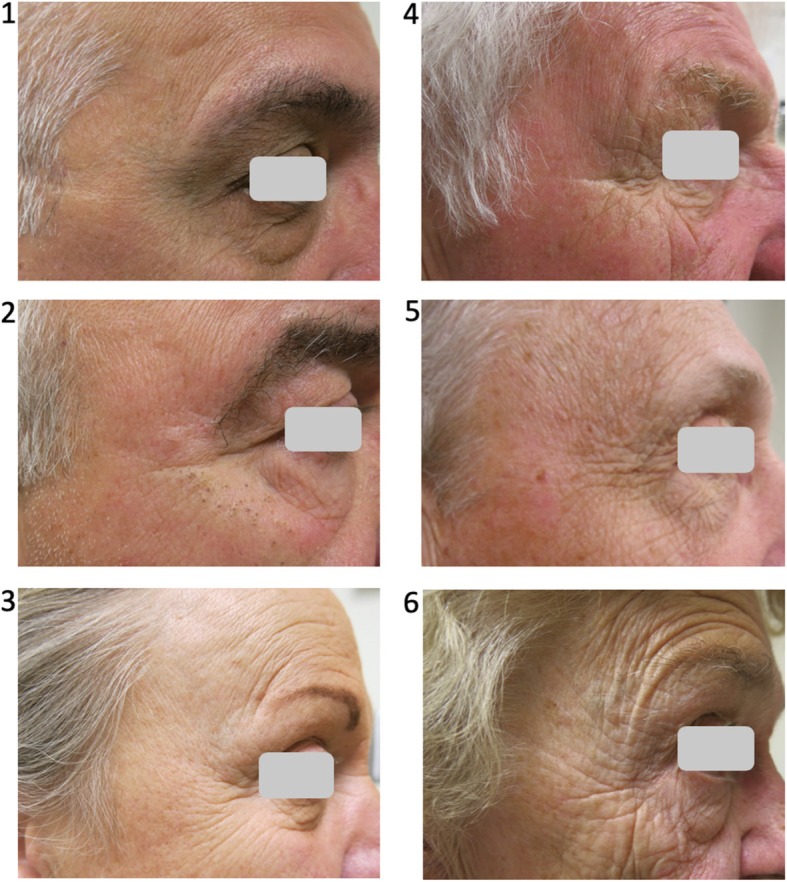
Methods: Two hundred and thirty-six Caucasian individuals were recruited into a sub-study of the University of Pittsburgh Specialized Center for Clinically Orientated Research in chronic obstructive pulmonary disease, a prospective cohort study of current and former smokers. The skin viscoelastic modulus (VE), a determinant of skin elasticity, was recorded from the volar forearm and facial wrinkling severity was determined using the Daniell scoring system.
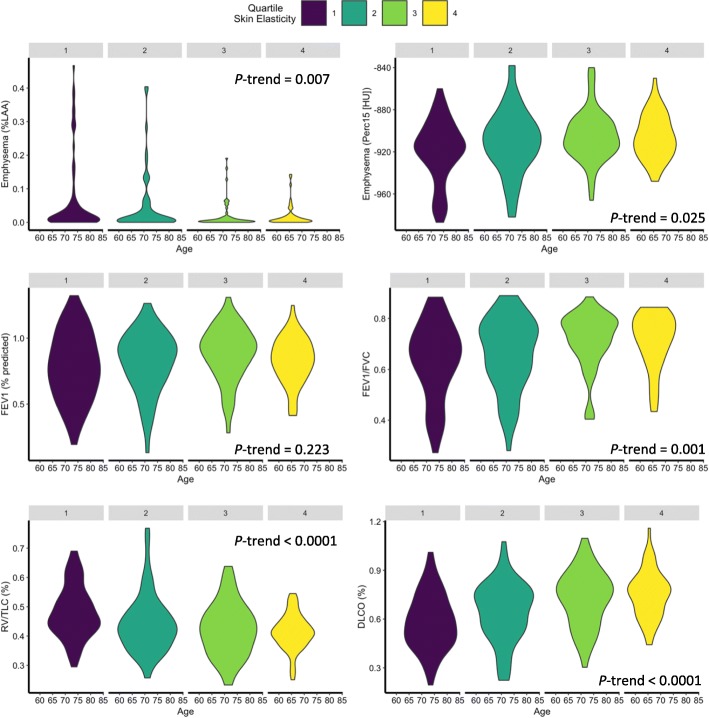
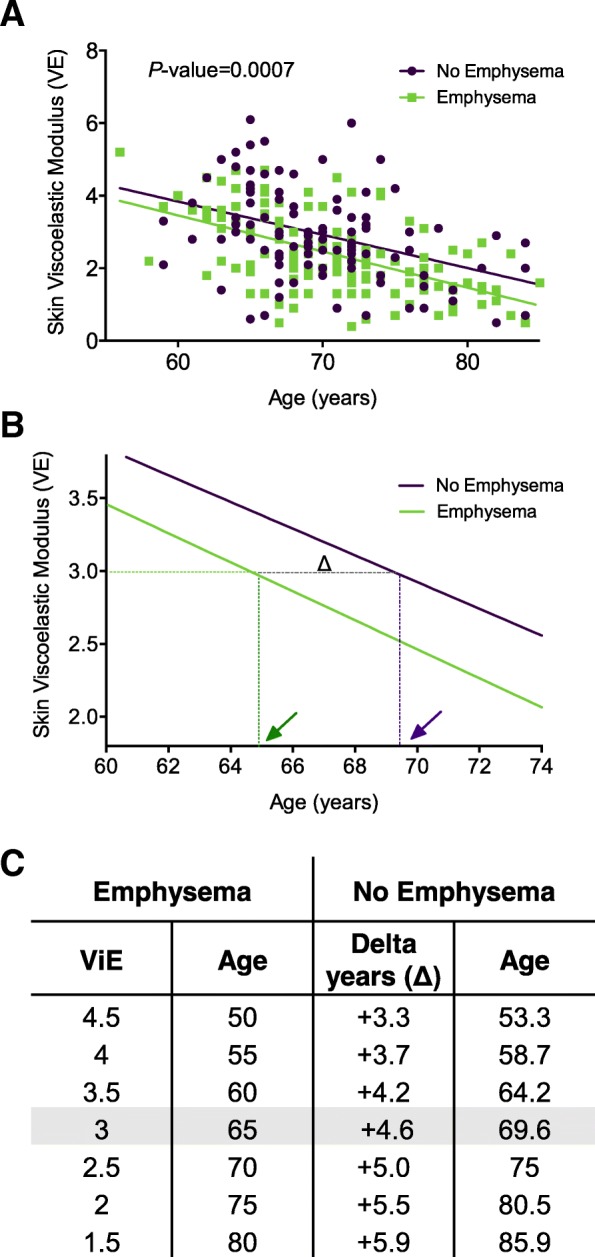
Results: In a multiple regression analysis, reduced VE was significantly associated with cross-sectional measurement of airflow obstruction (FEV1/FVC) and emphysema quantified from computed tomography (CT) images, β = 0.26, p = 0.001 and β = 0.24, p = 0.001 respectively. In emphysema-susceptible individuals, elasticity-determined skin age was increased (median 4.6 years) compared to the chronological age of subjects without emphysema. Plasma biomarkers of inflammation (TNFR1, TNFR2, CRP, PTX3, and SAA) and matrix metalloproteinase activity (MMP1, TIMP1, TIMP2, and TIMP4) were inversely associated with skin elasticity.
Conclusions: We report that an objective non-invasive determinant of skin elasticity is independently associated with measures of lung function, pulmonary emphysema, and biomarkers of inflammation and tissue proteolysis in tobacco-exposed individuals. Loss of skin elasticity is a novel observation that may link the common pathological processes that drive tissue elastolysis in the extracellular matrix of the skin and lung in emphysema-susceptible individuals.
Keywords: COPD; Elasticity; Emphysema; Inflammation; Metalloprotease; Skin.
Conflict of interest statement
The authors declare that they have no competing interests.
Figures
References
-
- Eisner MD, Anthonisen N, Coultas D, Kuenzli N, Perez-Padilla R, Postma D, et al. An official American Thoracic Society public policy statement: Novel risk factors and the global burden of chronic obstructive pulmonary disease. Am J Respir Crit Care Med. 2010;182(5):693–718. - PubMed
-
- Watz H, Waschki B, Kirsten A, Müller K-C, Kretschmar G, Meyer T, et al. The metabolic syndrome in patients with chronic bronchitis and COPD: frequency and associated consequences for systemic inflammation and physical inactivity. Chest. 2009;136(4):1039–1046. - PubMed
-
- Frei A, Muggensturm P, Putcha N, Siebeling L, Zoller M, Boyd CM, et al. Five comorbidities reflected the health status in patients with chronic obstructive pulmonary disease: the newly developed COMCOLD index. J Clin Epidemiol. 2014;67(8):904–911. - PubMed
MeSH terms
Substances
Grants and funding
- K24HL123342/National Institutes of Health (US)
- R01HL090648/NH/NIH HHS/United States
- K23HL126912/National Institutes of Health (US)
- UL1TR001857/National Institutes of Health (US)
- P50HL084948/National Institutes of Health (US)
- R01 HL090648/HL/NHLBI NIH HHS/United States
- K23 HL126912/HL/NHLBI NIH HHS/United States
- CURE SAP 4100062224/Pennsylvania Department of Health
- R21 HL129917/HL/NHLBI NIH HHS/United States
- R01HL128289/HL/NHLBI NIH HHS/United States
- P50 HL084948/HL/NHLBI NIH HHS/United States
- R21HL129917/National Institutes of Health (US)
LinkOut - more resources
Full Text Sources
Medical
Molecular Biology Databases
Research Materials
Miscellaneous
