


Construction of cardiomyoblast sheets for cardiac tissue repair: comparison of three different approaches
- PMID: 31236767
- PMCID: PMC6663965
- DOI: 10.1007/s10616-019-00325-2
Construction of cardiomyoblast sheets for cardiac tissue repair: comparison of three different approaches
Abstract
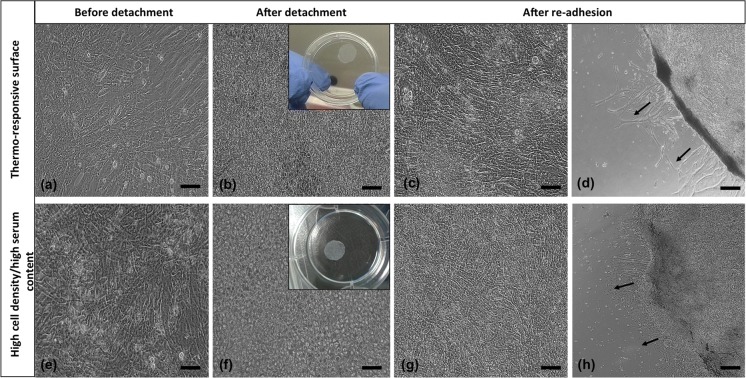
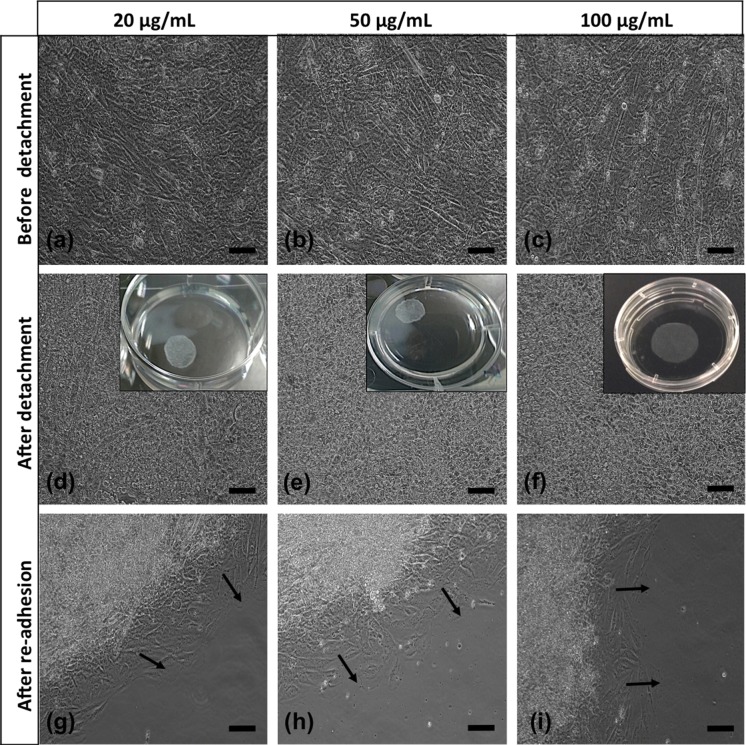
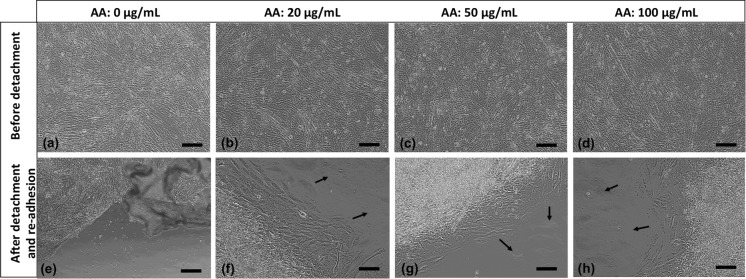
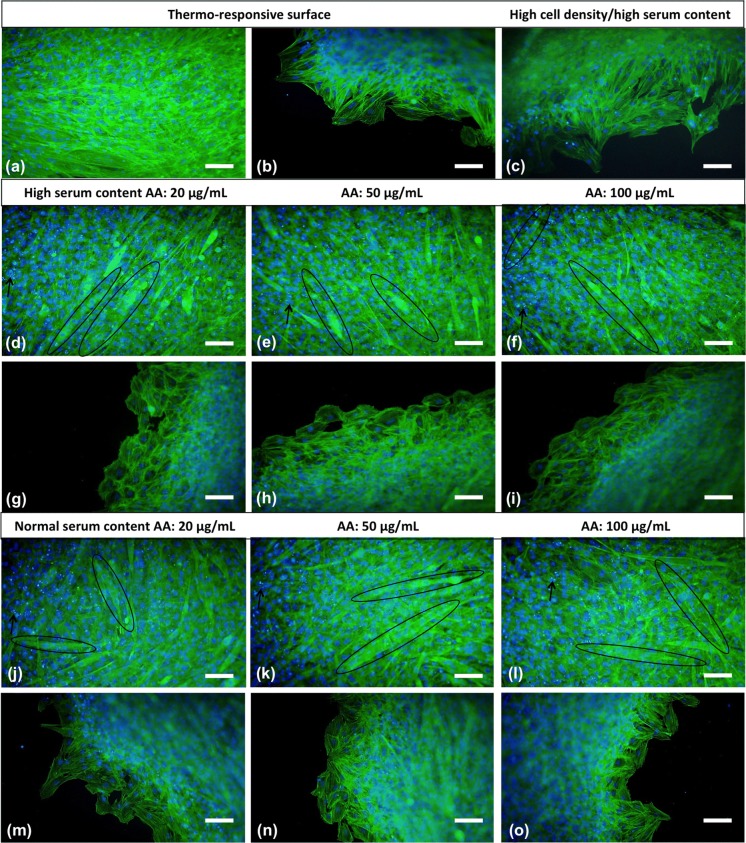
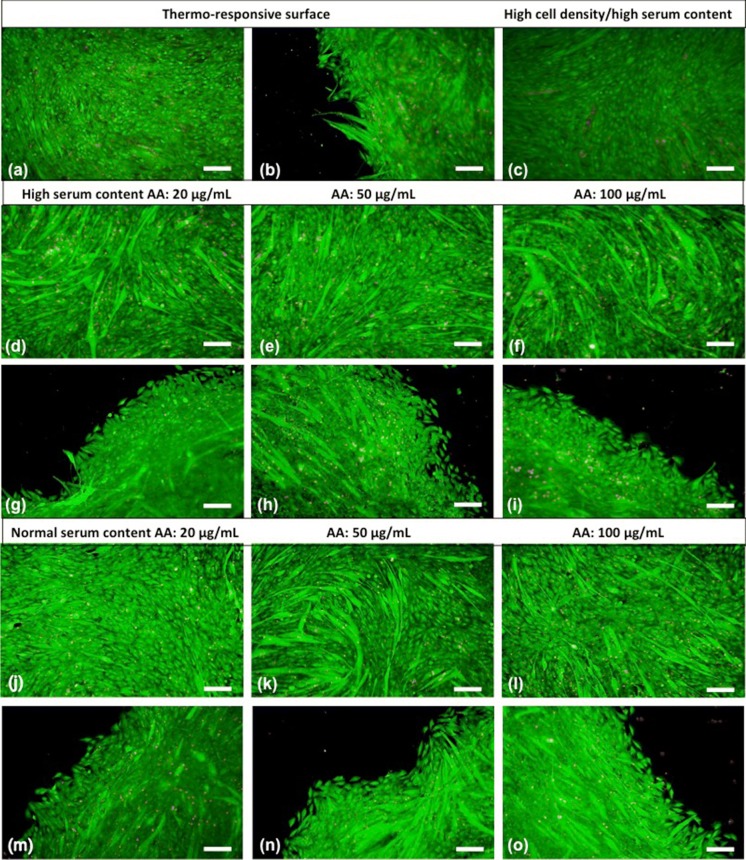
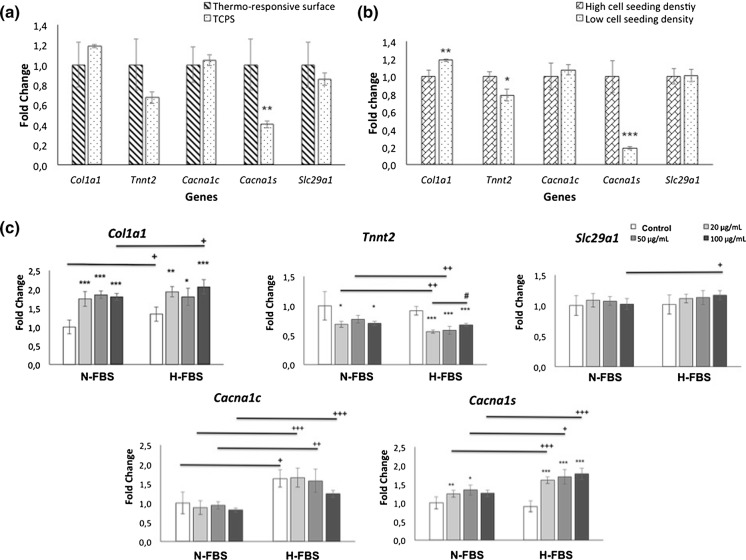
Recently, cell sheet engineering has emerged as one of the most accentuated approaches of tissue engineering and cardiac tissue is the pioneering application area of cell sheets with clinical use. In this study, we cultured rat cardiomyoblasts (H9C2 cell line) to obtain cell sheets by using three different approaches; using (1) thermo-responsive tissue culture plates, (2) high cell seeding density/high serum content and (3) ascorbic acid treatment. To compare the outcomes of three methods, morphologic examination, immunofluorescent stainings and live/dead cell assay were performed and the effects of serum concentration and ascorbic acid treatment on cardiac gene expressions were examined. The results showed that cardiomyoblast sheets were successfully obtained in all approaches without losing their integrity and viability. Also, the results of RT-PCR analysis showed that the types of tissue culture surface, cell seeding density, serum concentration and ascorbic acid treatment affect cardiac gene expressions of cells in cell sheets. Although three methods were succeeded, ascorbic acid treatment was found as the most rapid and effective method to obtain cell sheets with cardiac characteristics.
Keywords: Ascorbic acid; Cardiac tissue; Cell sheet engineering; H9C2 cell line; Thermo-responsive surface.
Conflict of interest statement
The authors declare that they have no conflict of interest.
Figures
References
Grants and funding
LinkOut - more resources
Full Text Sources
