


Giant villous adenoma of rectum- what is the malignant potential and what is the optimal treatment? A case and review of literature
- PMID: 31238922
- PMCID: PMC6593568
- DOI: 10.1186/s12957-019-1650-4
Giant villous adenoma of rectum- what is the malignant potential and what is the optimal treatment? A case and review of literature
Abstract
Introduction: Villous adenomas are dubiously benign lesions, which are difficult to interpret because of their malignant potential. Distal villous adenomas present with bleeding or mucus discharge. Giant adenomas are not amenable for endoscopic or transanal resection. Only few isolated cases have been reported by laparoscopic resection. We present our case of a circumferential giant villous adenoma of the rectum managed successfully by laparoscopic ultra-low anterior resection with colo-anal anastomosis with a review of literature in regard to their malignant potential.
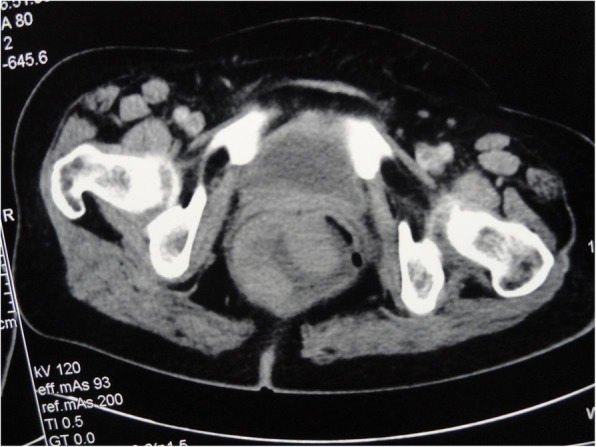
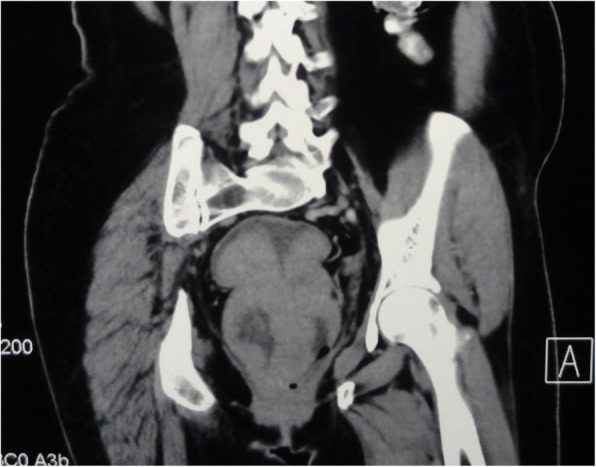
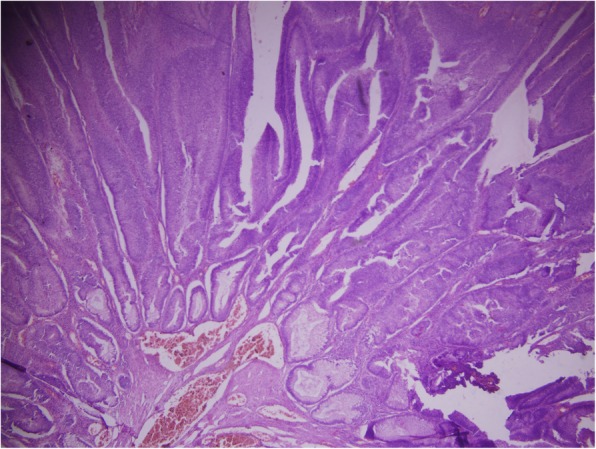
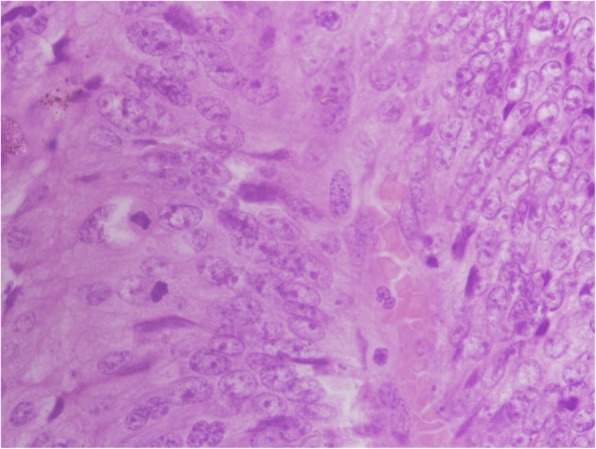
Case report: A 62-year-old lady presented with complaints of painless bleeding per rectum and a fleshy mass protruding from the anal canal which on digital rectal examination appeared a large soft velvety flat mass with mucus discharge. Colonoscopy showed circumferential irregular, friable, edematous mucosa in rectum extending for 15 cm. Computed tomography showed a large heterogeneously enhancing polypoid mass lesion in the rectal wall involving the entire rectum. The patient underwent laparoscopic low anterior resection with colo-anal anastomosis and protecting loop ileostomy. Histopathological examination of the resected specimen revealed villous adenoma of the rectum with moderate to severe dysplasia.
Discussion: Villous adenomas are sessile growths lined by dysplastic glandular epithelium, whose risk of malignancy is especially high up to 50% when greater than 2 cm in size. Large size, villous content, and distal location are all associated with severe dysplasia in colorectal adenomas. Large villous rectal tumors, particularly of circumferential type pose a great challenge for endoscopic or transanal removal. Henceforth, open or laparoscopic surgery is required for these cases.
Conclusion: Giant rectal villous polyps are usually unresectable by endoscopic methods or transanal endoscopic microsurgery and are associated with a high rate of unsuspected cancer which requires a formal radical oncologic resection. As per current data, the combined risk of dysplasia/malignancy is about 83% with 50% risk of dysplasia and frank malignancy in 33% of cases of giant rectal villous adenomas of more than 8 cm in size. Laparoscopic colorectal resection is safe and effective.
Keywords: Adenoma; Colo-anal; Colorectal carcinoma; Giant; Laparoscopic; Malignant; Rectal; Villous.
Conflict of interest statement
The authors declare that they have no competing interests.
Figures

References
-
- Giuliani A, Caporale A, Corona M, Ricciardulli T, di Bari M, Demoro M, et al. Large size, Villous content and Distal location are associated with severe dysplasia in colorectal adenomas. Anticancer Res. 2006;26:3717–3722. - PubMed
Publication types
MeSH terms
LinkOut - more resources
Full Text Sources
Research Materials
