Review
. 2019 May 23:2019:6313242.
doi: 10.1155/2019/6313242. eCollection 2019.

A Perspective Review on the Role of Nanomedicine in the Modulation of TNF-TNFR2 Axis in Breast Cancer Immunotherapy

Affiliations
Review

A Perspective Review on the Role of Nanomedicine in the Modulation of TNF-TNFR2 Axis in Breast Cancer Immunotherapy

Mohammad A I Al-Hatamleh et al. J Oncol. .

Abstract

In the past decade, nanomedicine research has provided us with highly useful agents (nanoparticles) delivering therapeutic drugs to target cancer cells. The present review highlights nanomedicine applications for breast cancer immunotherapy. Recent studies have suggested that tumour necrosis factor (TNF) and its receptor 2 (TNFR2) expressed on breast cancer cells have important functional consequences. This cytokine/receptor interaction is also critical for promoting highly immune-suppressive phenotypes by regulatory T cells (Tregs). This review generally provides a background for nanoparticles as potential drug delivery agents for immunomodulators and further discusses in depth the potential of TNF antagonists delivery to modulate TNF-TNFR2 interactions and inhibit breast cancer progression.


Figures
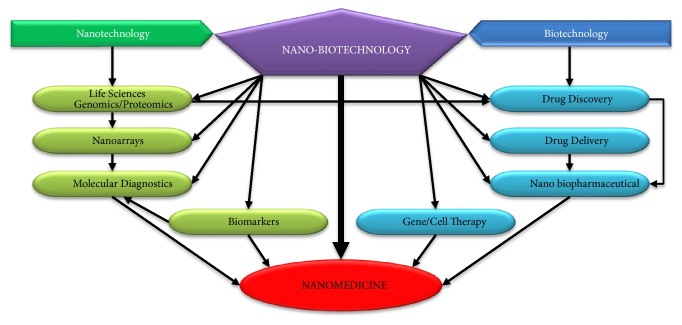
Figure 1
Figure 1
Illustration of how nanomedicine research is based on the applications of nanobiotechnology (adapted from Jain, 2008 [5]).
Figure 2
Figure 2
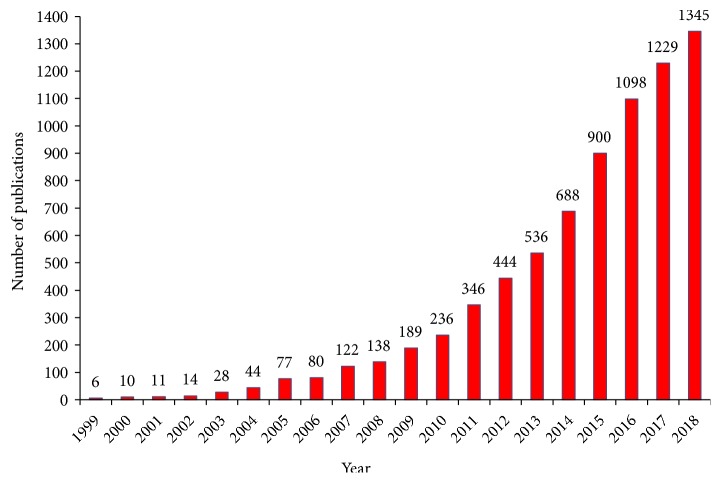
Annual publications regarding cancer nanomedicine research in the recent 20 years (applied on PubMed database on December 11, 2018, by using search terms: cancer nanomedicine/nanoparticles).
Figure 3
Figure 3
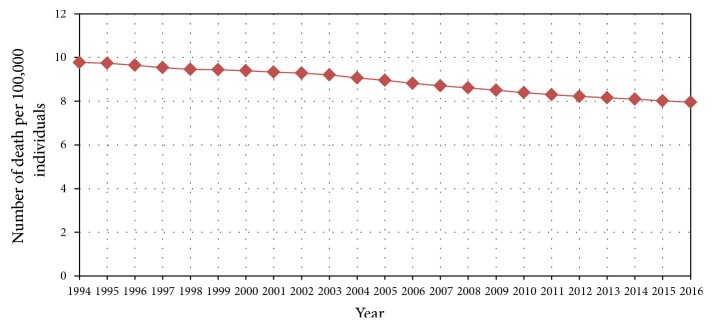
Global death rates caused by breast cancer between 1994 and 2016 [36].
Figure 4
Figure 4
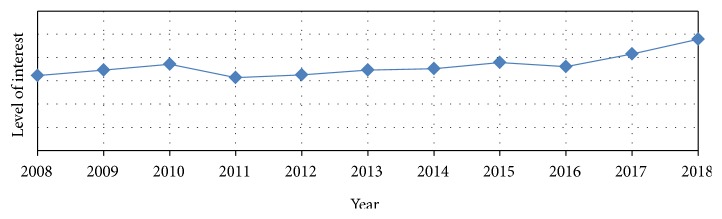
A search shows the levels of population awareness regarding breast cancer medications/treatments, over the recent 10 years. Applied on the Google Trends database up to December 11, 2018.
Figure 5
Figure 5
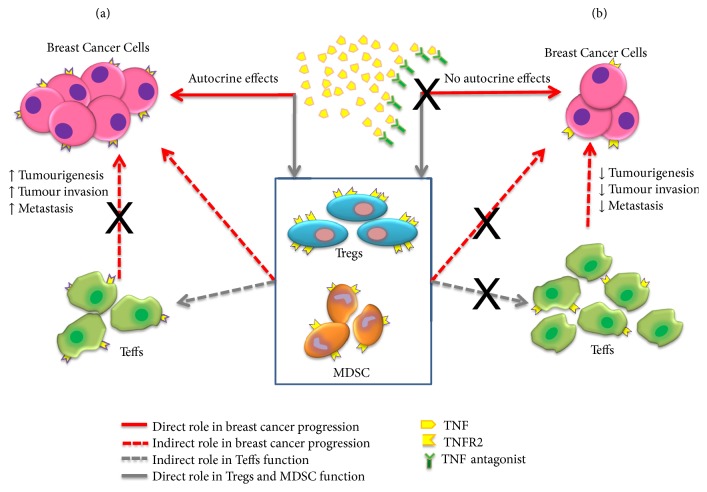
Role of TNF-TNFR2 in the progression of breast cancer and the potential role of TNF antagonists in competing with TNFR2 by mopping up excess soluble TNF and binding on the membrane-bound TNF. (a) TNFR2 is expressed on immune cells and tumour cells in cancer microenvironment. Instead of apoptosis, TNFR2 induces malignant transformation and tumour proliferation by sTNF that activates TNFR2 to enhance Tregs, cancer cells, and MDSC. Therefore, TNFR2 is implicated in enhancing tumour progression either by maintaining cancer microenvironment (immune responses) and enhancing cancer immune evasion, or by inducing cancer cells survival and proliferation [116]. TNFR2 was implicated in promoting the progression of breast cancer via stimulation of AKT signalling pathway which protects against DNA damage and, consequently, enhances proliferation, CAF induction, angiogenesis, and carcinogenesis. Further, a positive association had been reported between TNFR2 expression and its prognosis in terms of size of tumour, higher pathological grade, advanced clinical stage, and dampened doxorubicin resistance [95, 102]. (b) We hypothesized that TNF antagonists would modify breast cancer cells' signalling effects that lead to division, migration, differentiation, or death by assessing their expression markers and secreted cytokines.
Figure 6
Figure 6
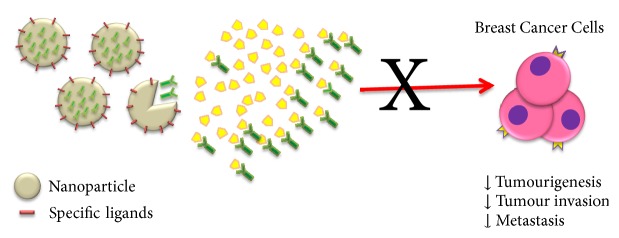
Nanoparticles are expected to serve as an efficient tool to deliver TNF antagonists or even to directly regulate TNF-TNFR2 interactions in breast cancer cells that leads to immunological cascades as observed in Figure 5(b).

References

    1. Whatmore R. W. Nanotechnology—what is it? should we be worried? Occupational Medicine. 2006;56(5):295–299. doi: 10.1093/occmed/kql050. - DOI - PubMed
    1. History of Nanotechnology. TryNano.org, 2002, http://www.trynano.org/about/history-nanotechnology.
    1. Colman D. Richard Feynman introduces the world to nanotechnology with two seminal lectures (1959 & 1984) Open Culture. 2013
    1. Chan C. From Nanotech to Nanoscience. Distillations. 2008
    1. Jain K. K. Nanomedicine: application of nanobiotechnology in medical practice. Medical Principles and Practice. 2008;17(2):89–101. doi: 10.1159/000112961. - DOI - PubMed

LinkOut - more resources