


Late-onset "white cord syndrome" in an elderly patient after posterior cervical decompression and fusion: a case report
- PMID: 31240122
- PMCID: PMC6461846
- DOI: 10.1038/s41394-019-0174-z
Late-onset "white cord syndrome" in an elderly patient after posterior cervical decompression and fusion: a case report
Abstract
Introduction: In 2013, a rare early complication following cervical decompression the so-called "white cord syndrome" (WCS) was described for first time. This designation was given on the basis of the postoperative appearance of intramedullary hypertense areas in T2-MRI, resulting in devastating neurological damage. To our knowledge, only three cases of WCS have been published; we hereby present the fourth case, but the first one with late-onset presentation of this syndrome.
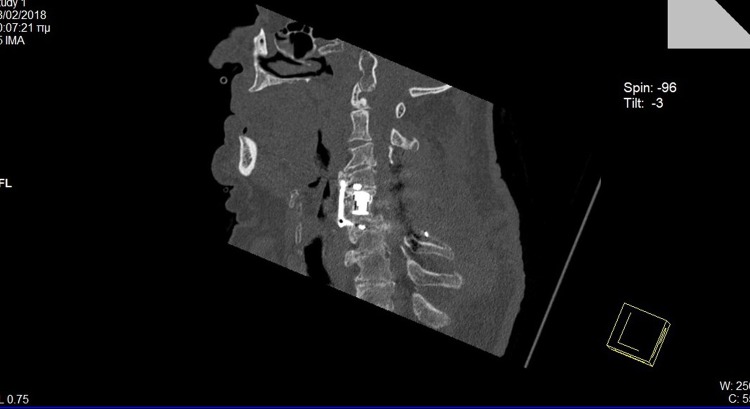
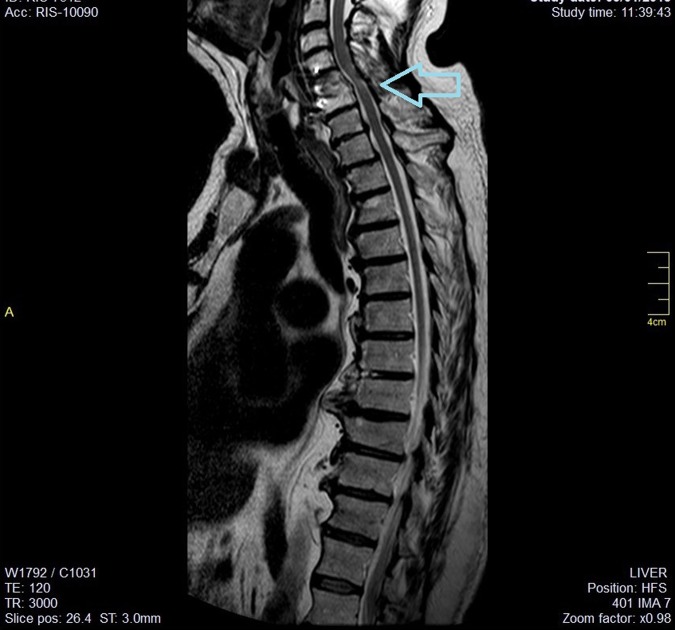
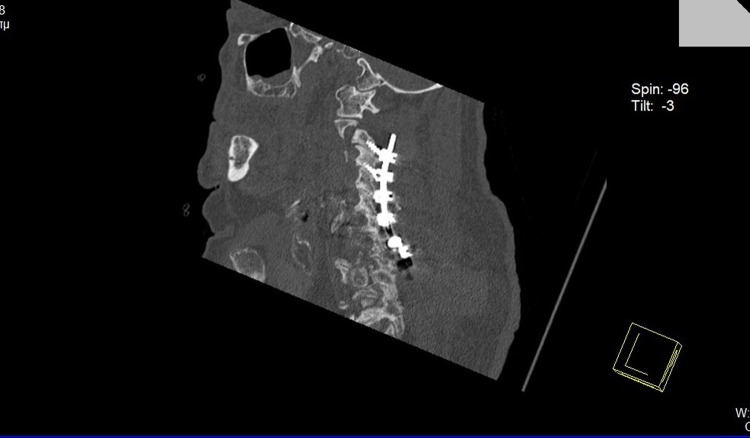
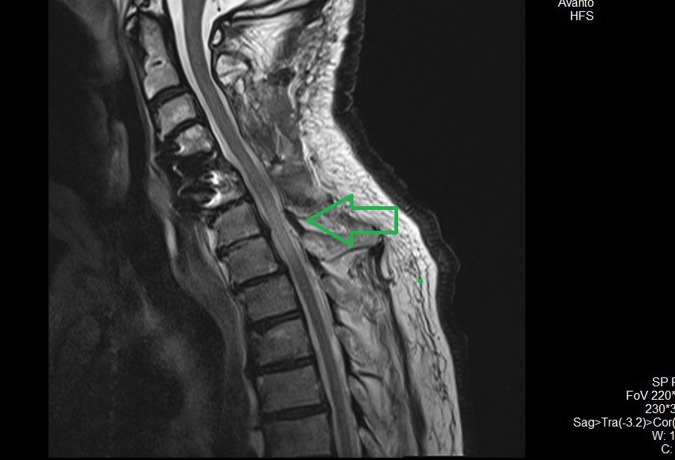
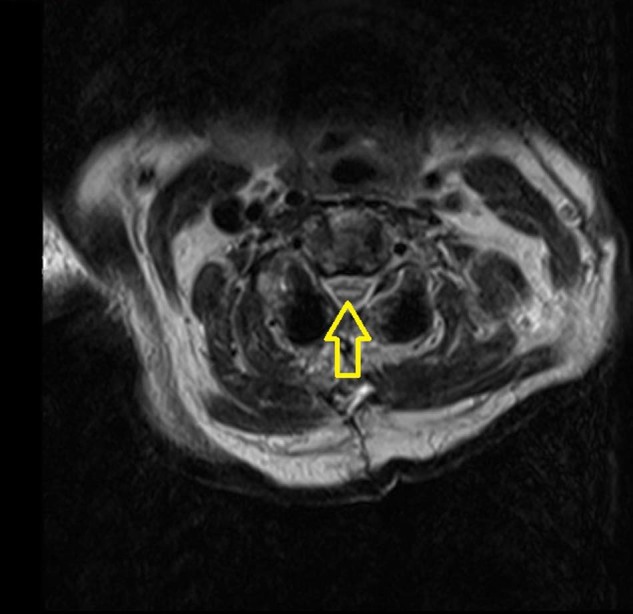
Case presentation: A 79-year-old male patient with Nurick grade 3 CSM was referred to our institution. He had already had a double-level C4-C6 anterior cervical decompression and fusion (ACDF) 2 years ago in another institution. The patient underwent posterior decompression from C3 to C6 plus C2-C7 lateral mass screw fusion. Within the first 24 h following surgery, he gradually developed C6 incomplete paraplegia (ASIA B). Cervical MRI disclosed a hypertensive signal in T2-weighted sequences at C6-C7 levels and the diagnosis of WCS was suspected. Revision surgery was made 30 h following our first surgery, with wider posterior decompression accompanied by intravenous methylprednisolone. The patient's neurologic status was improved, but the final neurologic outcome was worse (Nurick 4) than the preoperative status and subsequently did not change at all.
Discussion: To the best of our knowledge, this is the first report of a late-onset WCS and the fourth case of WCS per se. Spine surgeons should be aware of this rare but serious complication. We highlight possible risk factors and review the literature on the hypotheses about the pathophysiology of WCS.
Conflict of interest statement
Compliance with ethical standardsThe authors declare that they have no conflict of interest.
Figures
References
Publication types
MeSH terms
LinkOut - more resources
Full Text Sources
Medical
Miscellaneous
