


Effect of co-application of phosphorus fertilizer and in vitro-produced mycorrhizal fungal inoculants on yield and leaf nutrient concentration of cassava
- PMID: 31242274
- PMCID: PMC6594633
- DOI: 10.1371/journal.pone.0218969
Effect of co-application of phosphorus fertilizer and in vitro-produced mycorrhizal fungal inoculants on yield and leaf nutrient concentration of cassava
Abstract
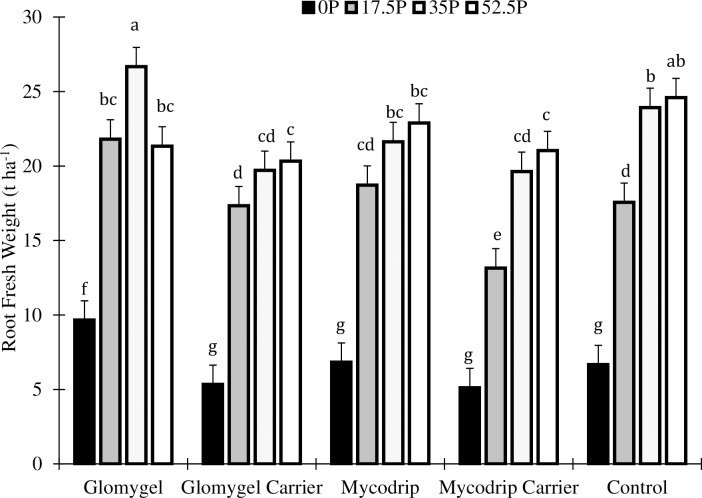
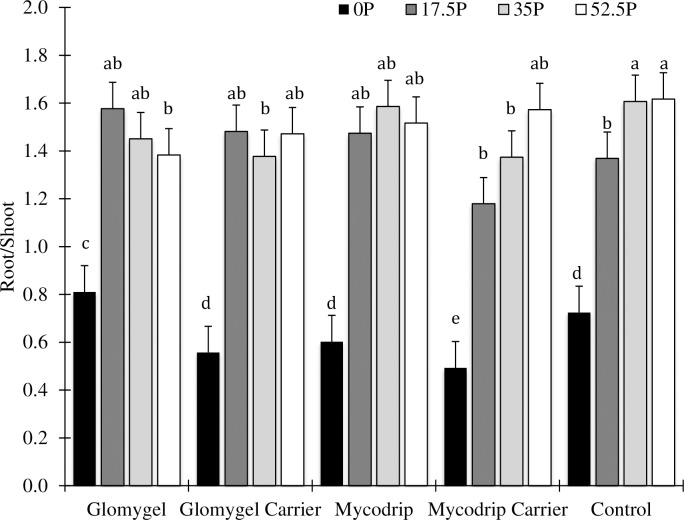
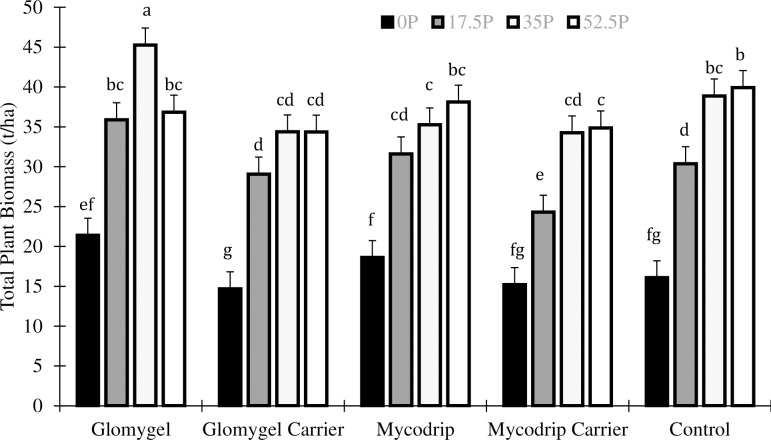
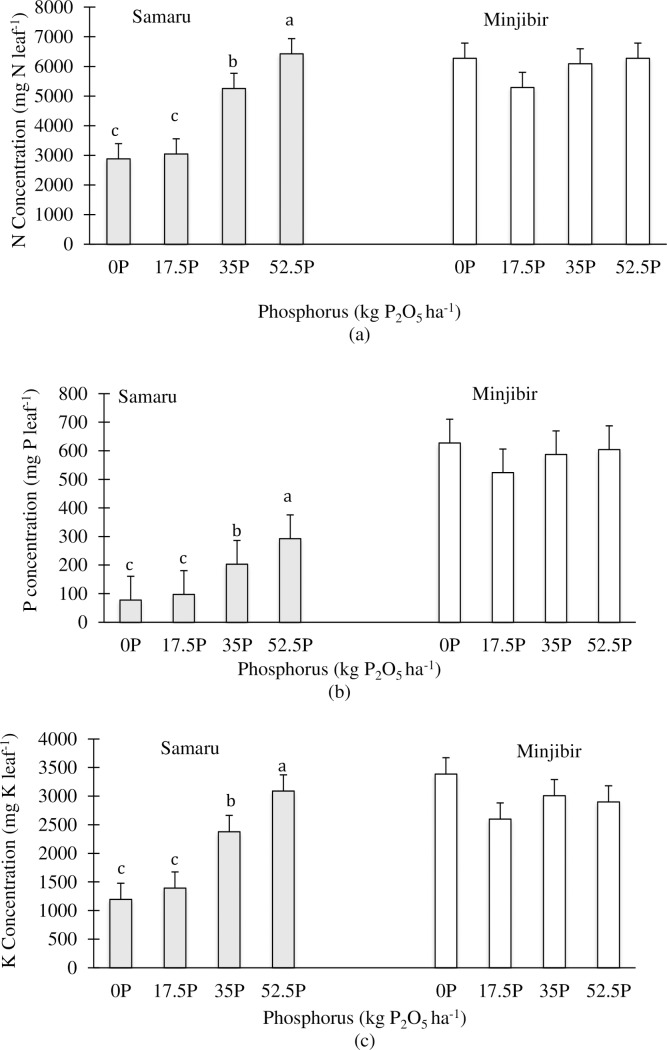
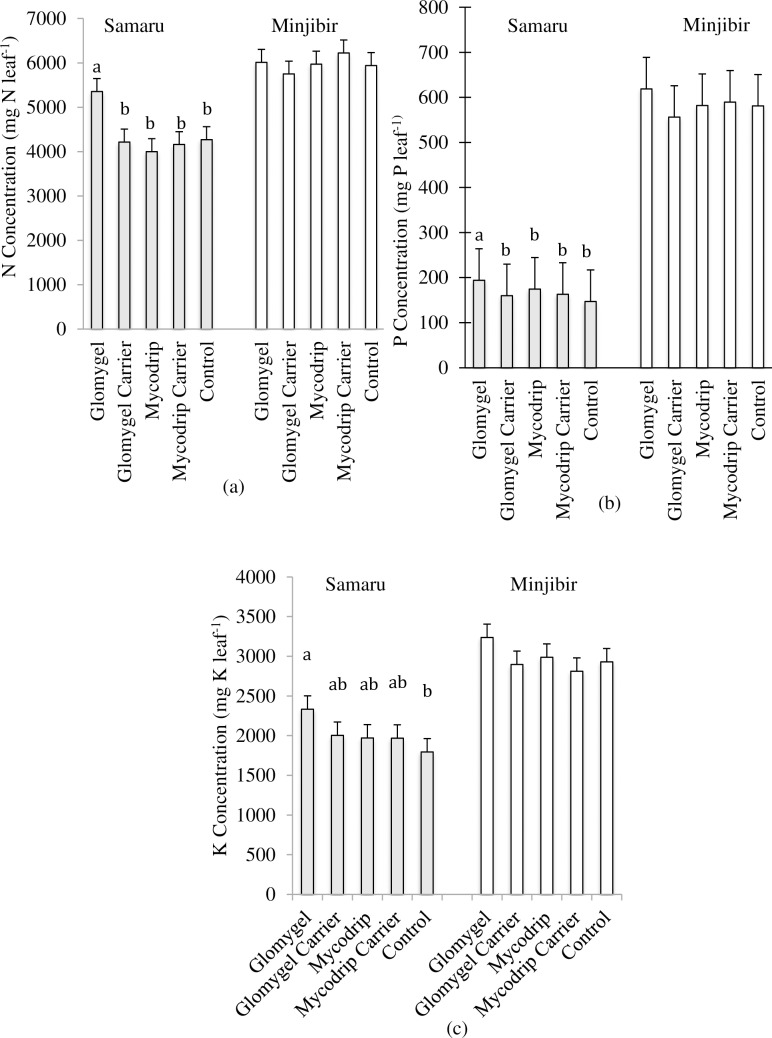
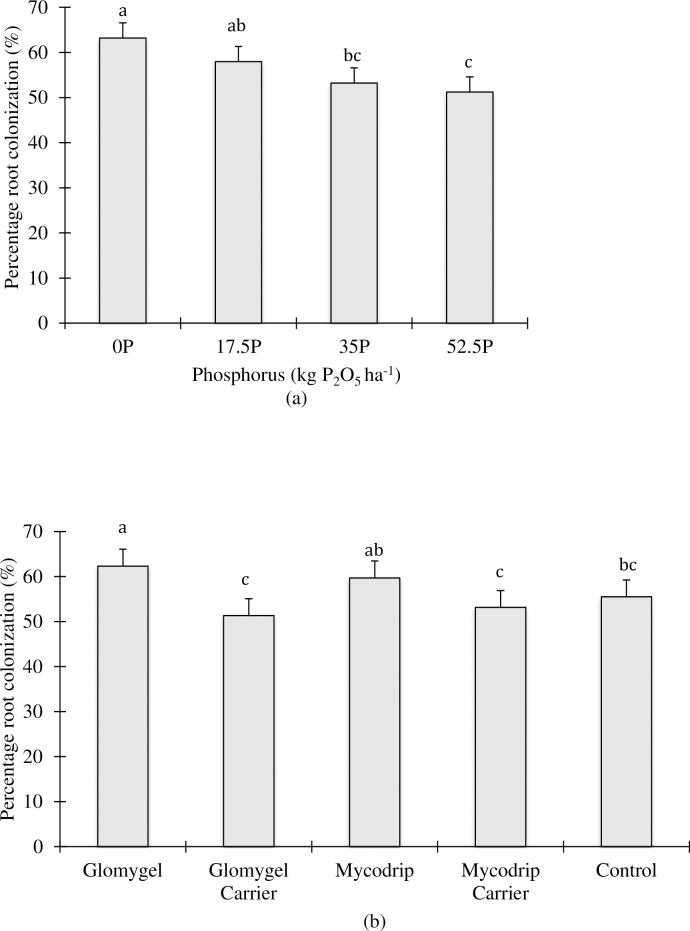
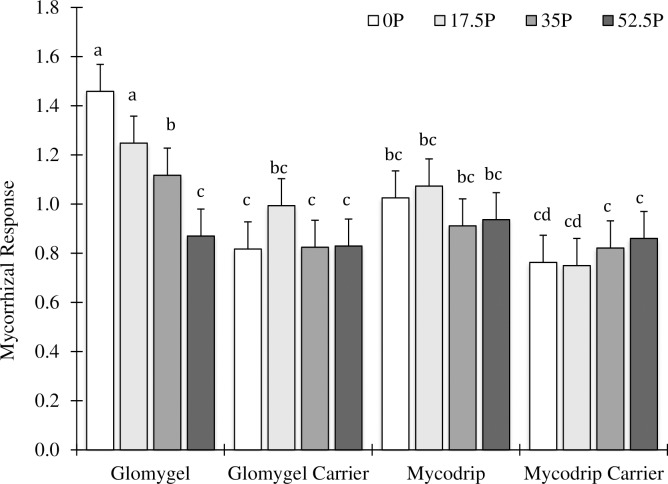
The adaptability of cassava to low fertile and marginal soils facilitates its production in subsistent agriculture. As a result, smallholder farmers rarely apply fertilizers. The current yield gap is therefore very large, calling for application of fertilizers and soil amendments to improve its productivity. Field experiments were carried out to assess the potential of partially substituting Phosphorus (P) fertilizers by in vitro-produced arbuscular mycorrhizal fungal (AMF) inoculants in cassava production in two agro-ecologies of Nigeria: Northern Guinea Savanna (Samaru) and Sudan Savanna (Minjibir). The experiments were laid out in a split plot design with P levels (0, 17.5, 35 and 52.5 kg P2O5 ha-1) as main plot and AMF inoculants (Control, Glomygel, Glomygel carrier, Mycodrip, Mycodrip carrier) as subplots. The results in Samaru showed that there was significant interaction between AMF and P in root fresh weight, total biomass and root to shoot ratio. The root fresh weights of the inoculated cassava increased proportionally with application of P. However, highest root fresh weight of cassava inoculated with Glomygel was observed at 35 kg P2O5 ha-1 recording 25% yield increase compared to 52.5 kg P2O5 ha-1 application. Interestingly, Cassava inoculated with Glomygel at 17.5 kg P2O5 ha-1 gave root fresh yield statistically similar to where 35 kg P2O5 ha-1 was applied. This represented a 50% reduction in P fertilizer use. Also, cassava inoculated with Glomygel increased leaf nutrient concentrations, which strongly correlated with the root fresh yield. However, no effects of inoculant carriers were observed in yield and nutrient concentrations. Contrarily, there was no significant treatment effect in Minjibir for nearly all the measured parameters. Cassava yield was however, higher in Minjibir than Samaru probably due to soil fertility and structural differences, which resulted in few observable effects of AMF and P treatments at Minjibir. We conclude that under low P conditions inoculation with in vitro produced AMF inoculants could be employed to reduce P fertilizer requirements for cassava and improve yields, but the variability of the responses as a result of soil heterogeneity and the identity of the fungal strain in the inoculant require further investigations before recommending the practice.
Conflict of interest statement
The authors have declared that no competing interests exist.
Figures
References
-
- Zafar M, Abbasil MK, Rahim N, Khaliq A, Shaheen A, Jamil M et al. (2011) Influence of integrated phosphorus supply and plant growth promoting rhizobacteria on growth, nodulation, yield and nutrient uptake in Phaseolus vulgaris. Afr J Biotech 10(74): 16793–16807.
-
- Tsado PA, Osunde OA, Igwe CA, Adeboye MKA, Lawal BA (2012) Phosphorus sorption characteristics of some selected soil of the Nigerian Guinea Savanna. Int J Agri Sci 2(7): 613–618.
-
- Nwoke OC, Vanlauwe B, Diels J, Sanginga N, Osunbi O (2004) The distribution of phosphorus fractions and desorption characteristics of some soils in the moist savanna zone of West Africa. Nut Cycl Agroecosyst 69: 127–141.
-
- Kamara AY, Kwari J, Ekeleme F, Omoigui L, Abaidoo RC (2008) Effect of phosphorus application and soybean cultivar on grain and dry matter yield of subsequent maize in the tropical savannas of north-eastern Nigeria. Afr J Biotech 7(15): 2593–2599.
Publication types
MeSH terms
Substances
LinkOut - more resources
Full Text Sources
Research Materials
Miscellaneous
