


Difficult Access and Poor Productivity: Mammography Screening in Brazil
- PMID: 31244310
- PMCID: PMC7021592
- DOI: 10.31557/APJCP.2019.20.6.1857
Difficult Access and Poor Productivity: Mammography Screening in Brazil
Abstract
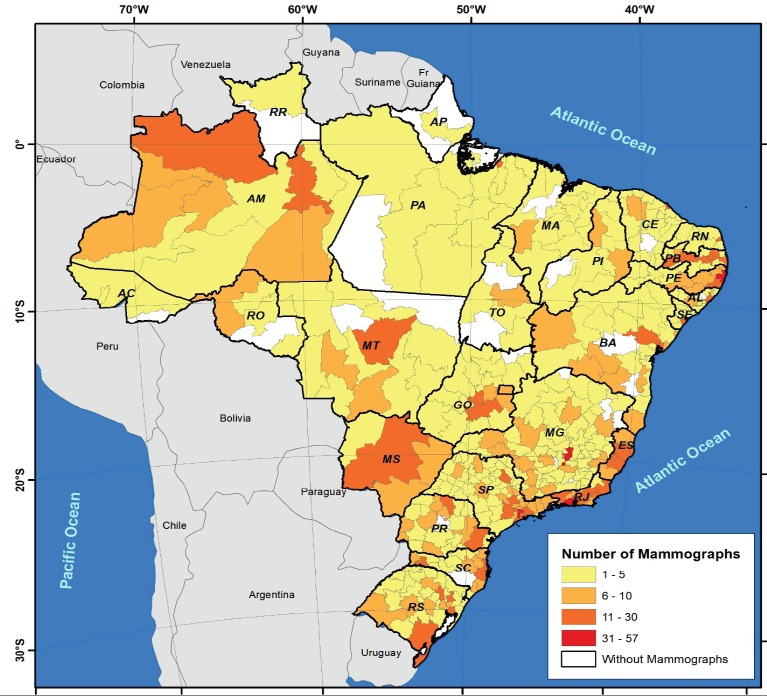
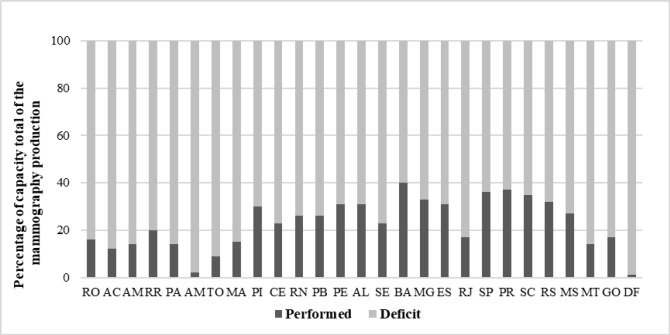
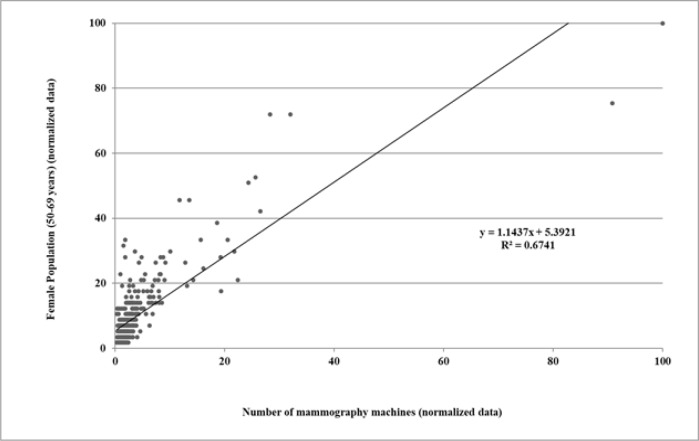
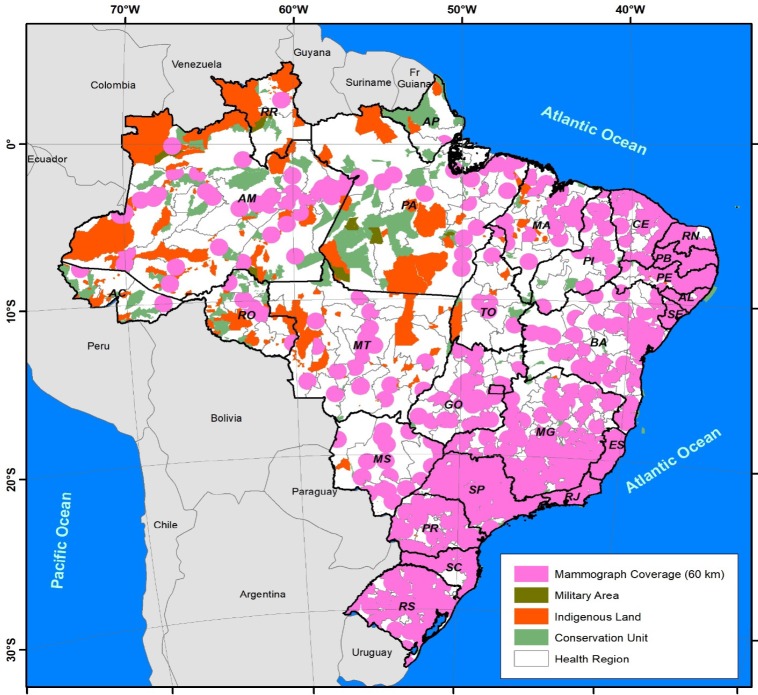
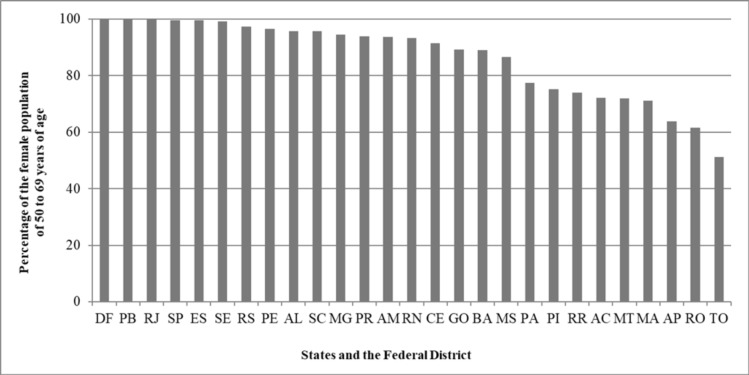
Background: Factors that may hamper access to mammographic screening in any given region include socioeconomic limitations and the geographical distribution and quality of the mammography machines. This study evaluated access to breast cancer screening within the Brazilian National Health Service (SUS), the geographical distribution of mammography equipment and the number of mammograms performed in Brazil. Methods: This ecological study evaluated the availability of mammography machines within the SUS, those available for Brazil as a whole, its macroregions, states and the Federal District in 2016. The number of mammography machines required for breast cancer screening was calculated and compared to the number of machines available. The expected number of mammograms was compared with the actual number performed. Machines were georeferenced based on their location and the municipal seat, according to healthcare region, with 60 km being defined as the maximum distance for an individual to travel for a mammogram. Results: In 2016, there were 4,628 mammography machines in Brazil. Of these, 4,492 were in use and 2,113 (47%) were available to the SUS. Considering the number of mammograms required as a function of the number clinically indicated, 2,068 machines would be required for breast cancer screening in Brazil. The network of machines available would be capable of producing 14,279,654 exams; however, only 4,073,079 exams were performed, representing 29% of the total capacity of production in the country in 2016. Regarding the maximum distance of 60 km to access a mammogram, only relatively small areas of Brazil were found not to meet this indicator. Conclusion: These results suggest that the difficulty of the Brazilian population in accessing breast cancer screening through the SUS is not associated with the number of machines available or with the geographical location of the equipment but rather with the insufficient number of mammograms performed.
Keywords: diagnostic screening programs; mammography; national health programs; universal health insurance.
Figures
References
-
- Berry DA, Cronin KA, Plevritis SK, et al. Cancer Intervention and Surveillance Modeling Network (CISNET) Collaborators Effect of screening and adjuvant therapy on mortality from breast cancer. N Engl J Med. 2005;353:1784–92. - PubMed
-
- Biller-Andorno N, Jüni P. Abolishing mammography screening programs? A view from the Swiss Medical Board. N Engl J Med. 2014;370:1965–7. - PubMed
-
- Bray F, Ferlay J, Soerjomataram I, et al. Global cancer statistics 2018: GLOBOCAN estimates of incidence and mortality worldwide for 36 cancers in 185 countries. CA Cancer J Clin. 2018;68:394–424. - PubMed
-
- Coldman A, Phillips N, Wilson C, et al. Pan-Canadian study of mammography screening and mortality from breast cancer. J Natl Cancer Inst. 2015;106 DOI: 10.1093/jnci/dju261. - PubMed
MeSH terms
LinkOut - more resources
Full Text Sources
Medical
