


Access-related infections in two haemodialysis units: results of a nine-year intervention and surveillance program
- PMID: 31244996
- PMCID: PMC6582529
- DOI: 10.1186/s13756-019-0557-8
Access-related infections in two haemodialysis units: results of a nine-year intervention and surveillance program
Abstract
Background: Access-related infections are a major cause of morbidity and mortality in haemodialysis patients. Our goal was to decrease the rate of these infections by implementing an intervention and surveillance program.
Methods: This intervention took place in two haemodialysis units (Units A and B) and was a joint effort by the haemodialysis staff and the unit for infection prevention and control. It included reviewing the work methods and work space, observations on compliance with standard precautions and handling of the vascular access, creating a checklist and a designated kit for handling the vascular access and prospective surveillance of access-related infections.
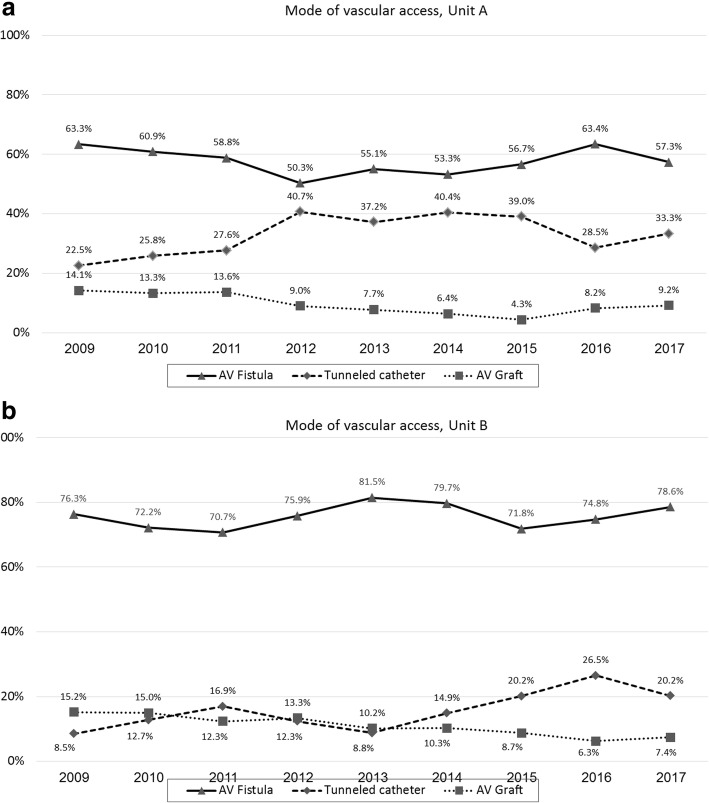
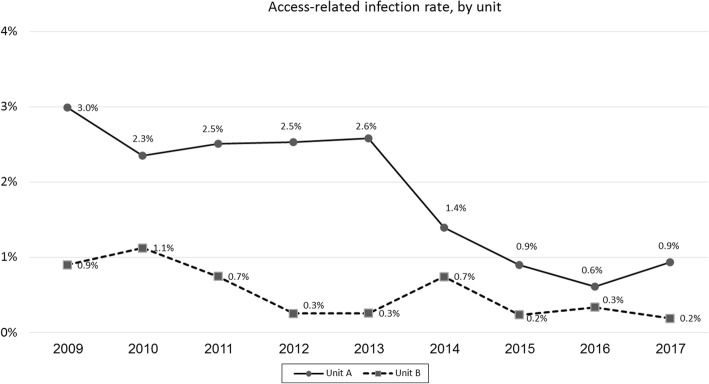
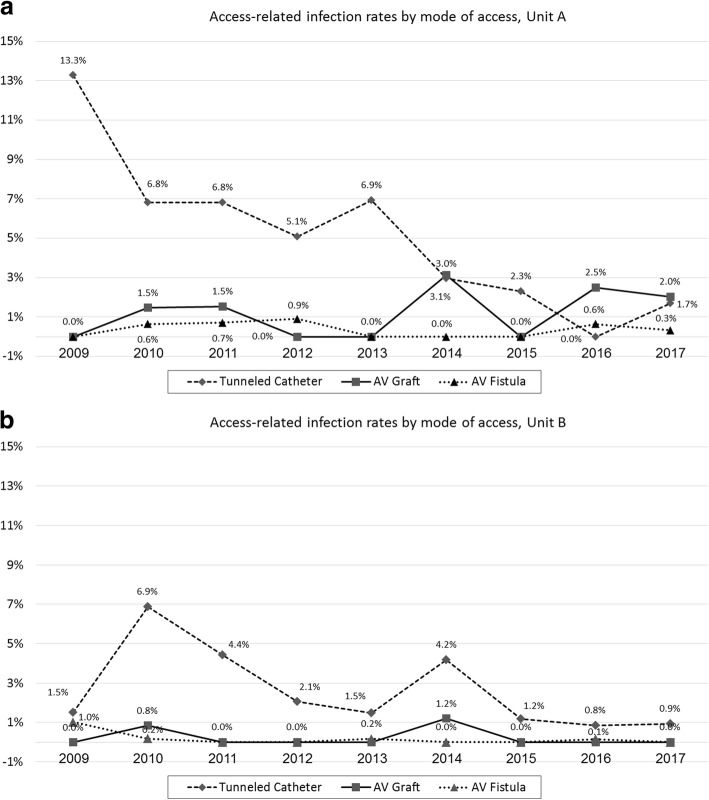
Results: During a nine-year period, the haemodialysis units A and B treated 4471 and 7547 patients (mean number of patients per year: 497 (range 435-556) and 839 (range 777-1055), respectively). For most patients, the procedure was done through an arteriovenous fistula (66.7%, range 50.3-81.5%). The access-related infection rate decreased significantly in both haemodialysis units: from 3 to 0.9% (trend: p < 0.05, linear regression: p < 0.001) in Unit A and from 0.9 to 0.2% (trend: p < 0.05, linear regression: p = 0.01) in Unit B.
Conclusions: An intervention which included introduction of a checklist and designated kit, together with ongoing surveillance and feedback, resulted in a significant decrease in the access-related infection rates in both haemodialysis units.
Keywords: Access-related infections; Checklist; Haemodialysis; Intervention; Surveillance.
Conflict of interest statement
Competing interestsThe authors declare that they have no competing interests.
Figures
References
-
- Centers for Disease Control and Prevention. CDC approach to BSI prevention in dialysis facilities. 2006. Retrieved from http://www.cdc. gov/dialysis/prevention-tools/core-interventions. Accessed 1 Aug 2018.
Publication types
MeSH terms
LinkOut - more resources
Full Text Sources
Medical
