


Nitrosative stress-mediated inhibition of OsDHODH1 gene expression suggests roots growth reduction in rice (Oryza sativa L.)
- PMID: 31245237
- PMCID: PMC6581995
- DOI: 10.1007/s13205-019-1800-y
Nitrosative stress-mediated inhibition of OsDHODH1 gene expression suggests roots growth reduction in rice (Oryza sativa L.)
Abstract
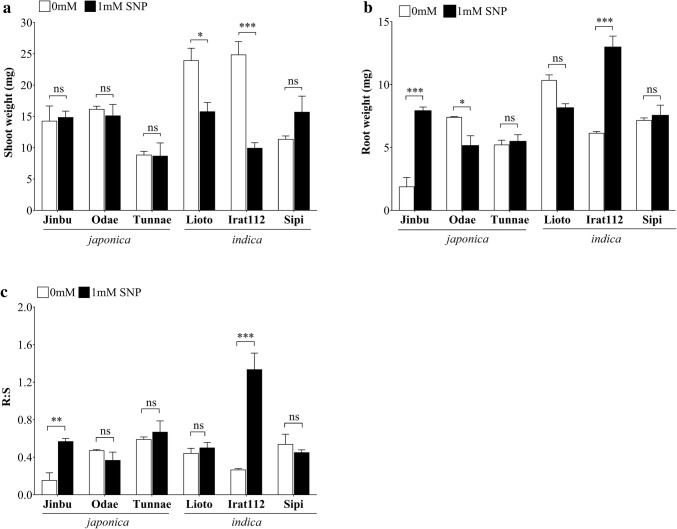
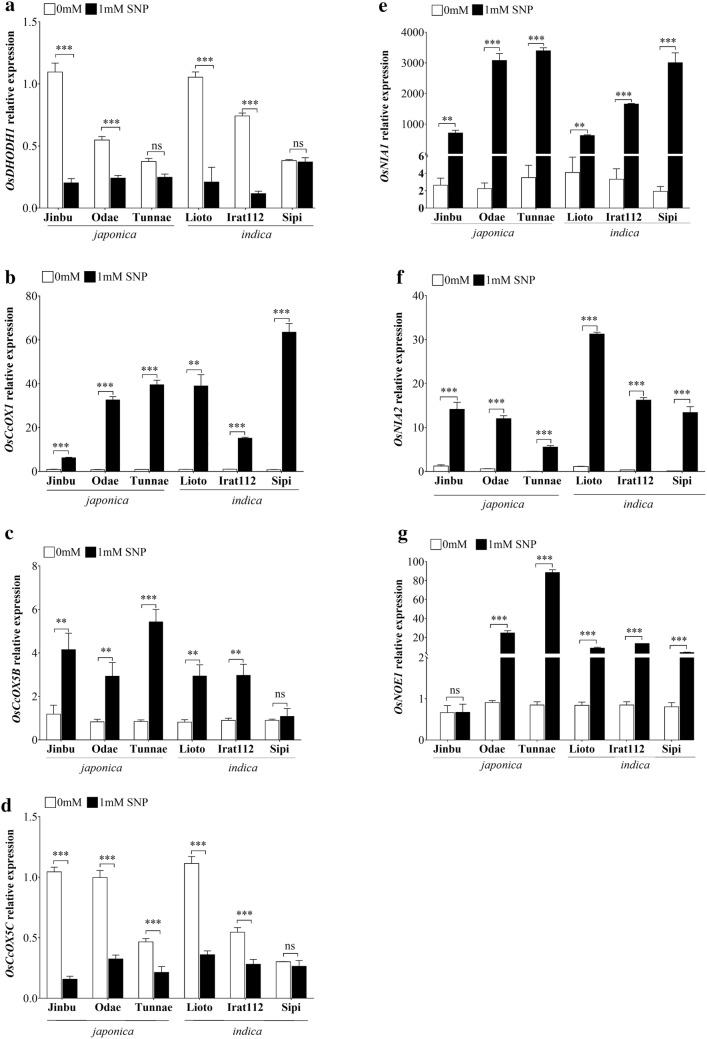
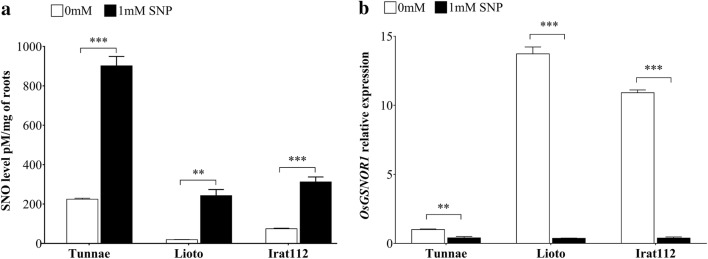
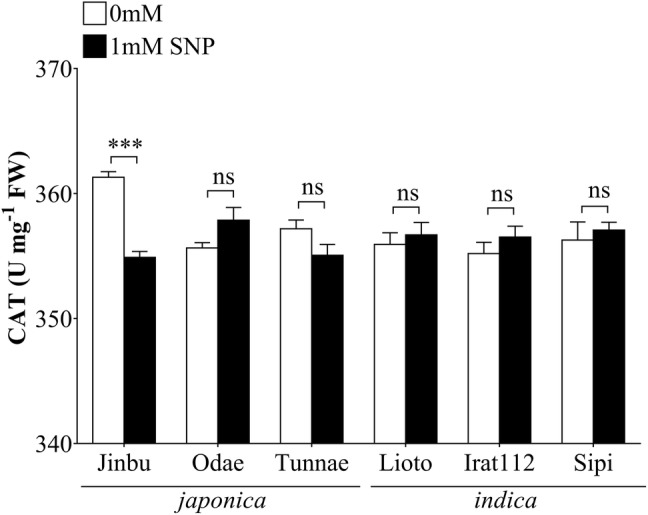
This study monitored the transcriptional response of OsDHODH1 under nitrosative stress conditions relative to the transcripts accumulations for the core mitochondrial cytochrome c oxidase1 (CcOX1) subunit, nuclear CcOX subunits 5b and 5c, two rice nitrate reductases (OsNIA1 and OsNIA2), and nitric oxide excess 1 (OsNOE1) genes. Our findings reveal that short-term exposure of rice seedlings to 1 mM SNP (Nitric oxide donor) applied exogenously for 1 h resulted in significant down-regulation of OsDHODH1 expression in all rice cultivars. In addition, the transcriptional patterns for the CcOX subunits, which are known to have a high affinity for nitric oxide, showed that the core catalytic subunit (OsCcOX1) and the nuclear subunit (OsCcOX5b) were up-regulated, while the nuclear subunit (OsCcOX5c) gene expression was suppressed. OsGSNOR1 expression was enhanced or decreased concomitant with a decrease or increase in SNO accumulation, particularly at the basal level. Moreover, high OsNIA1 expression was consistent with impaired root development, whereas low transcript accumulation matched a balanced root-growth pattern. This suggests that OsNIA1 expression would prevail over OsNIA2 expression under nitrosative stress response in rice. The level of malondialdehyde (MDA) content increased with the increase in SNP concentration, translating enhanced oxidative damage to the cell. We also observed increased catalase activity in response to 5 mM SNP suggesting that potential cross-talk exist between nitrosative and oxidative stress. These results collectively suggest a possible role of OsDHODH1 and OsCcOX5b role in plant root growth during nitrosative stress responses.
Keywords: CAT; CcOX; Lipid peroxidation; Nitric Oxide; OsDHODH1; OsNIA1; OsNIA2; Rice.
Conflict of interest statement
Conflict of interestThe authors declare that there is no potential conflict of interest.
Figures



References
-
- Aboukhadrah S, Abd Allah A, Gharib H, Sakran RM. Effect of soil water deficit on yield and its components at the different growth stages in rice (Oryza sativa) Egypt J Agron. 2015;37:79–92. doi: 10.21608/agro.2015.65. - DOI
-
- Adamu T, Mun B-G, Lee S-U, Hussain A, Yun B-W. Exogenously applied nitric oxide enhances salt tolerance in rice (Oryza sativa L.) at seedling stage. Agronomy. 2018;8:276. doi: 10.3390/agronomy8120276. - DOI
-
- Aebi H. Methods in enzymology. Netherlands: Elsevier; 1984. Catalase in vitro; pp. 121–126. - PubMed
-
- Antoniou C, Filippou P, Mylona P, Fasoula D, Ioannides I, Polidoros A, Fotopoulos V. Developmental stage-and concentration-specific sodium nitroprusside application results in nitrate reductase regulation and the modification of nitrate metabolism in leaves of Medicago truncatula plants. Plant signal Behav. 2013;8:e25479. doi: 10.4161/psb.25479. - DOI - PMC - PubMed
LinkOut - more resources
Full Text Sources
Miscellaneous
