


Searching for Sympatric Speciation in the Genomic Era
- PMID: 31245871
- PMCID: PMC8175013
- DOI: 10.1002/bies.201900047
Searching for Sympatric Speciation in the Genomic Era
Abstract
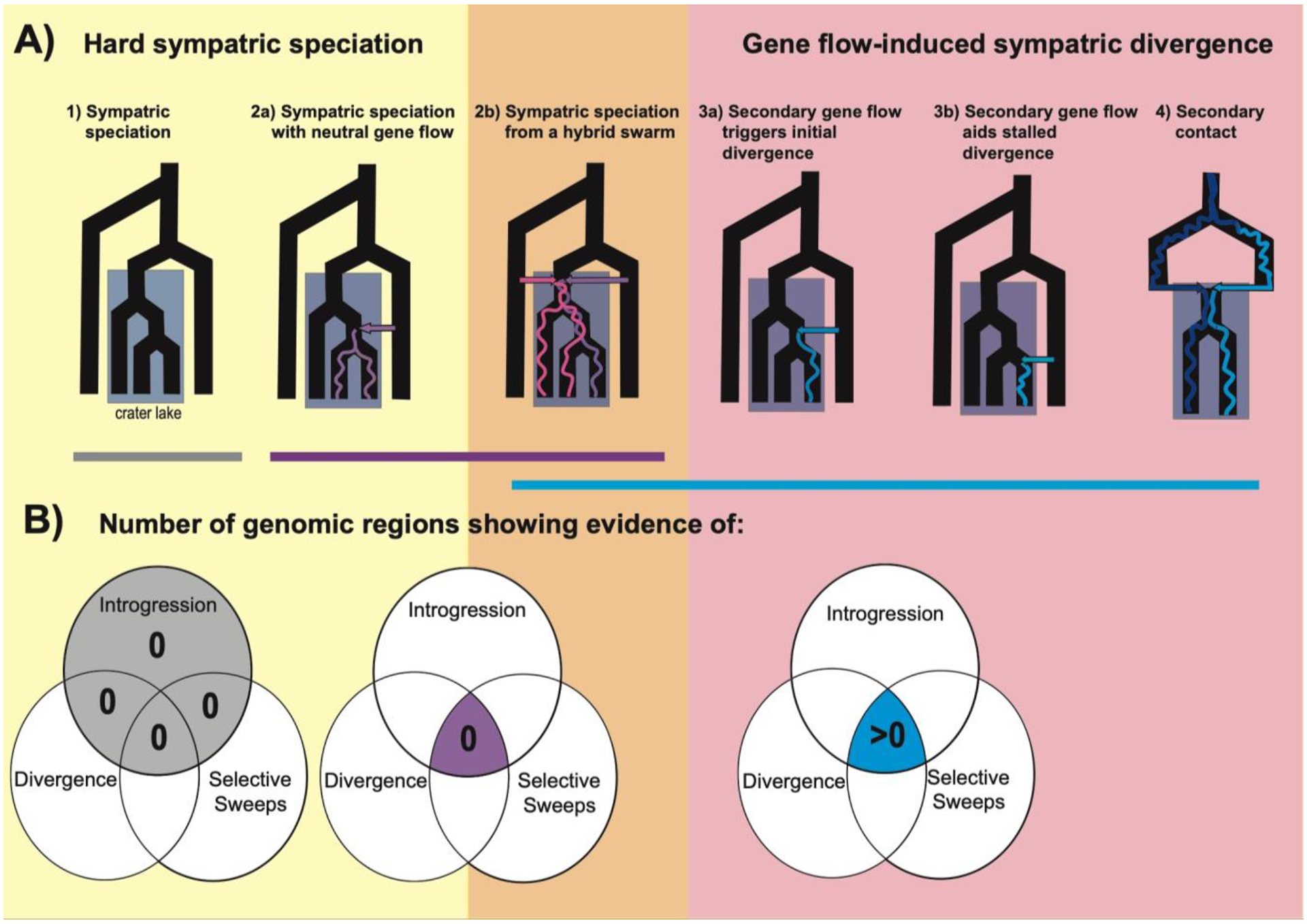
Sympatric speciation illustrates how natural and sexual selection may create new species in isolation without geographic barriers. However, recent genomic reanalyses of classic examples of sympatric speciation reveal complex histories of secondary gene flow from outgroups into the radiation. In contrast, the rich theoretical literature on this process distinguishes among a diverse range of models based on simple genetic histories and different types of reproductive isolating barriers. Thus, there is a need to revisit how to connect theoretical models of sympatric speciation and their predictions to empirical case studies in the face of widespread gene flow. Here, theoretical differences among different types of sympatric speciation and speciation-with-gene-flow models are reviewed and summarized, and genomic analyses are proposed for distinguishing which models apply to case studies based on the timing and function of adaptive introgression. Investigating whether secondary gene flow contributed to reproductive isolation is necessary to test whether predictions of theory are ultimately borne out in nature.
Keywords: cichlids; gene flow; genomics; introgression; selection; sympatric speciation.
© 2019 WILEY Periodicals, Inc.
Figures


References
-
- Barluenga M, Stölting KN, Salzburger W, Muschick M & Meyer A (2006). Sympatric speciation in Nicaraguan crater lake cichlid fish. Nature, 439, 719–723. - PubMed
-
- Bolnick DI (2006). Multi-species outcomes in a common model of sympatric speciation. J. Theor. Biol, 241, 734–744. - PubMed
-
- Bolnick DI & Doebeli M (2003). Sexual dimorphism: two sides of the same ecological coin. Evolution (N. Y), 57, 2433–2449. - PubMed
